The $54 Billion Burn: Why 2025’s Wildfires Were the Costliest on Record Despite Smaller Burn Areas
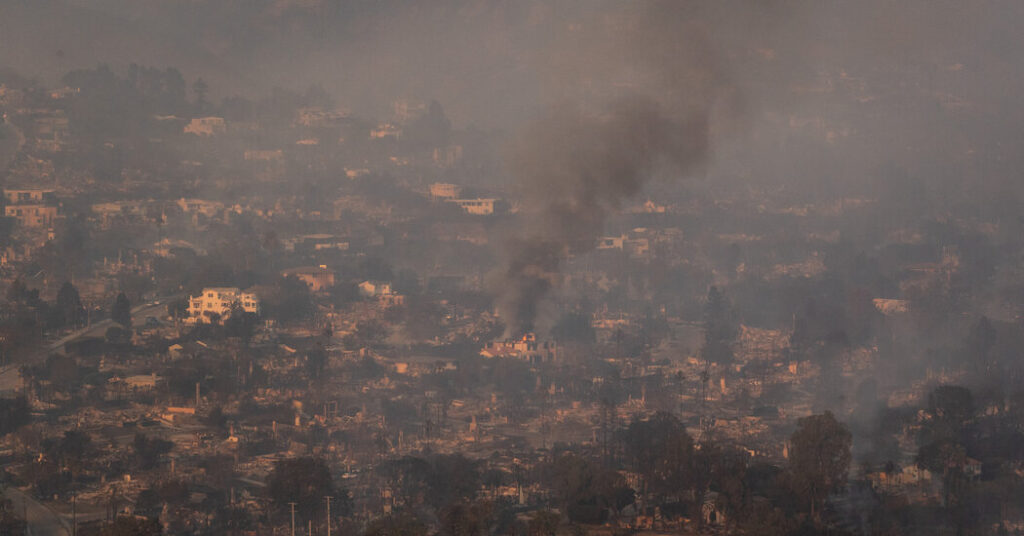
Table of Contents
The shift from acreage to assets
For decades, the metric for a ‘bad’ wildfire season was almost always measured in hectares or square miles. But a new analysis released Sunday suggests that the relationship between the size of a fire and its economic impact has fundamentally decoupled. According to researchers utilizing data from the EM-DAT database, 2025 stands as the most economically damaging wildfire year on record, despite the total area burned remaining relatively modest compared to historic mega-fires.
The study estimates that global insured losses reached at least $54 billion, a staggering peak that reflects a growing trend: fires are no longer just burning forests; they are burning high-value infrastructure and dense urban interfaces. This financial spike was driven largely by a series of catastrophic blazes in South Korea and Spain, but the primary engine of the record-breaking cost was the devastation in the Los Angeles area.
The Los Angeles anomaly
The fires that swept through Southern California early last year serve as a case study in the ‘new normal’ of disaster economics. While the blazes tore through approximately 90 square miles—a figure that doesn’t break records in terms of scale—the location of those miles mattered immensely. The fires penetrated deeply into residential zones and commercial hubs, leading to the evacuation of over 150,000 residents and claiming at least 31 lives.
The $54 billion figure, however, represents only the tip of the iceberg. Because the study relies heavily on insured losses, it inherently underestimates the total wreckage. Insurers rarely share proprietary data, and in many regions, damage assessment is hampered by a lack of transparent reporting. When researchers factored in indirect losses—such as systemic business closures, lost productivity from missed work days, and the massive strain on healthcare systems—the toll for the Los Angeles fires alone jumped by an estimated $100 billion.
Data gaps and the EM-DAT challenge
The research team leaned on the EM-DAT database, a communal global effort designed to track disasters and their societal costs. While EM-DAT is the gold standard for disaster tracking, the researchers acknowledge a significant ‘visibility gap.’ The current figures are conservative minimums. In many cases, smoke-related deaths—which experts suggest may number in the hundreds beyond the official death toll—are not captured in immediate casualty reports, nor is the long-term devaluation of land and infrastructure.
From a technical perspective, this data suggests that current risk models used by insurance companies and urban planners may be outdated. For years, the focus was on containing the perimeter of a fire to save timber and wildlife. Now, the focus is shifting toward ‘defensible space’ and urban hardening, as the financial cost of a fire is now determined more by the zip code it hits than the number of acres it consumes.
A global pattern of volatility
The volatility wasn’t limited to the U.S. The synchronized nature of the 2025 losses, with simultaneous severe events in Europe and Asia, suggests a global tightening of climate vulnerability. In Spain and South Korea, the cost was driven by a similar pattern: fires hitting areas where human development has crept closer to combustible wilderness, creating a high-stakes environment where a single spark can lead to billions in property loss in a matter of hours.
As these events become more frequent, the pressure on the global insurance market is mounting. With insured losses hitting record highs, the industry is facing a crisis of insurability, where the cost of premiums in high-risk zones may soon become unsustainable for the average homeowner.