The Rise of ‘Bimbo Tech’: How Cyberdecks Are Becoming a Feminist Rebellion Against Big Tech
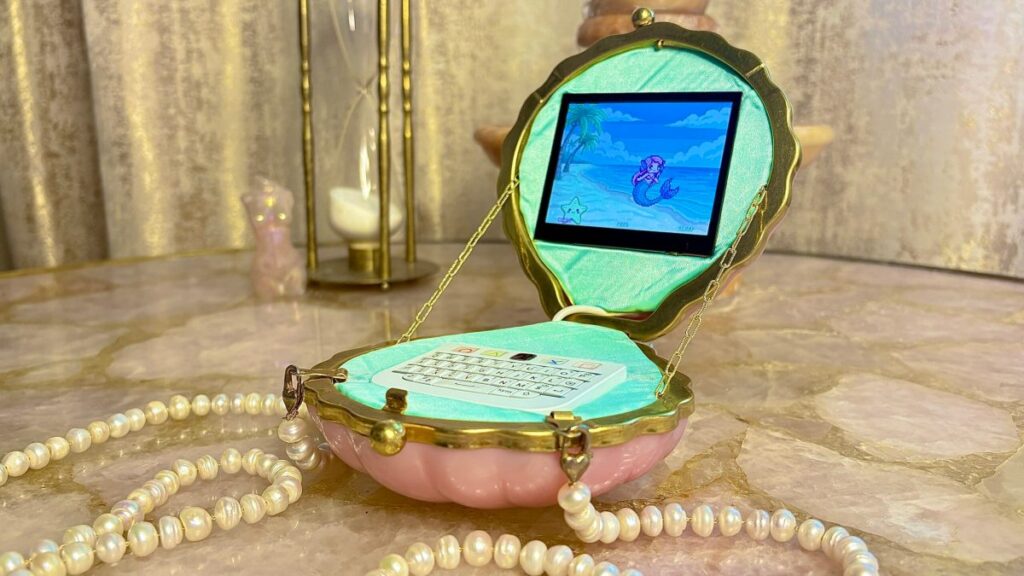
Table of Contents
Beyond the Black Box
For decades, the aesthetic of high-performance computing has been defined by a very specific, corporate palette: matte black, brushed aluminum, and sterile silver. In the eyes of creators like CC, a self-described “open source baddie,” this isn’t just a design choice—it’s a signal of who the technology is built for. “Whenever they release a pro model, or an elite model… I’m always like, let me guess, it’s black or silver,” CC says. “It’s never going to come in pink.”
This frustration is fueling a burgeoning movement within the DIY hardware community. Enter the “cyberdeck”—a term coined by William Gibson in his 1984 novel Neuromancer to describe a portable, often modular computer used to access cyberspace. While cyberdecks have existed in niche hobbyist circles for years, primarily powered by the accessibility of the Raspberry Pi, they are currently undergoing a cultural pivot. A new wave of creators, documenting their work on TikTok, Instagram, and blogs like Bimbo Tech, are blending hyper-feminine aesthetics with hardcore computing to reclaim agency over their devices.
These aren’t just decorative shells. CC’s current project—a computer housed in a pink mermaid seashell purse—is networked to her private servers and home-hosted AI setup, giving her a portable gateway to her entire library of PDFs, notes, and data. It is a deliberate rejection of the “black box” philosophy employed by companies like Apple and Meta, where hardware is locked down and any attempt at a jailbreak or unauthorized repair can void a warranty.
Hardware as Art and Protest
The movement is characterized by a refusal to prioritize optimization over expression. In an era where tech giants push for seamless integration and invisible interfaces, the cyberdeck is gloriously impractical. The current trend sees hardware being integrated into unexpected forms: 3D-printed fossils that act as MP3 players, Barbie dollhouses that open into mini-computers, and wooden casings entwined with moss.
For creator Sarahbelle Kim, the appeal is as much about privacy as it is about style. “I don’t want Meta AI glasses. I want to pirate books in a tiny embellished shell,” Kim posted on TikTok. “No one can surveil you there.” This sentiment highlights a growing tension between the user and the provider; by building their own hardware from the ground up using eBay parts and open-source boards, these creators are opting out of the telemetry and data harvesting baked into commercial consumer electronics.
The Weaving of History and Silicon
The intersection of feminine labor and computing is not a new phenomenon, a fact that blockchain developer Maro Vardanyan integrates into her own work. Vardanyan describes her process as “crocheting with computers” or creating “macrame motherboards,” using conductive thread to build wearable tech, including Raspberry Pi corsets and purses.
Vardanyan’s work serves as a historical callback to the early days of computing. Long before the dominance of silicon processors, the Apollo Guidance Computer that powered the moon landing relied on “core rope memory.” This hardware was literally hand-woven by skilled textile workers—predominantly women—who threaded copper wires through magnetic cores to encode binary data. “The original processor was handwoven by seamstresses, not by engineers,” Vardanyan notes. “I feel like the hand weaving, and even the fashion-meets-technology… It’s so full circle.”
Pushback from the ‘Pro’ Community
The transition of cyberdecks from gray-box utilitarianism to pink-hued art has not been without friction. Both CC and Vardanyan report a consistent stream of condescension from traditional hardware enthusiasts. On platforms like Reddit and X, critics often dismiss these builds as “performative” or a “waste of hardware,” particularly during periods of chip shortages.
Vardanyan recounts instances where men questioned the viability of her macrame builds, worrying about rain or energy loss in the GPIO pins. Her response is technical: the hardware is preserved in acrylic shells and utilizes specialized conductive thread to ensure full functionality. For CC, the pushback often takes the form of gatekeeping, with critics questioning her experience level because her devices don’t look like traditional workstations.
Ultimately, the rise of the stylized cyberdeck is a commentary on the current state of digital culture. In a landscape dominated by the pursuit of peak efficiency and corporate surveillance, the act of building a functional computer inside a seashell is a radical assertion of ownership. It is a move away from being a mere “user” of a product and toward being a creator of a tool.