Nvidia Enters the Arm Race: RTX Spark Aims to Turn Windows Laptops into Local AI Powerhouses
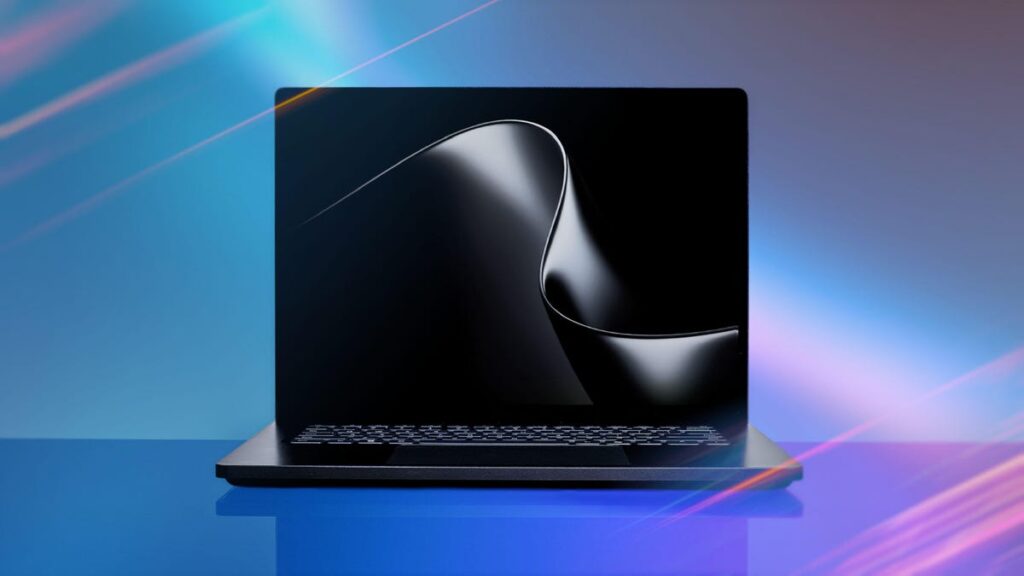
Table of Contents
A New Blueprint for the Personal Computer
During the GTC at Computex event in Taipei, CEO Jensen Huang didn’t just announce a new chip; he claimed Nvidia is “reinventing the personal computer.” The center of this ambition is the RTX Spark, a highly anticipated system-on-chip (SoC) built on Arm architecture that integrates Nvidia’s Blackwell GPU technology directly into the silicon of thin-and-light Windows laptops and mini desktops.
For years, the “Windows on Arm” dream has been primarily a play for battery life and mobility, led by Qualcomm’s Snapdragon X series. However, the RTX Spark shifts the goalposts. While Snapdragon focuses on efficiency for office productivity, the Spark is engineered for heavy-lift workloads—rendering massive 3D scenes, editing 12K video, and running large-scale generative AI agents locally—without the thermal and spatial overhead of a discrete graphics card.
The Technical Muscle: Blackwell Meets Grace
The RTX Spark is an evolution of the DGX Spark (GB10) found in developer-centric Linux desktops. Developed in collaboration with MediaTek, the chip pairs a 20-core Grace CPU with 6,144 CUDA cores. This unified memory architecture is a critical departure from traditional laptop builds; by allowing the GPU to access a shared pool of up to 128GB of RAM, Nvidia is attempting to bypass the VRAM bottlenecks that typically plague mobile workstations.
In terms of raw performance, the GPU is roughly comparable to a mobile RTX 5070. Nvidia claims the SoC can push AAA games at 1440p and over 100 frames per second, though the company remained vague on whether these numbers rely on DLSS 4.5. More impressively, the Spark is designed to handle LLMs with up to 120 billion parameters and a 1 million token context window, positioning it as a direct competitor to Apple’s M5 Pro and M5 Max chips.
The FP4 Advantage
One of the most significant technical reveals is the Spark’s support for FP4 (4-bit floating point) calculations, reaching a peak of one PFLOPS. While FP4 involves a tradeoff between speed and precision, it is currently the gold standard for accelerating AI inference. By baking FP4 support into the hardware, Nvidia provides a distinct advantage over the M5 lineup, which lacks support for these specific data types, potentially making the Spark a faster engine for local generative AI.
Hardware Strategy and the ‘Surface’ Effect
The first wave of Spark-powered devices is expected to hit shelves this fall. Most notable is the 15-inch Surface Laptop Ultra, a move that signals a long-overdue hardware refresh for Microsoft. The Ultra features a 2,000-nit peak brightness mini-LED touchscreen (262ppi), finally giving the Surface line the high-end display and integrated GPU power that professional creatives have demanded for years.
Beyond laptops, Nvidia is targeting the mini-desktop market, where it will clash with AMD’s Ryzen AI Halo series. Major OEMs including Dell, HP, Asus, Acer, and Lenovo are expected to launch Spark-based miniatures, catering to a growing demographic of developers who need workstation power in a small footprint.
The Power Trade-off
Despite the claims of “all-day battery life,” the RTX Spark operates across a wide power envelope, ranging from single digits up to 80W. This suggests that real-world performance will vary wildly depending on the manufacturer’s thermal solution. A laptop throttled for silence will feel vastly different from one pushed to its 80W limit.
While the chip includes an NPU to meet the 40 TOPS requirement for Microsoft’s Copilot Plus certification, Nvidia is keeping the NPU details quiet, preferring to let the GPU do the heavy lifting. Furthermore, the company is maintaining a strict wall between its consumer and professional tiers; the Spark will not support ECC memory or a formal application certification program, ensuring that the high-margin enterprise workstations remain distinct from these new consumer SoCs.