The Plastic Courtyard: How Urbanization is Rewriting the Mating Rituals of Australian Bowerbirds
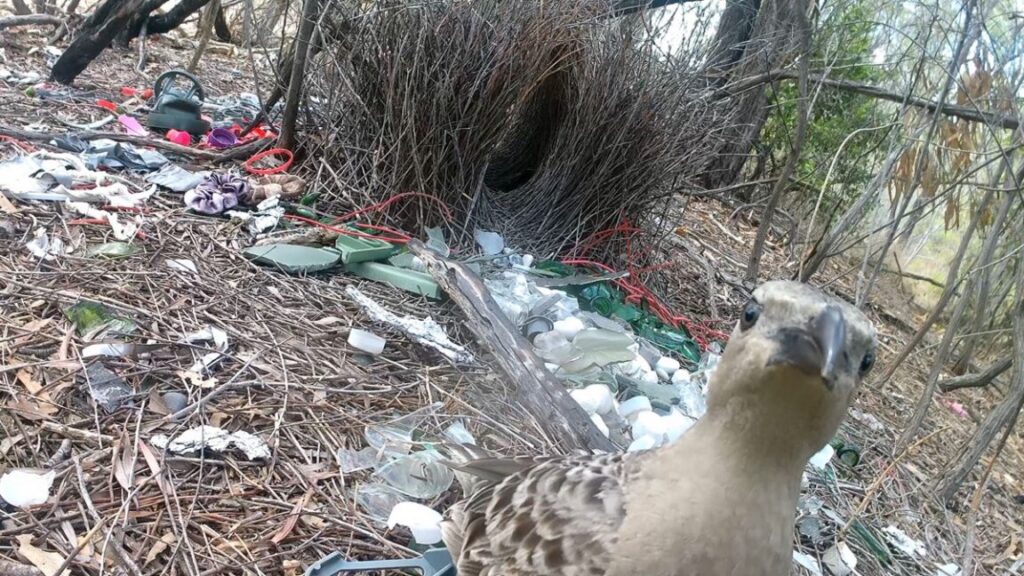
Table of Contents
A Shift in Aesthetic
In the forests of northern Queensland, the Great Bowerbird is known for a meticulous, almost architectural approach to romance. The male spends hours constructing a ‘bower’—a tunnel of twigs—which serves as a stage for a high-stakes courtship dance. To seal the deal, he decorates the entrance with a curated collection of colorful trinkets, tossing the shiniest objects toward the female in a bid to prove his fitness and attention to detail.
However, a new study published in Royal Society Open Science suggests that the ‘curation’ process is changing. As Australian cities expand, bowerbirds are increasingly substituting natural treasures like berries and snail shells for the colorful debris of human civilization.
The Urban Advantage
Researchers from the University of Exeter spent the 2023 breeding season monitoring 61 male bowerbirds across two distinct landscapes: the rural Dreghorn Cattle Station and the urban center of Townsville City. The contrast in their ‘interior design’ choices was stark. Urban bowers were more than ten times more likely to be adorned with human-made objects than those in rural areas.
The sheer volume of decorations also spiked in the city. While rural birds averaged around 20 items per bower, urban males averaged 90. One particularly ambitious city bird managed to hoard 300 individual items, creating a neon-hued display that would be impossible to replicate in a wilder setting. The items ranged from the mundane to the surreal; researchers noted the presence of medicine jars near hospitals and fluorescent mouthguards near Australian Rules football grounds. One bower even featured a pair of handcuffs.
Preference vs. Availability
The core question for the Exeter team was whether urban birds simply happen upon these items, or if they actually prefer them. To test this, the team conducted a ‘slush pile’ experiment. They stripped the bowers of their existing decorations and provided a mixed pool of items sourced from both urban and rural environments.
The results indicated a universal preference: regardless of where they lived, bowerbirds flocked to human-made materials. Rural birds, though limited by their environment, eagerly snatched up the urban plastics and glass when given the chance. This suggests that the preference for these vivid, synthetic colors is an inherent drive, and rural birds are effectively ‘restricted’ by the lack of available anthropogenic materials.
The Evolutionary Trade-off
From a biological perspective, this shift may be more than just a quirk of taste. The researchers suggest that the abundance of plastic and glass in cities may reduce the ‘energetic cost’ of mating. In the wild, a male must travel long distances and spend significant time searching for the perfect shade of green or red, often leaving his bower unguarded and vulnerable to rivals.
In Townsville, the ‘materials’ are everywhere. This efficiency could lead to higher mating rates in urban environments, though the long-term impact on sexual selection remains unclear. It is still unknown if urban females have evolved a preference for plastic over petals, or if the synthetic brightness simply triggers the same primal response as a rare natural find.
“Our study demonstrates that availability of human items—often glass and plastic—is affecting the behavior of bowerbirds,” says co-author Laura Kelley. While the immediate impact may seem benign or even beneficial for the males, it serves as a vivid indicator of how human infrastructure is invisibly sculpting the behavioral evolution of wildlife.