Samsung’s $2,000 Galaxy Fold Faces Early Durability Crisis as Reviewer Units Fail
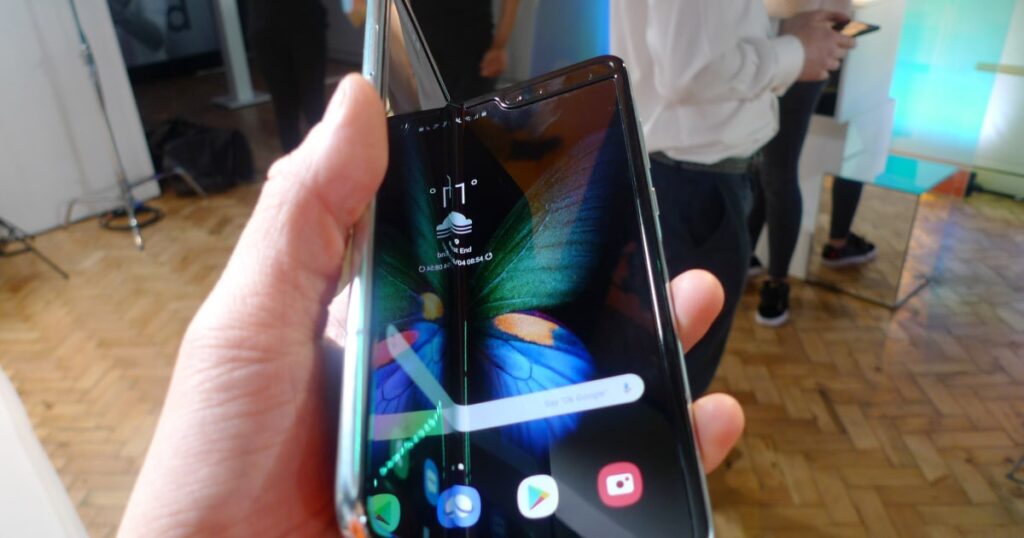
Table of Contents
Early Failures for a High-Stakes Bet
Samsung is facing a precarious moment with the rollout of the Galaxy Fold. The device, which carries a steep $1,980 price tag in the U.S., is intended to be a vanguard for the next generation of mobile computing. However, several journalists who received early review units have reported catastrophic screen failures within just a few days of typical use.
The reports describe a disturbing pattern: screens beginning to flicker, developing black patches, and eventually failing entirely. For a device that positions itself as a luxury productivity tool, these failures are not merely glitches—they are renders of the hardware as “completely unusable,” according to CNBC reporter Todd Haselton, whose unit failed after only two days of testing.
The Protective Layer Controversy
A critical point of contention has emerged regarding the Galaxy Fold’s screen protector. Initial reports suggested that some failures occurred after reviewers removed a thin, plastic-like layer from the inner display, assuming it was a standard shipping film. Samsung has since clarified that this layer is structural and essential to the screen’s integrity; removing it effectively strips the device of its primary defense against scratches and internal stress.
However, this explanation does not cover all the failures. Reporters from The Verge and CNBC have confirmed that their screens failed even while the protective layer remained perfectly intact. This suggests that the issue may be deeper than user error, potentially pointing to a systemic hardware vulnerability in the folding OLED panel or the hinge mechanism.
Engineering Promises vs. Real-World Stress
Samsung has leaned heavily on its laboratory testing to justify the Fold’s pricing and viability. The company claims the hinge and screen can withstand 200,000 folds—roughly 100 openings and closings every day for five years. But as the tech industry has seen repeatedly, synthetic benchmarks rarely translate perfectly to the chaos of real-world usage.
The Galaxy Fold’s design, which transforms a standard smartphone footprint into a small tablet, introduces a level of mechanical stress that traditional slabs simply don’t encounter. The central crease, while a known aesthetic trade-off, is also the primary point of failure. When the OLED layers are repeatedly bent and stretched, any impurity in the manufacturing process or any slight misalignment in the hinge can lead to the “fizzling out” described by early testers.
The Ghost of the Note 7
For Samsung, these reports are more than just a technical hurdle; they are a PR nightmare that echoes a dark chapter in the company’s history. In 2016, the Galaxy Note 7 rollout ended in a global recall after batteries began spontaneously combusting, costing the company billions in lost revenue and significant brand equity.
While a flickering screen is not as dangerous as a battery fire, the timing is equally damaging. The Galaxy Fold is scheduled to hit U.S. shelves on April 26. If the public perceives the device as fragile, the $1,980 investment becomes an impossible sell for the average consumer.
In an official statement, Samsung acknowledged the reports and stated it would “thoroughly inspect these units in person to determine the cause of the matter.” The company is now in a race against the clock to determine if these failures are isolated anomalies in a small batch of review units or a fundamental flaw that could necessitate a delay or a redesign of the product’s launch strategy.