ASUS Challenges MacBook Pro Dominance With NVIDIA RTX Spark-Powered ProArt Laptops
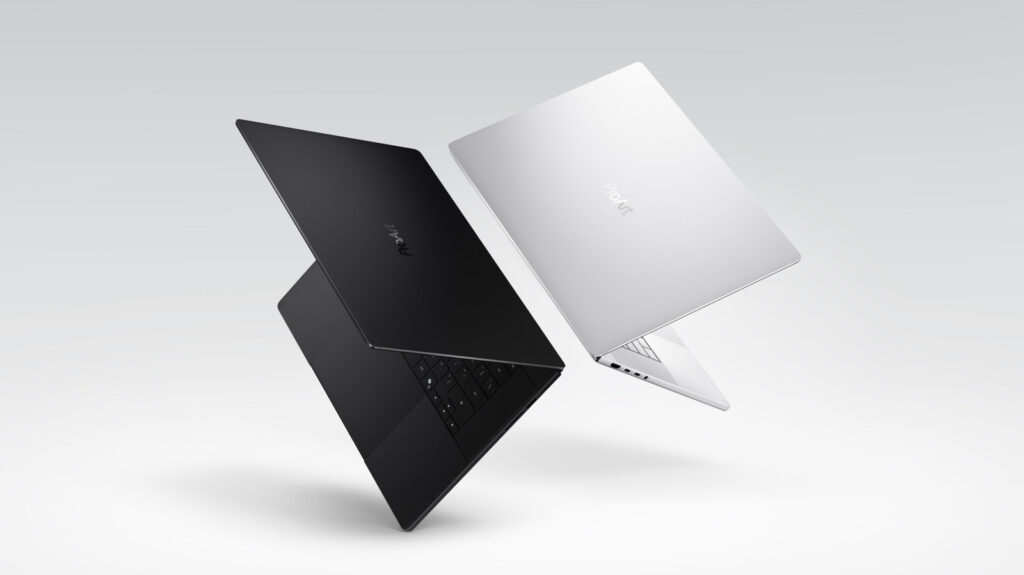
Table of Contents
A New Architecture for the Creative Class
For years, the professional creative market has been essentially a monoculture. If you needed a laptop that balanced extreme power efficiency with the raw horsepower required for 8K video editing or complex 3D rendering, the Apple MacBook Pro was the only logical choice. The transition to Apple Silicon created a performance-per-watt gap that Windows OEMs struggled to close, even with high-wattage Intel and AMD chips that often turned laptops into portable space heaters.
ASUS is betting that NVIDIA’s new RTX Spark ARM “superchip” is the catalyst needed to break that streak. The company has unveiled the ProArt P14 and P16, two machines designed specifically to lure high-end creators away from macOS by mirroring Apple’s unified memory architecture while leveraging NVIDIA’s dominance in GPU acceleration.
The Hardware Gamble: OLED vs. Mini-LED
On paper, the ProArt series is an aggressive play. The P16 weighs in at 3.9 pounds, while the P14 is a lean 3.2 pounds. Both are notably slimmer than their MacBook Pro counterparts, which is a critical detail for professionals who spend their days in transit or on set. But the real battle is in the glass. ASUS has deployed its Lumina Pro OLED technology, pushing peak brightness to 1,600 nits with 100 percent DCI-P3 coverage and a Delta E less than 1.
While Apple’s XDR displays are industry standards, they rely on Mini-LED technology. By opting for OLED, ASUS is targeting a specific pain point for video editors: true blacks and infinite contrast without the blooming artifacts often seen around bright objects on dark backgrounds. For a colorist working in a dim studio, the difference between Mini-LED and OLED is not just a spec—it’s a workflow improvement.
Chasing the “Superchip” Promise
The core of the story, however, is the RTX Spark silicon. NVIDIA isn’t just offering a GPU; they are providing an ARM-based system-on-a-chip (SoC) that supports up to 128GB of unified memory. This is a direct shot at Apple’s M-series chips, which allow the CPU and GPU to access the same memory pool, eliminating the bottleneck of moving data across a PCIe bus.
NVIDIA’s claims for the Spark chip are staggeringly ambitious. According to the company, the hardware is capable of rendering 3D scenes exceeding 90GB, editing 12K 4:2:2 video, and running local Large Language Models (LLMs) with 120 billion parameters and a 1-million-token context window. This suggests that the ProArt series isn’t just for designers; it’s positioned as a mobile workstation for the burgeoning AI era.
The Windows 11 Arm Hurdle
Despite the impressive hardware, the success of the ProArt P14 and P16 hinges on a variable that has historically plagued Windows on ARM: the software ecosystem. ASUS claims the laptops will support Adobe Creative Cloud, Blender, and Blackmagic DaVinci Resolve 21 natively. However, the user experience will depend on how seamlessly Windows 11 handles these workloads without falling back on emulation, which traditionally kills the very battery life ARM chips are meant to provide.
Furthermore, Microsoft’s aggressive push of CoPilot+ integration into Windows 11 has left some power users feeling that the OS is becoming too cluttered. For a professional who needs a stable, distraction-free environment, the “messiness” of the current Windows AI rollout could be a deterrent, regardless of how fast the RTX Spark chip is.
ASUS has yet to release official pricing for the P14 and P16. If they price these machines to undercut the top-tier MacBook Pro configurations, they may find a hungry market of creators who are tired of the Apple ecosystem but have previously been unwilling to sacrifice performance for a PC.