Nvidia Takes on Arm Laptops with RTX Spark: A High-Stakes Bet on Local AI Agents
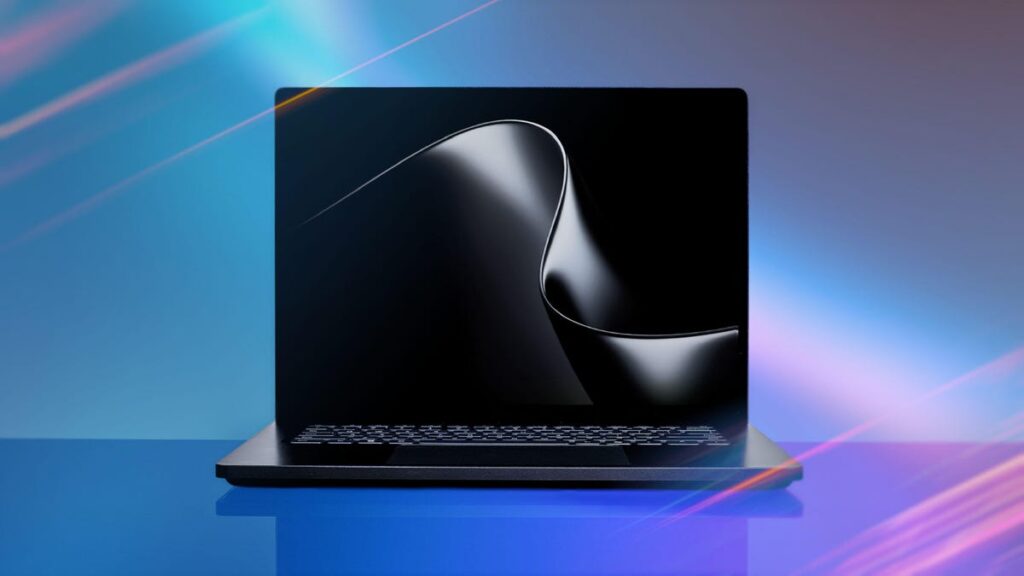
Table of Contents
The Convergence of Blackwell and Mobility
During a keynote at Computex in Taipei, Nvidia CEO Jensen Huang didn’t just announce a new chip; he claimed the company is “reinventing the personal computer.” The centerpiece of this ambition is the RTX Spark, a new Arm-based system-on-chip (SoC) that marks a decisive shift in Nvidia’s strategy. For the first time, the company is moving beyond the discrete GPU market to offer a fully integrated platform for thin-and-light Windows laptops and mini desktops.
By bringing the Blackwell architecture to an Arm-based SoC, Nvidia is attempting to bridge the gap between portable efficiency and workstation-grade power. While Qualcomm has already established a foothold with the Snapdragon X series, the RTX Spark is designed for a fundamentally different class of user. Where Snapdragon focuses on “all-day battery life” for general productivity, the Spark is targeting the heavy-lifters: 3D artists, 12K video editors, and developers running massive local LLMs.
The Hardware Breakdown: CUDA Cores and Memory
The RTX Spark is essentially a consumer-facing evolution of the DGX Spark (GB10), which Nvidia previously developed for Linux-based developer desktops. Engineered in collaboration with MediaTek, the SoC features a 20-core Grace CPU and 6,144 CUDA cores. In terms of raw GPU capability, the Spark tracks closely with the RTX 5070, but it leverages a unified memory architecture that allows it to access up to 128GB of RAM.
This unified approach is critical for the “personal agents” Huang highlighted. Nvidia claims the Spark can run 120B-parameter models with a 1-million-token context window locally. While AMD’s Ryzen AI Max Pro 400 series claims support for even larger 300B parameter models, Nvidia’s integration of FP4 (4-bit floating point) calculations gives the Spark a unique edge. FP4 is increasingly the preferred format for AI because it balances speed and accuracy more effectively than integer formats, and the Spark is the first consumer SoC to support it in hardware.
Surface Laptop Ultra and the Hardware Refresh
Microsoft is clearly lean-in on this transition. The most immediate manifestation of this partnership is the upcoming Surface Laptop Ultra. This 15-inch machine finally addresses long-standing criticisms of the Surface line by introducing a 2,000-nit mini LED touchscreen with a 262ppi density. For years, the Surface lineup has lacked the discrete graphical punch its price points suggested; the RTX Spark provides a path to high-end performance without the thermal throttling typically associated with bulky GPUs.
Beyond laptops, we are seeing a surge in mini desktops from Acer, Asus, Dell, HP, and Lenovo. These devices will likely compete directly with AMD’s Ryzen AI Halo-based systems, targeting developers who need a compact footprint but cannot compromise on AI compute power.
The Power Paradox
There is, however, a significant caveat regarding the Spark’s efficiency. Nvidia states the chip can operate anywhere from “single digits” to 80W. This wide variance suggests that real-world performance will depend heavily on how OEMs manage thermals. A laptop throttled to preserve battery will feel vastly different from one plugged into a wall running at full 80W tilt.
While the chip includes an NPU to meet Microsoft’s 40 TOPS requirement for Copilot Plus certification, Nvidia has remained curiously quiet about the NPU’s specifics, preferring to let the CUDA cores do the heavy lifting. Furthermore, the company is maintaining a strict boundary between its consumer and professional tiers—expecting no ECC memory support or official professional application certifications for the Spark line.
As AI-driven demand continues to squeeze the global supply of HBM and high-speed SSDs, pricing for these machines remains speculative. However, the RTX Spark represents more than just a new SKU; it is a direct challenge to Apple’s M5 Pro and Max chips, attempting to bring a level of AI-centric compute to Windows that was previously only possible in massive desktop rigs.