Samsung Aggressively Targets Indian Mid-Range Market With AI-Integrated Mini LED TVs
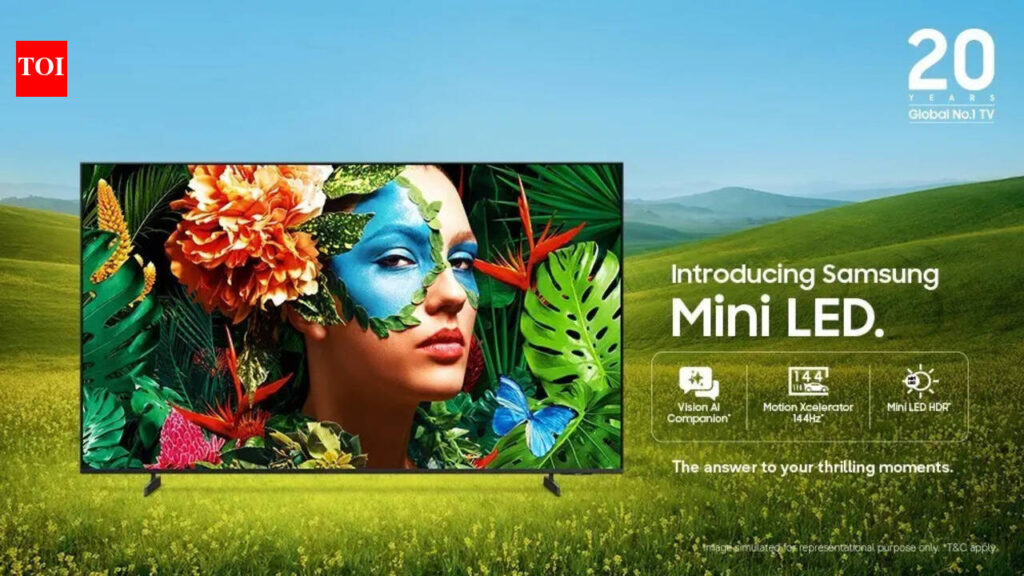
Table of Contents
A strategic pivot toward the ‘affordable premium’ segment
Samsung is doubling down on its display dominance in India with the launch of a new series of AI-powered Mini LED televisions, starting at a surprisingly aggressive price point of Rs 42,990. This move signals a shift in Samsung’s regional strategy, attempting to bridge the gap between entry-level 4K LED panels and the high-end Neo QLED series that often retail for well over a lakh.
While the industry has largely seen Mini LED as a luxury feature reserved for flagship models, Samsung’s new pricing suggests a desire to commoditize the technology. By integrating smaller, more efficient LEDs, these panels offer significantly better contrast and brightness than traditional LEDs, effectively narrowing the performance gap with OLED without the associated risk of burn-in or the prohibitive cost.
The AI engine: More than just a buzzword
The centerpiece of this rollout is the integration of Samsung’s latest AI processing suite. Rather than relying on static presets, the TVs utilize neural networks to perform real-time AI upscaling. This process analyzes the incoming signal—whether it’s a 720p cable broadcast or a 1080p streaming clip—and intelligently fills in missing pixels to simulate a 4K output.
More importantly, the AI is tasked with dynamic contrast management. In traditional LED TVs, “blooming”—the halo effect around bright objects on dark backgrounds—is a persistent issue. The AI engine in these Mini LED models manages the local dimming zones with higher precision, adjusting brightness levels in micro-sections of the screen to maintain deep blacks while keeping highlights crisp.
Hardware specs and the gaming angle
Beyond the processing, the hardware is tailored for the modern living room. Expect the inclusion of HDMI 2.1 ports, which are essential for the growing cohort of PS5 and Xbox Series X users in India. This allows for 4K gaming at 120Hz, reducing input lag and screen tearing.
The software layer remains anchored in the Tizen OS, which has recently seen a push toward becoming a hub for the SmartThings ecosystem. The ability to control home automation directly from the TV remote is a key selling point for Samsung, as they attempt to lock users into a wider hardware ecosystem beyond just the screen.
Market implications and the competition
Starting at Rs 42,990 puts Samsung in direct competition with aggressive Chinese brands like Xiaomi and TCL, who have dominated the budget-to-mid range space through sheer pricing volume. For years, Samsung maintained a premium price ceiling in India, but the entry of high-spec, low-cost alternatives has forced a recalibration.
By bringing Mini LED technology down to the 40k-60k bracket, Samsung is attempting to move the goalposts. They aren’t just competing on price; they are competing on perceived value. A consumer who might have considered a top-tier standard LED from a competitor may now opt for a “Mini LED AI” TV from Samsung for a marginal price increase.
Whether the hardware at this price point retains the build quality of Samsung’s flagship series remains to be seen, but the strategic intent is clear: capture the upgrading middle class before the competition fully pivots to Mini LED and QD-OLED across their entire catalogs.


