The Digital Divide and the Death of the Red Corridor: Why India’s Maoist Insurgency is Collapsing
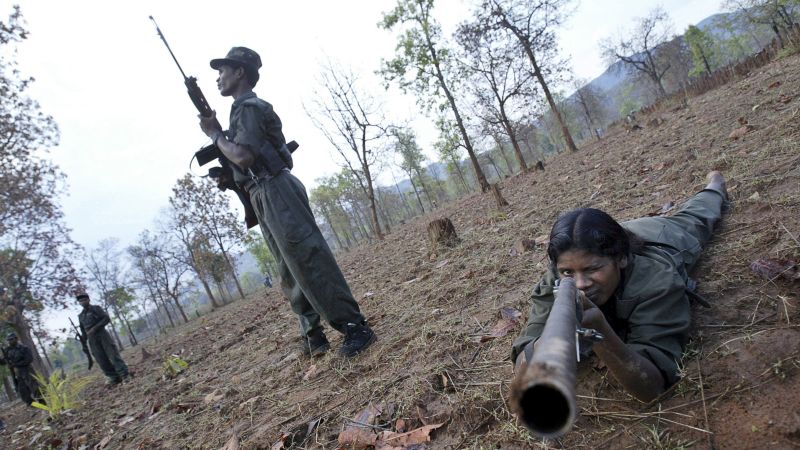
Table of Contents
The End of an Ideological Epoch
Papa Rao emerged from the dense foliage of central India wearing a faded checkered shirt and scuffed sports shoes, a rifle slung over his shoulder and a $26,000 bounty on his head. Behind him followed a small troop of men and women carrying L1A1 and Lee-Enfield rifles—weapons that are effectively museum pieces in the age of drone warfare and precision strikes. This was not a tactical retreat, but a surrender.
For decades, the Naxalite movement—India’s Maoist insurgency—represented one of the most persistent internal security threats to the world’s largest democracy. At its zenith nearly 20 years ago, the rebels controlled a swath of territory in the “Red Corridor” roughly the size of Indiana. Today, the revolution is in its death throes, not just because of military pressure, but because the material and technological conditions that birthed it have evaporated.
The Technological Asymmetry of the Jungle
The Maoist strategy, rooted in the teachings of Zedong, relied on surprise, mobility, and a deep integration with the marginalized Adivasi (tribal) communities. For years, the rugged terrain of states like Chhattisgarh provided a natural fortress against the Indian state. However, the security landscape has shifted fundamentally. The deployment of sophisticated signals intelligence (SIGINT), satellite imagery, and unmanned aerial vehicles (UAVs) has stripped the insurgents of their primary advantage: invisibility.
Security forces have recently neutralized a string of high-ranking Maoist commanders, utilizing a combination of intelligence-led operations and advanced tracking technology. This precision has created a ripple effect through the rank-and-file. When the leadership is systematically erased and the jungle is no longer a sanctuary, the incentive to lay down arms becomes overwhelming.
Connectivity as a Counter-Insurgency Tool
Beyond the kinetic warfare, a quieter but more potent transformation is occurring. The insurgency thrived on isolation—both geographic and informational. In the past, the Naxals were the sole providers of “justice” and administration in remote villages, filling a vacuum left by a negligent state.
The rapid expansion of mobile connectivity and digital infrastructure into rural India has broken this monopoly. As smartphones and cheap data penetrate the deepest reaches of the Red Corridor, the narrative of a classless utopia is competing with the reality of a booming capitalist economy. The “mainstreaming” of these regions is not just about roads and bridges, but about the digital integration of the rural poor into the national economy.
Sukhmati Dhruv, a former insurgent who joined in her teens to escape poverty and forest department corruption, recalls a time when the movement was the only alternative. But for the new generation, the appeal of a 20th-century guerrilla war is dwarfed by the aspirations of a 21st-century digital society. The ruling government is leveraging this shift, pairing security crackdowns with developmental projects that prioritize connectivity.
The Ritual of Surrender
The surrender ceremonies have become highly choreographed events. In March 2026, Papa Rao and 17 comrades were ushered onto a stage in Chhattisgarh, where their antiquated weapons were displayed like exhibits. In a symbolic gesture of realignment, each former rebel was handed a rose and a copy of the Indian constitution.
This transition marks more than just the end of a conflict; it signals the final collapse of a global revolutionary movement that once sought to challenge capitalism across Asia. While the Naxals once found approval in the Peking Review and were viewed as a significant Cold War proxy, they have been rendered obsolete by the very forces of modernization they sought to overthrow.
As the Indian state continues to integrate these remote frontiers, the Red Corridor is fading. The rebellion, once fueled by the desperation of the marginalized, is being replaced by a state-driven push toward a digitized, centralized authority where the rifle is no longer the primary tool for social mobility.