Nature’s Own Biocontrol: New ‘Killer Fungus’ Identified as Natural Weapon Against Invasive Moss
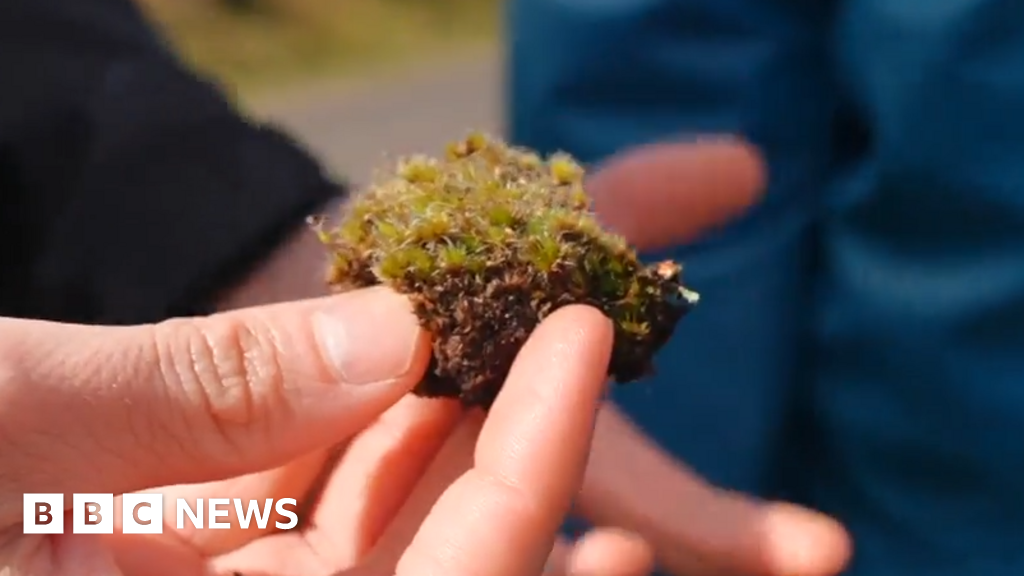
Table of Contents
A Natural Counter-Offensive in the British Highlands
In a rare instance of an ecosystem fighting back against biological invasion, researchers have identified a new species of fungus that is systematically dismantling one of Britain’s most aggressive plant invaders. The fungus, colloquially termed ‘moss die-back,’ targets the heath-star moss, an invasive species that has spent decades suffocating native flora across the UK’s hillsides, sand dunes, and peatlands.
The discovery was not the result of a planned laboratory experiment, but rather a moment of serendipity. Dr. George Greiff, a researcher at Amgueddfa Cymru (National Museum Wales), first noticed decaying patches of moss while walking along the cliffs of the Isle of Wight four years ago. What initially appeared to be random decay revealed itself to be a pattern—circular ‘fairy rings of death’ where the invasive moss had been completely obliterated.
The Mechanics of the Die-Back
The heath-star moss, believed to have arrived from the Southern Hemisphere in the 1940s, became a dominant ecological force by the 1990s. Its ability to reproduce rapidly via spores allows it to outcompete native mosses, which serve as the critical foundation for temperate rainforests and carbon-storing peatlands. By creating a monoculture, the heath-star moss effectively erases the biodiversity required for insects, mollusks, and other native plants to thrive.
The newly identified fungus operates as a potent biological control. Under microscopic analysis at the Amgueddfa Cymru museum, the fungus appears as a candy-floss-like structure that clings to the moss stem and penetrates the cellular walls, leading to rapid necrosis. Through extensive DNA sequencing, Greiff and his collaborators in the UK and France determined that the pathogen is a close relative of the ash die-back fungus—the same aggressive organism responsible for the loss of approximately 80 million ash trees across Britain.
Strategic Implications for Biodiversity
The primary concern with introducing or discovering a powerful plant-killing fungus is the risk of host-jumping. If a fungus is too generalist, it could devastate the very native species researchers are trying to protect. However, Greiff’s current analysis suggests a high level of specificity; the fungus primarily targets the heath-star moss, with only limited impact on one other related species. This narrow host range makes it an ideal natural biocontrol agent.
The ecological impact is already visible in the field. In the Bannau Brycheiniog national park in south Wales, areas previously smothered by the invasive moss are now seeing the return of baby heather plants. As the fungus clears the ‘moss carpet,’ it opens physical space and nutrient pathways for native vegetation to reclaim the soil.
The Value of Autonomous Biological Control
Traditionally, the management of invasive species in the UK—such as the North American grey squirrel or Japanese knotweed—requires expensive, human-led interventions. These range from chemical treatments to resource-intensive contraceptive programs. The emergence of a native-adapted fungus provides a scalable, low-cost alternative that operates without human interference.
Dr. Nathan Smith, Head of Plant and Earth Science at the museum, is now utilizing the UK’s oldest moss collections—some dating back to the 1880s—to trace the fungus’s evolutionary timeline. By analyzing historical samples, the team hopes to determine if the fungus is a native species that adapted to the invader or a co-invader that arrived later.
With one in six species in the UK currently at risk of extinction, the identification of a natural mechanism to halt habitat destruction provides a critical data point for conservationists. While further research is required to confirm the fungus’s long-term safety across all native bryophytes, the ‘moss die-back’ represents a rare victory for indigenous biodiversity in the face of global biological homogenization.