Asus Pushes the Thermal Ceiling: ROG Strix Scar 18’s 320W Power Target and 4K Mini-LED Ambitions
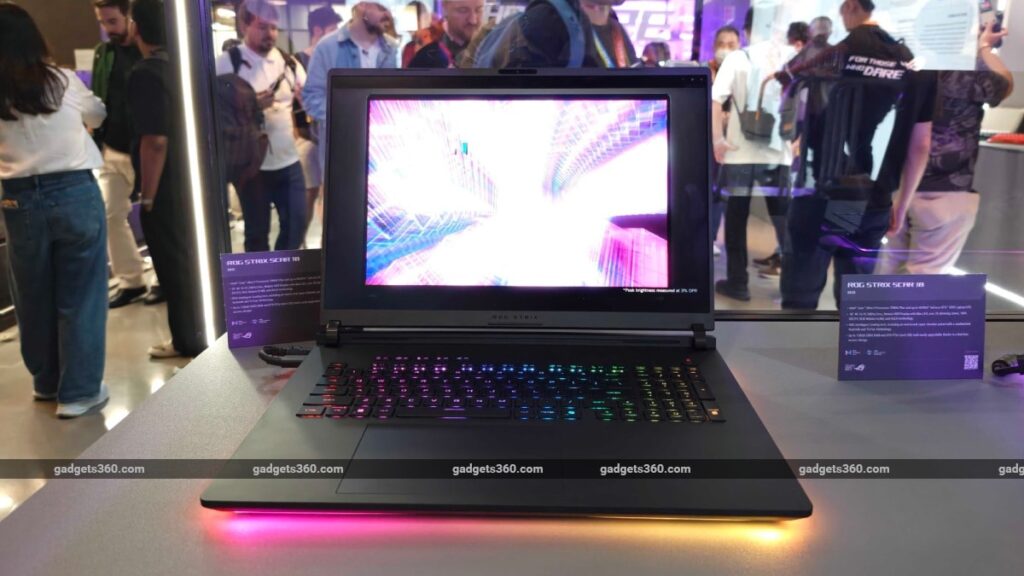
Table of Contents
The Brute Force Approach to Mobile Gaming
At Computex 2026, Asus didn’t just show off a new laptop; they showcased a statement of intent regarding the limits of portable power. The 2026 iteration of the ROG Strix Scar 18, which first surfaced in brief May announcements, has finally been put under the spotlight, revealing a machine designed for one specific purpose: eliminating the compromise between a desktop rig and a laptop.
The headline figure isn’t just the hardware, but the power delivery. Asus is targeting a total system power budget of up to 320W. To put that in perspective, that is a staggering amount of energy to manage in a chassis that still needs to be portable. This overhead is necessary to feed the beast inside—a combination of the Intel Core Ultra 9 290HX Plus and the Nvidia GeForce RTX 5090 Laptop GPU. While the industry has been pivoting toward ‘efficiency’ and ‘AI-integrated’ silicon, the Scar 18 remains committed to raw, unadulterated wattage.
A Display That Outclasses the Competition
While the internals provide the horsepower, the 18-inch ROG Nebula HDR display is where the Scar 18 attempts to distance itself from other flagship 18-inch offerings. We aren’t just looking at a high refresh rate; this is a 4K (3,840×2,400) mini-LED panel that manages to hit 240Hz. Historically, laptop manufacturers have forced a choice between resolution (4K) and speed (240Hz), but Asus is pushing both simultaneously.
The technical specifics of the panel suggest a professional-grade tool masquerading as a gaming screen. With over 2,000 local dimming zones, the display can achieve a peak HDR brightness of 1,600 nits, ensuring that deep blacks don’t bleed into bright highlights—a common struggle for traditional IPS panels. The addition of AGLR (Anti-Glare Low Reflection) technology and a VESA ClearMR 11000 rating suggests that Asus is targeting a wider range of lighting environments, moving beyond the darkened bedroom of the typical gamer.
Further enhancing motion clarity is the ROG Nebula ELMB technology, which now includes eight-zone strobing. This is a critical inclusion for competitive titles where ghosting can be the difference between a win and a loss, though its utility in a 4K environment is a bold engineering choice given the massive pixel density.
Solving the Heat Equation
Pushing 320W of power creates a thermal nightmare. To prevent the Core Ultra 9 from throttling into oblivion, Asus has overhauled the cooling architecture. While specific fan counts and heat pipe diameters weren’t detailed in a spec sheet, the physical presence of the chassis suggests an expanded vapor chamber and a more aggressive airflow design. This thermal headroom is what allows the RTX 5090 to maintain its boost clocks without the dreaded ‘performance dip’ seen in thinner ‘Studio’ laptops.
Interestingly, Asus is leaning into the ‘enthusiast’ identity by providing tool-less access for hardware upgrades. In an era where RAM is increasingly soldered and SSD slots are shrinking, the Scar 18 treats its user like a PC builder. This accessibility, combined with Wi-Fi 7 support, ensures the machine won’t be obsolete by the time the RTX 60-series arrives.
Finished in a muted ‘Off Black,’ the Scar 18 avoids the garish aesthetic of early 2010s gaming gear, opting instead for a look that suggests professional power. It remains a niche machine—too heavy for a commute, too expensive for a casual user—but as a benchmark for what is possible in 2026, it is an impressive, if slightly terrifying, piece of hardware.


