Google’s ‘Agentic’ Pivot: The Quiet Death of the App Interface
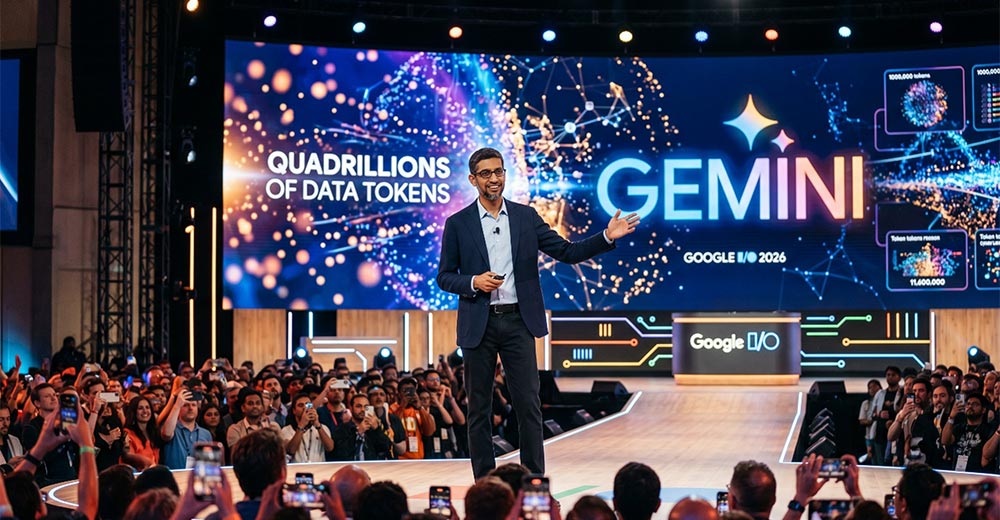
Table of Contents
The End of the Icon Grid
For nearly two decades, the primary interaction model for mobile computing has been the grid of colorful icons. You find a task, you find the app, you open the app, and you navigate its specific UI. But following the latest reveals at Google I/O 2026, that era is looking increasingly like a legacy system. Google isn’t just adding AI to its apps; it’s attempting to make the concept of a ‘standalone app’ irrelevant.
The core of this shift is the transition from generative AI—which simply provides information—to agentic AI, which executes actions across disparate software environments. During the keynote, the demonstration of Gemini’s new orchestration layer showed the AI navigating a flight booking, a calendar update, and a restaurant reservation not by opening three separate apps, but by operating in a unified, headless layer that abstracts the interface away from the user.
The Orchestration Layer vs. The App Store
In a technical breakdown of the new API updates, Google is pushing a framework where apps are no longer destinations, but rather a set of capabilities (or ‘skills’) that the AI agent can call upon. In this model, the developer’s job shifts from designing a pixel-perfect user interface to optimizing their service for AI discovery and execution.
This creates a precarious situation for mid-tier app developers. If a user no longer needs to enter the Uber app to request a ride because Gemini handles the logistics via a background API, the developer loses more than just screen time—they lose the ability to serve ads, upsell premium subscriptions, and maintain brand loyalty through a curated UX. We are seeing a move toward a ‘headless’ ecosystem where the AI is the only UI the user ever sees.
The Friction of the ‘Walled Garden’
This pivot isn’t without significant hurdles. For this ‘app-less’ future to work, Google needs deep integration from third parties who may be wary of handing over total control of the user journey to Gemini. While Google’s own suite—Docs, Gmail, Maps—is already seamlessly integrated, the success of this strategy depends on whether companies like Shopify or Airbnb are willing to become mere back-end providers for a Google-controlled agent.
There is also the looming question of monetization. The current App Store model relies on visibility and engagement. If the agent handles the transaction, the traditional ‘conversion funnel’ disappears. Industry analysts suggest this could lead to a new era of API-based licensing fees, where Google pays developers per successful ‘agent action,’ though the specifics of this financial model remain opaque.
A New Paradigm for Interaction
The implications extend beyond just how we book hotels. It changes the fundamental nature of software design. When the interface is dynamic and generated on the fly by an LLM, the ‘static’ app becomes a bottleneck. We are moving toward a world of Just-in-Time UI, where a small piece of a functional interface appears only for the second the user needs to confirm a payment or sign a document, then vanishes back into the agentic flow.
Google is betting that the path of least resistance—removing the need to switch between apps—will outweigh the desire for curated brand experiences. If they succeed, the home screen of the smartphone will cease to be a map of tools and instead become a single, omnipotent entry point to the digital world.


