Acer’s TravelMate P6 14 AI Challenges the Physics of Ultra-Light Laptops
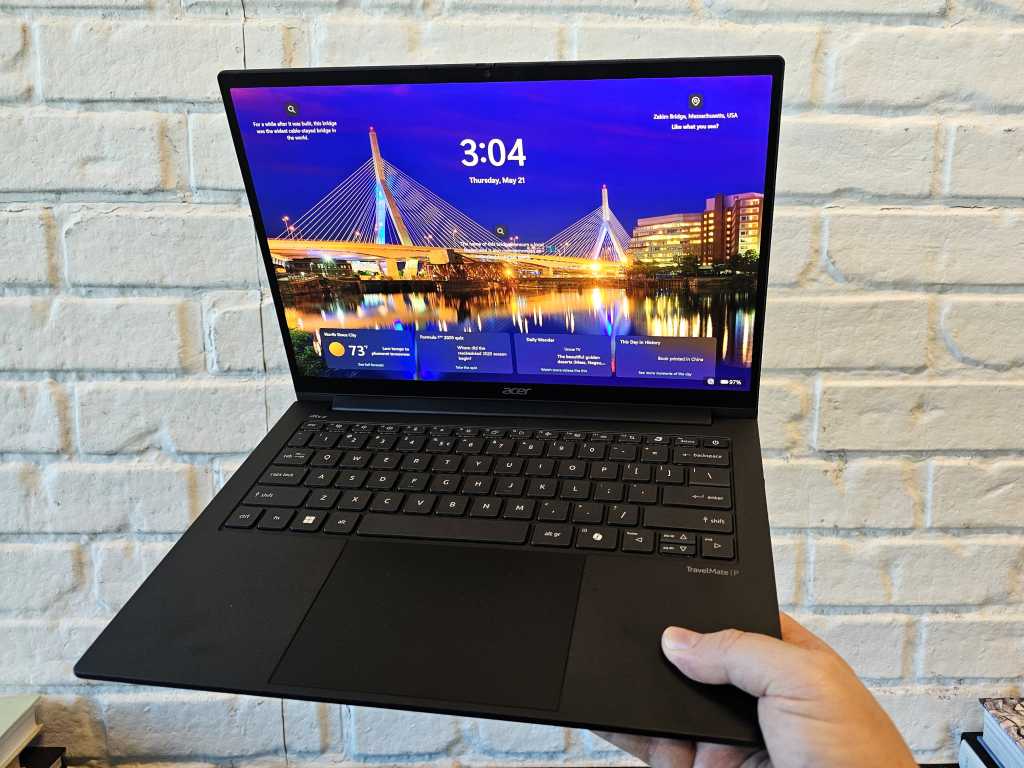
Table of Contents
The disappearing act of laptop weight
For years, the trade-off in the executive travel laptop market has been a zero-sum game: you either carry a lightweight machine with a battery that dies by lunchtime, or a powerhouse that requires a dedicated shoulder strap to carry. Acer is attempting to break that cycle with the TravelMate P6 14 AI, a device that manages to weigh in at just 2.11 pounds while claiming a staggering 30 hours of battery life.
Holding the device feels less like holding a piece of professional hardware and more like holding a prototype prop. While the difference between a two-pound and three-pound laptop is negligible when tucked inside a backpack, the tactile experience of the P6 14 AI suggests a fundamental shift in how Acer is approaching chassis engineering. The secret lies in a strategic mix of carbon fiber and a magnesium-aluminum alloy, allowing the frame to remain rigid without the bulk of traditional aluminum unibodies.
The Panther Lake efficiency play
The hardware core is where the actual magic happens. The TravelMate P6 14 AI is powered by Intel’s latest Core Ultra Series 3 processors, codenamed Panther Lake. Depending on the configuration, users can opt for the Core Ultra 5 325 up to the high-end Core Ultra X7 368H. The ‘X7’ designation is particularly notable, as it signals the inclusion of Intel’s more powerful integrated GPU, theoretically pushing the machine into the realm of light gaming and heavy creative work.
However, there is a caveat regarding thermal headroom. In similar thin-and-light implementations—such as the latest Surface Laptop 8—Panther Lake chips have occasionally hit thermal ceilings, leading to performance throttling. Given the ultra-slim profile of the TravelMate, it is likely that Acer has prioritized sustained efficiency and low heat over raw peak performance, a trade-off that makes sense for a machine designed for airports and boardrooms rather than rendering farms.
Deconstructing the ’30-Hour’ claim
As with most manufacturer claims, the 30-hour battery life requires some context. Acer’s marketing centers on the non-touch 1920×1200 panel configuration. In a video rundown test, this specific model hit the 30-hour mark. For those opting for the premium 3K OLED or IPS touchscreens, that number drops to 23.5 hours. While lower than the headline figure, 23 hours remains comfortably above the industry average for 14-inch productivity laptops.
The battery itself is a 71Wh cell. While not the largest available—the legal limit for aircraft is 99Wh—it is remarkably dense for a chassis this light. Acer’s decision to stop at 71Wh likely prevents the device from crossing the 2.2-pound threshold, striking a balance between endurance and portability. All three screen options feature variable refresh rate (VRR) support, which is critical for extending longevity by scaling down the hertz when static content is displayed.
Real-world productivity and ergonomics
Beyond the battery, the P6 14 AI is a classic business tool. The keyboard remains a strong suit for Acer, providing a tactile, comfortable typing experience that doesn’t feel cramped despite the slim chassis. However, the port placement reveals a slight oversight in ergonomics: both Thunderbolt 4 ports are situated on the left side. For left-handed users or those with a crowded desk, this creates a localized ‘cable jam’ that can be frustrating during a long work session.
Regarding visibility, the OLED option is the clear winner, boasting a 500-nit brightness and a dedicated matte coating to kill reflections. The IPS and non-touch versions lag slightly at 400 nits, though they remain sufficient for most indoor environments.
While Acer has yet to announce regional pricing ahead of the August launch, the specs suggest a premium tier. With options for up to 60GB of soldered LPDDR5X memory and 1TB of PCIe Gen 4 NVMe storage, this is clearly aimed at the high-end enterprise market where weight is the primary pain point.