SpaceX’s Secret ‘Starfall’ Project Aims to Industrialize Space Manufacturing and Cargo
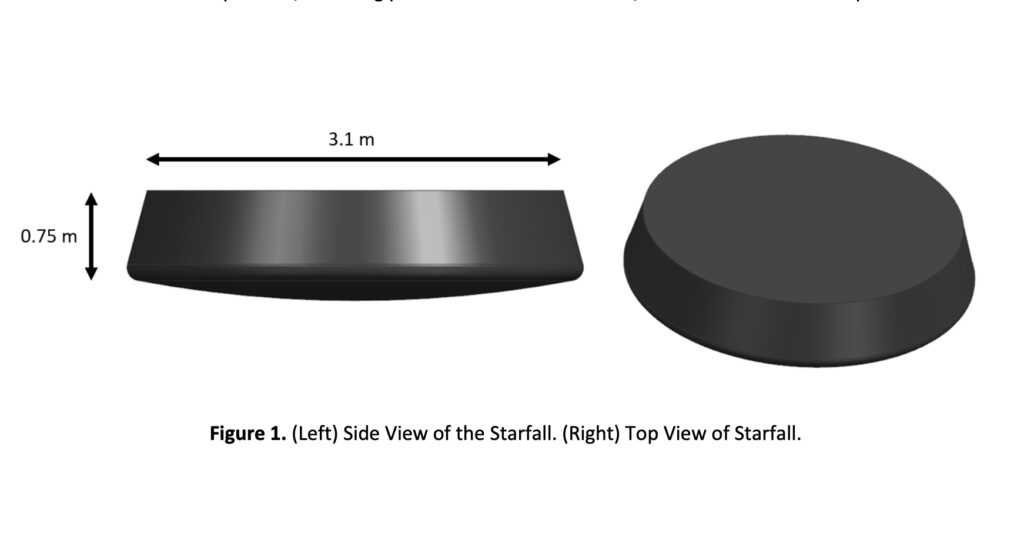
Table of Contents
The FAA Leak That Revealed ‘Starfall’
SpaceX is notoriously tight-lipped about its mid-term development roadmaps, but federal regulatory filings have a habit of spilling the secrets. Recent documents from the Federal Aviation Administration (FAA) have shed light on a project codenamed “Starfall,” an uncrewed reentry vehicle designed to bridge the gap between orbital manufacturing and terrestrial delivery.
The FAA recently issued an environmental assessment and a subsequent record of decision approving initial test flights for the Starfall capsules. While the agency didn’t publicize these findings immediately, they surfaced in a late-May “FAA Space Update,” confirming that the project is moving from the conceptual phase into active atmospheric testing.
Starfall isn’t just a single spacecraft; it is envisioned as a scalable logistics system. According to the FAA documents, the goal is to create a “self-sustaining manufacturing economy in space,” treating orbital environments—characterized by vacuum and microgravity—as industrial assets. By offering “return from orbit as a service,” SpaceX intends to move beyond merely being a launch provider to becoming the primary logistics layer for the next generation of space-based factories.
Technical Specs: A Disk-Shaped Logistics Hub
Unlike the iconic conical shape of the Dragon capsules, the Starfall vehicle is described as disk-shaped, measuring 3.1 meters in diameter and only 0.75 meters in height. It is a minimalist design stripped of the complexities required for human life support or autonomous orbital maneuvering.
The vehicle is split into two primary components: a 1,400kg aluminum top plate wrapped in thermal protection and a 700kg carbon-fiber heat shield. Notably, the craft lacks a primary propulsion system for deorbiting, relying instead on cold-gas attitude control thrusters to maintain orientation during its descent. This indicates that the launch vehicle—likely a Starship or Falcon 9—will be responsible for the precise burn required to push the capsule back into the atmosphere.
Once in the atmosphere, Starfall utilizes a sequence of pilot, drogue, and main parachutes to slow its descent, jettisoning the heat shield shortly before splashing down in the Pacific Ocean. The FAA has specifically approved two reentries in a zone roughly 1,300 kilometers off the coasts of California and Mexico, with SpaceX utilizing recovery boats to retrieve the hardware.
Disrupting the ‘Rideshare’ Ecosystem
The most significant implication of Starfall is the potential for SpaceX to cannibalize the business models of its own customers. Currently, a burgeoning sector of startups focuses exclusively on the “return” leg of space missions—developing specialized capsules that launch via SpaceX rideshares and return to Earth with manufactured goods or scientific data.
Companies like Varda Space Industries have already proven this model, flying multiple W-series spacecraft on SpaceX missions to perform microgravity research. Other players, including Inversion and Atmos Space Cargo, are attempting to carve out a niche in high-speed cargo return. However, the FAA documents reveal that SpaceX is planning a “mass producible” version of Starfall capable of carrying up to 1,000 kilograms of payload.
By offering a standardized, high-capacity reentry vehicle, SpaceX could effectively move from being the “bus driver” for these companies to being their direct competitor. If SpaceX can provide the launch, the orbital loitering, and the reentry as a bundled, scalable service, the value proposition for standalone reentry startups diminishes significantly.
Point-to-Point Logistics
Beyond manufacturing, the FAA filings explicitly mention “point-to-point delivery of critical cargo through space on rapid timelines.” This aligns with Elon Musk’s long-standing vision of using Starship for earth-to-earth transport, but Starfall suggests a more modular approach. Rather than sending a massive Starship to deliver a small package, SpaceX could launch a cluster of Starfall disks, delivering diverse payloads to various global locations with surgical precision.
While the current FAA approval is limited to two test flights, the involvement of contractor KBR in assessing sonic booms suggests that SpaceX is already thinking about the noise profiles and regulatory hurdles of operating these vehicles as a frequent, commercial service. The project marks a pivot toward the “industrialization” of low Earth orbit, transforming it from a place of exploration into a hub of commercial production.