Blue Origin’s New Glenn Disaster: Why a Single Static-Fire Failure Cripples the U.S. Lunar Timeline
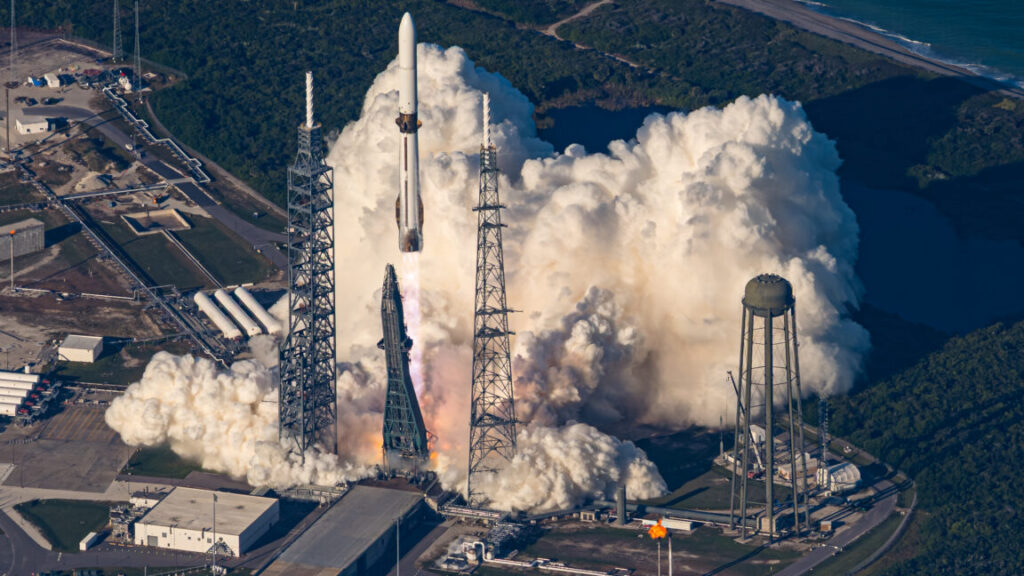
Table of Contents
A Spectacular Setback at LC-36A
The night sky over Florida was illuminated Thursday by a massive fireball as Blue Origin’s New Glenn rocket detonated during a critical static-fire test. While the company has not yet released a formal forensic report, the scale of the explosion was visible for miles, sending debris across the surrounding coastal scrubland and into the Atlantic. For Jeff Bezos’ aerospace venture, the event is more than a technical glitch; it is a structural catastrophe.
The most immediate and pressing concern is the state of Launch Complex 36A (LC-36A). Unlike the iterative ‘fail fast’ approach championed by SpaceX, Blue Origin has treated New Glenn as a mature design, pushing the vehicle through exhaustive ground testing before flight. Consequently, the destruction of the launch mount and surrounding infrastructure represents a devastating loss of capital and time. Multiple sources confirm that the damage to the pad is significant. Given the complexity of the lightning towers and fueling systems, industry insiders suggest a 15-month rebuild is the best-case scenario, leaving Blue Origin without a primary launch site for its heaviest vehicle.
The Heavy-Lift Monopoly Returns
This failure creates a precarious vacuum in the U.S. domestic launch market. With United Launch Alliance’s Vulcan rocket currently sidelined due to its own set of anomalies, the United States has effectively returned to a state of total reliance on SpaceX. The Falcon 9 and Falcon Heavy now stand as the only operational medium- and heavy-lift options for national security and commercial payloads.
There is also a deeper technical worry: the BE-4 engine. Early indications suggest the anomaly originated in the booster’s central engine. If the failure is systemic to the BE-4 design, the ripples will extend to ULA’s Vulcan, which also relies on these engines. A design flaw here wouldn’t just delay New Glenn; it would keep the Vulcan grounded, further cementing SpaceX’s monopoly on the American orbital gateway.
Moon Base I and the Artemis Ripple Effect
The fallout extends beyond Earth’s orbit to the lunar surface. NASA recently entrusted Blue Origin with a pivotal role in the ‘Moon Base I’ mission, awarding the company $280.4 million to deliver two lunar rovers by 2028 via the Blue Moon Mark 1 lander. The Mark 1 was specifically designed to be launched aboard a New Glenn vehicle.
While SpaceX’s Falcon Heavy or ULA’s Vulcan theoretically possess the lift capacity to carry the Mark 1, the logistics are fraught. The Mark 1 is powered by the BE-7 engine, utilizing a liquid hydrogen and liquid oxygen propellant mix that may be incompatible with the kerosene-based upper stages of the Falcon family. Moreover, the competitive friction between Bezos and Musk makes a partnership of this nature unlikely.
The Artemis III and IV Crisis
The timeline for crewed lunar exploration is now in jeopardy. NASA’s Artemis III mission, slated for 2027, envisions a rendezvous in low-Earth orbit between the Orion spacecraft and the Human Landing Systems (HLS) from both SpaceX and Blue Origin. With the New Glenn fleet grounded and the launch pad in ruins, the prospect of a Blue Moon lander being flight-ready within the next 18 months has vanished.
This forces NASA into a difficult strategic choice: delay the entire Artemis III window or pivot to a Starship-only landing mission. For Artemis IV, the complications are even more severe. Even if the lander hardware remains intact, the lack of a reliable, crew-rated heavy-lift vehicle means the 2028 landing targets are now virtually unreachable for Blue Origin.
A Shift in Strategy
For years, Blue Origin operated under a philosophy of precision and secrecy, avoiding the public ‘explosive learning’ phase that defined the early days of Starship. By attempting to arrive at the finish line with a perfected product, they have left themselves with no margin for error. SpaceX can blow up a prototype and iterate in weeks; Blue Origin has blown up its primary infrastructure and may be waiting over a year to try again.