Lenovo’s ThinkStation P4 Targets the ‘Prosumer’ Gap With New Compact Workstation
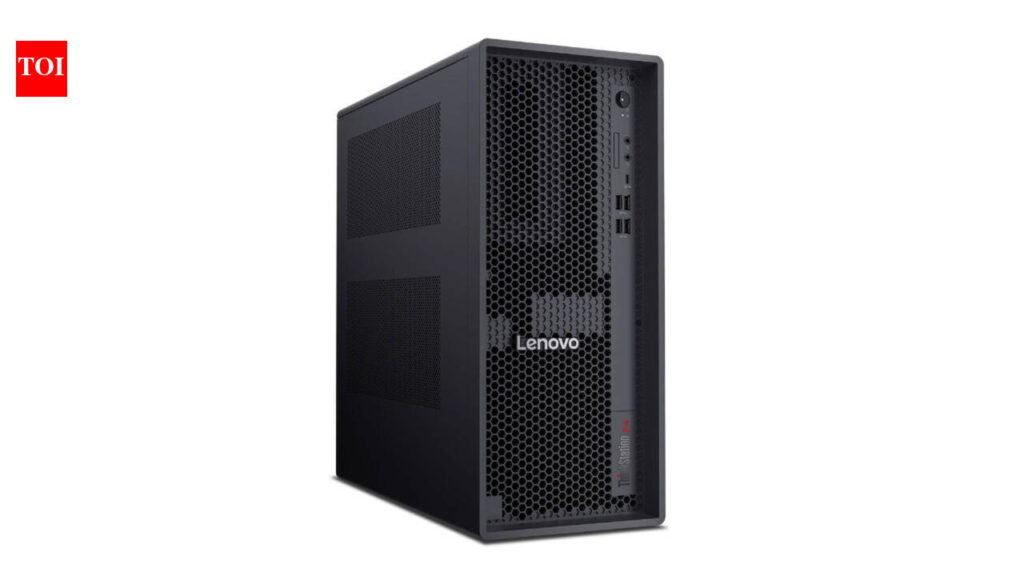
Table of Contents
Bridging the Gap Between Desktop and Tower
Lenovo has officially unveiled the ThinkStation P4, a compact workstation designed to occupy the increasingly crowded space between high-end consumer desktops and massive, rack-mounted enterprise towers. While the company’s larger P-series machines are built for data centers and heavy industrial rendering, the P4 is aimed squarely at the ‘prosumer’—architects, 3D modelers, and data analysts who need professional-grade reliability but lack the physical space for a full-sized chassis.
The P4 is not merely a shrunken version of its larger siblings. It represents a tactical shift in how Lenovo handles thermal management in small form factors. The chassis features a redesigned airflow system that allows it to house higher-wattage components without the aggressive fan noise typically associated with compact workstations.
Hardware Specifications and ISV Certification
At the heart of the ThinkStation P4 is a focus on stability. Unlike consumer gaming PCs, the P4 comes with a suite of ISV (Independent Software Vendor) certifications. This means the hardware is specifically tuned and tested to run industry-standard software like AutoCAD, SolidWorks, and Adobe Premiere Pro without the driver crashes or instability that often plague non-certified hardware.
Depending on the configuration, the P4 leverages the latest Intel Xeon W-series processors, providing the multi-core performance necessary for heavy multitasking and complex simulations. Memory support is equally robust, offering ECC (Error Correction Code) RAM, which prevents the system crashes that can occur during long-term renders—a critical feature for professionals whose work cannot afford a spontaneous reboot mid-process.
On the graphics front, Lenovo has opted for NVIDIA RTX Ada Generation GPUs. These cards are optimized for precision and reliability over raw frame rates, making them the preferred choice for GPU-accelerated computing and AI model training on the edge.
The ‘Right-Sized’ Approach to Professional Gear
The move toward more compact, modular workstations reflects a broader trend in professional environments. As hybrid work becomes permanent for many engineering and design firms, the demand for ‘office-grade’ power in ‘home-grade’ footprints has spiked. The ThinkStation P4 addresses this by offering a modular tool-less chassis, allowing users to swap drives or upgrade RAM without needing a degree in electrical engineering.
Critics of small-form-factor workstations often point to limited expandability. Lenovo attempts to mitigate this by providing a flexible array of I/O ports and PCIe slots that, while fewer than those in the P6 or P8 series, are sufficient for the vast majority of creative professionals. The inclusion of high-speed Thunderbolt 4 ports ensures that the P4 can act as a hub for high-resolution external displays and lightning-fast external storage arrays.
Market Positioning and Availability
The ThinkStation P4 enters a market where it will compete directly with the Dell Precision 3000 series and HP’s Z2 Mini. Lenovo’s edge here is the balance of thermal headroom and the reliability of the Think brand. By positioning the P4 as a dependable ‘workhorse’ rather than a niche luxury item, Lenovo is betting that the mid-market professional is tired of compromising between a bulky tower and a limited laptop.
Detailed pricing varies by region and specific hardware configuration, but the P4 is expected to begin shipping to enterprise customers and prosumers globally over the coming weeks. For those transitioning from consumer hardware to professional workstations, the P4 serves as a logical entry point into an ecosystem where uptime is valued over overclocking.


