The ‘Good’ Killer Fungus: A New Biological Weapon Against Britain’s Invasive Moss
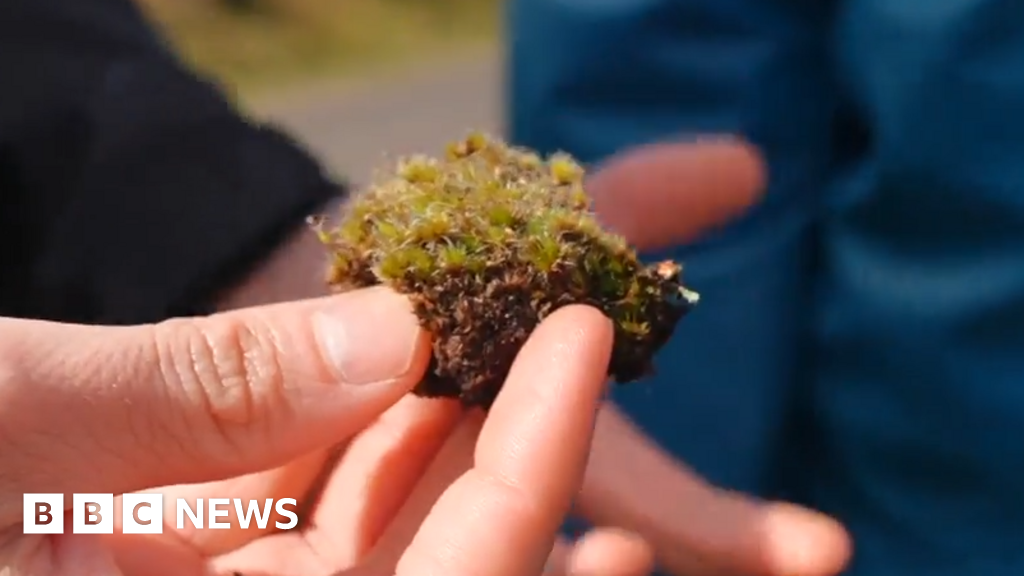
Table of Contents
A Rare Ecological Counter-Attack
In the quiet corners of the British countryside, a biological war is being waged at a microscopic scale. For decades, the heath-star moss—an aggressive, non-native invader—has systematically dismantled native UK habitats, choking out indigenous species from sand dunes to urban tarmac. But a new discovery by researchers suggests the environment may have developed its own weapon.
Dr. George Greiff, a researcher at the Amgueddfa Cymru museum in Cardiff, has identified a previously unknown species of fungus that acts as a precision strike against this invasive moss. The fungus, which Greiff has termed ‘moss die-back,’ creates distinct ‘fairy rings of death’—brown, decaying circles of moss that signal the collapse of the invader’s grip on the land.
The discovery began four years ago on the cliffs of the Isle of Wight, where Greiff noticed unusual patches of decaying moss. While initial samples left him puzzled, continued sightings across the UK led to a collaborative effort with scientists in France and the UK to sequence the organism’s DNA and understand its mechanism of action.
The Biology of the ‘Goodie’ Fungus
To the casual observer, a ‘killer fungus’ sounds like an ecological nightmare. However, in the context of invasive species management, this organism is what biologists call a ‘goodie.’ The heath-star moss, believed to have arrived from the southern hemisphere around the 1940s, exploded in population by 1990, displacing over 1,000 types of native mosses that form the critical backbone of carbon-storing peatlands and rare temperate rainforests.
Under a microscope, the moss die-back fungus reveals a violent efficiency. It clings to the moss stem, expanding like candy floss and penetrating the cell walls of the plant. This process doesn’t just kill the moss; it clears the physical space for native flora to return. In the Bannau Brycheiniog national park in south Wales, Greiff has already observed baby heather plants emerging in the gaps left by the decaying moss—a tangible sign of habitat recovery.
A Genetic Link to Forest Die-back
The technical profile of the fungus is particularly intriguing. DNA sequencing reveals it is a close relative of the ash die-back fungus, the notorious pathogen responsible for the death of up to 80 million ash trees across Britain. This genetic relationship explains the fungus’s potency, but for now, the damage appears contained. Current analysis suggests the fungus primarily targets the heath-star moss, with only limited impact on one other moss species.
Greiff believes this may be an instance of a native British fungus adapting to a new host. If confirmed, it represents a rare example of an ecosystem ‘fighting back’ naturally, rather than relying on human intervention.
Scaling Biological Control
The implications for conservation are significant. Traditionally, controlling invasive species is a resource-heavy endeavor. From the costly efforts to manage Japanese knotweed to the initiatives aimed at reducing grey squirrel populations through contraception, human-led biological control is often expensive and imperfect.
“To have a natural biological control agent doing it for us is really valuable,” Greiff explains. Manual removal of the heath-star moss is largely ineffective due to its rapid spore dispersal; a self-propagating fungal predator, however, can scale across the landscape without human overhead.
At Amgueddfa Cymru, Dr. Nathan Smith, Head of Plant and Earth Science, is now utilizing the museum’s extensive archives—some dating back to the 1880s—to determine exactly when this fungus appeared. By analyzing historical samples, the team hopes to map the trajectory of the fungus’s evolution and its potential to save the UK’s most depleted biodiversity hotspots.