Colombia’s Presidential Race Heads to Run-off: Hardline Outsider De la Espriella Challenges Leftist Ivan Cepeda
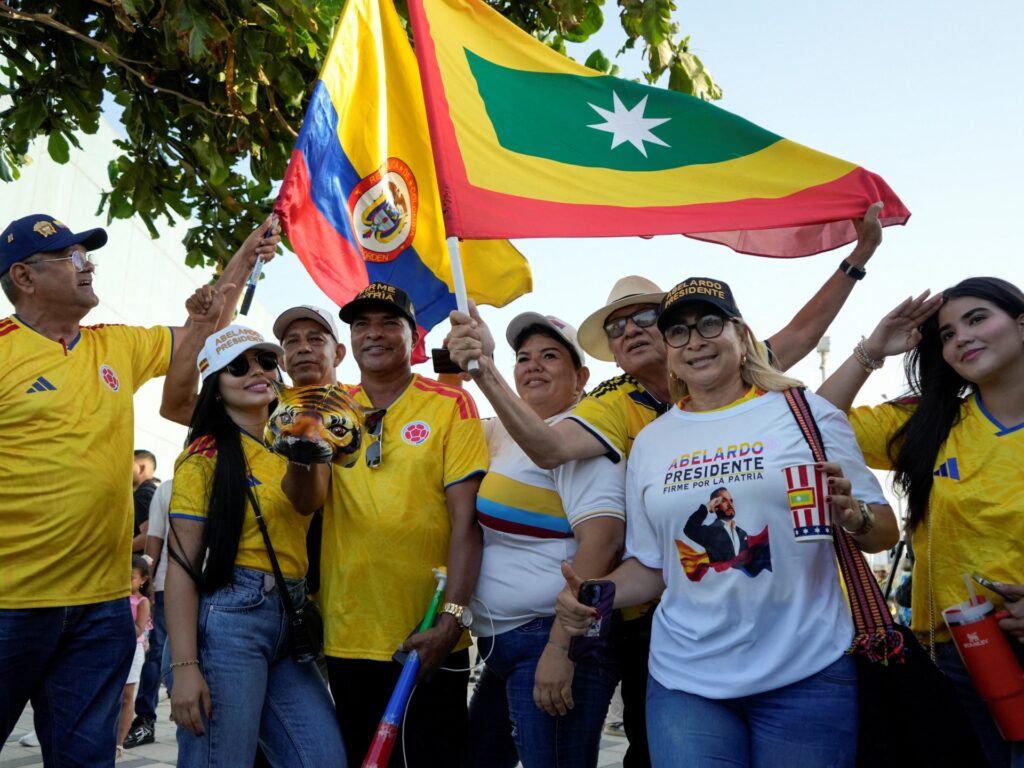
Table of Contents
A Nation Divided: The Path to June 21
Colombia is bracing for a high-stakes presidential run-off after Sunday’s first-round election failed to produce a majority winner, leaving the country split between two fundamentally opposed visions of governance. Abelardo de la Espriella, a far-right businessman and political outsider, and Senator Ivan Cepeda, a stalwart of the left-wing establishment, will face off on June 21 to determine the next leader of the South American nation.
With 99 percent of the votes tallied, de la Espriella has carved out a narrow lead with 43 percent of the vote, totaling more than 10.3 million ballots. Cepeda follows closely at 40 percent, with approximately 9.7 million votes. The result effectively sidelined right-wing Senator Paloma Valencia, who entered the race as a frontrunner but failed to maintain momentum as the electorate polarized around the two extremes.
The gap between the two candidates is more than just numerical; it is a clash of political philosophies that mirrors a broader ideological shift occurring across Latin America. While Cepeda had led several public opinion polls in the final weeks—including a May 24 CNC poll that placed him at 33 percent against de la Espriella’s 30.9 percent—the actual ballot results suggest a surge in support for the right-wing challenger.
The ‘Tiger’ vs. The Institutionalist
Abelardo de la Espriella, nicknamed “The Tiger,” has run a campaign that echoes the populist, anti-establishment strategies of Argentinian President Javier Milei and U.S. President Donald Trump. A lawyer by trade who has never held elected office, de la Espriella’s platform is built on a foundation of hardline security and a direct assault on the existing political class. His “Defenders of the Homeland” party has campaigned on a platform of aggressive deterrence, promising the construction of 10 “megaprisons” to house criminals and insurgents.
His approach to the war on drugs is particularly controversial. De la Espriella has suggested a bombing campaign to disrupt trafficking networks, which critics argue would lead to extrajudicial killings and bypass the judicial process entirely. In a recent statement to the Associated Press, he was blunt about his stance: “The only peace process I believe in is one imposed by the force of arms and the laws of the republic.”
Ivan Cepeda offers a starkly different trajectory. A veteran senator since 2014, Cepeda is closely allied with outgoing President Gustavo Petro. He seeks to preserve and refine Petro’s “Total Peace” framework, which prioritizes negotiated settlements over military escalation. Cepeda’s own history is deeply intertwined with Colombia’s struggle against political violence; his father was assassinated in 1994, a tragedy that helped shape his commitment to human rights and judicial accountability.
The Shadow of the Past
For Cepeda, the struggle is not just ideological but personal and legal. He spent years in a protracted legal battle with former President Alvaro Uribe, accusing the former leader of complicity with right-wing paramilitaries. While the legal aftermath of that dispute was complex—including a Supreme Court investigation into Uribe for witness tampering and a subsequent overturned conviction—it cemented Cepeda as the primary antagonist to the traditional right-wing security state.
However, the “Total Peace” policy Cepeda champions is under fire. Opponents point to a recent increase in regional violence as evidence that negotiation is perceived as weakness by criminal networks. In a recent CNN interview, Cepeda admitted the policy faces “immense challenges,” acknowledging that conversations must yield tangible results to maintain public trust.
The Regional Context and the Run-off
The current climate in Colombia is not an isolated event. A victory for de la Espriella would align Colombia with a growing regional trend where left-wing governments in Chile, Honduras, and Bolivia have recently been replaced by right-wing contenders. This “rightward swing” is often driven by voter frustration over economic instability and persistent insecurity.
The second round presents a significant hurdle for Cepeda. Historically, the right-wing vote tends to consolidate behind a single candidate in a run-off. With the collapse of Paloma Valencia’s campaign, a large portion of those votes is expected to migrate to de la Espriella.
The sheer volume of undecided or disillusioned voters is also notable. Over 650,000 ballots were either left blank or nullified, suggesting a segment of the population remains unconvinced by either the hardline security of “The Tiger” or the negotiated peace of the Historic Pact party.
As the candidates enter the final three weeks of campaigning, de la Espriella has already begun framing the contest as a battle against “tyranny and absolutism,” promising to “make history” on June 21.