SITAEL Bets on Electric Propulsion and Biodiversity to Triple Revenue by 2031
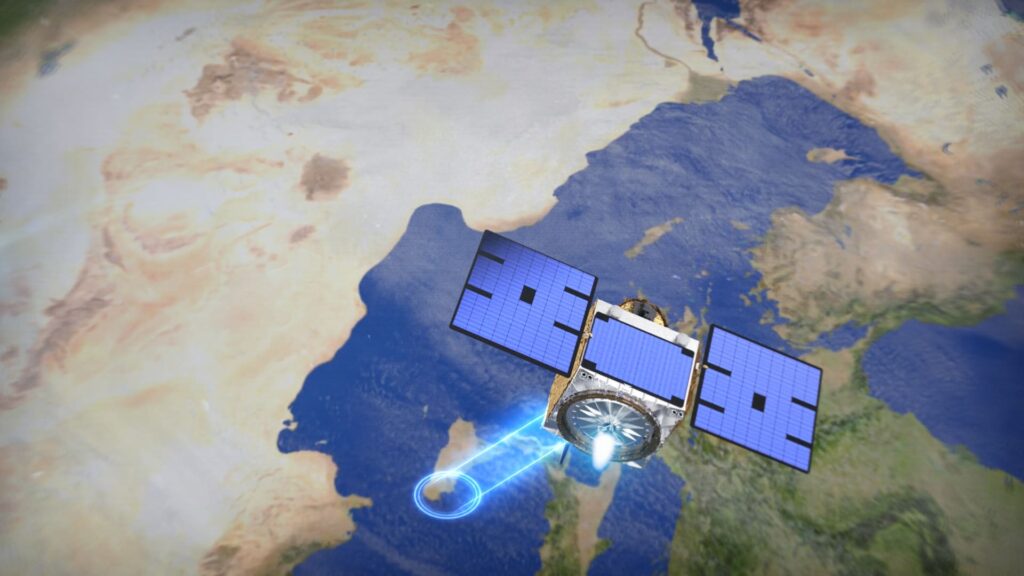
Table of Contents
Industrializing the ‘New Space Cycle’
At the SmallSat Europe conference in Amsterdam, SITAEL, the Italian satellite manufacturer and subsidiary of Angel Holding, laid out a high-stakes roadmap to scale its operations from a specialized boutique provider to a dominant European mission company. The company is targeting a revenue jump from approximately €60 million to €200 million by 2031, a move backed by a current backlog exceeding €150 million.
The strategy isn’t just about chasing contracts; it’s about the industrialization of high-efficiency hardware. While much of the ‘New Space’ era has been defined by rapid prototyping and disposable CubeSats, SITAEL is pivoting toward sustainable, high-performance infrastructure. This includes a significant investment in two primary Italian hubs: a state-of-the-art clean room in Mola di Bari—currently hosting five simultaneous satellite builds—and a dedicated production line for Hall-effect electric propulsion in Pisa, which became operational in July 2025.
The Propulsion Edge: VLEO and Sustainability
SITAEL is positioning itself at the forefront of Very Low Earth Orbit (VLEO) operations. While traditional satellites occupy higher orbits to avoid atmospheric drag, VLEO offers higher-resolution imaging and lower latency. The trade-off is a constant battle against drag that drains fuel quickly.
To solve this, SITAEL is leveraging its NextGen and EMPYREUM platforms alongside a propellantless RAM-EP thruster concept developed with the European Space Agency (ESA). By focusing on electric propulsion, the company is addressing the critical need for orbital management and space sustainability, allowing satellites to maintain low altitudes longer without the weight penalty of traditional chemical propellants.
HiBiDiS: A Pivot to Prime Contracting
The most significant signal of SITAEL’s evolution is its role as prime contractor for the ESA Scout HiBiDiS mission. Scheduled for a 2030 launch, HiBiDiS is not merely a technical exercise but a shift in the company’s business model. By managing the entire mission lifecycle—from platform and payload integration to data processing—SITAEL is moving away from being a component supplier to a full-service mission architect.
HiBiDiS is designed to tackle a specific blind spot in Earth observation: the forest understory. Most current satellites can only see the top of the canopy. Through a partnership with AMOS (providing hyperspectral instrumentation), VITO, and the University of Zurich, the mission will use multi-angular observations to penetrate the canopy and monitor biodiversity resilience in forest ecosystems.
“HiBiDiS is more than a new contract,” says CEO Chiara Pertosa. “It confirms our evolution towards becoming a European mission company, capable of combining platform, payload, integration, data and impact.”
Strategic Expansion and Market Positioning
The growth plan includes a dense launch manifest between 2026 and 2030, featuring the PLATINO 1 and 2 missions, EAGLE-1, and five IRIDE satellites. This pipeline is intended to drive EBITDA from 12% toward a projected 25% by the end of the decade.
Beyond the ESA ecosystem, SITAEL is diversifying its portfolio through a new Memorandum of Understanding (MoU) with Eycore, a Polish provider of Synthetic Aperture Radar (SAR) services. This collaboration focuses on integrating SAR applications with advanced satellite services, allowing SITAEL to enter the high-growth sector of all-weather, day-night Earth observation.
This aggressive expansion puts SITAEL in a direct line for future European governmental architectures, including the European Resilience from Space (ERS) and the IRIS² secure communications constellation. As Europe seeks technological sovereignty in space to reduce reliance on American and Chinese hardware, SITAEL’s vertical integration—covering everything from component-level electronics to mission design—makes it a strategic asset for the continent’s defense and observation goals.