The Orbital Pivot: Why Propulsion is the Invisible Linchpin of the ‘Golden Dome’ Missile Defense Project
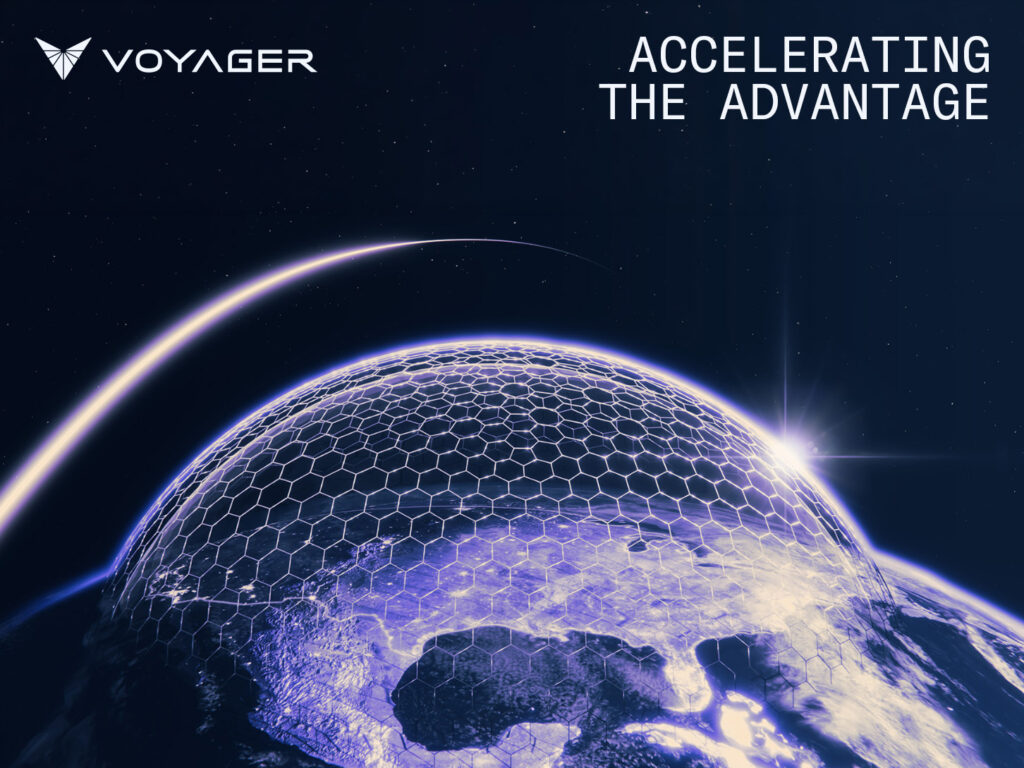
Table of Contents
Moving Beyond the Intercept
For decades, the logic of missile defense has been a linear exercise in three stages: detect, track, and intercept. The focus was almost always on the ‘kill vehicle’—the final piece of hardware that physically neutralizes a threat. However, a new strategic framework dubbed ‘Golden Dome’ is shifting that calculus. Rather than focusing solely on the moment of impact, Golden Dome emphasizes the distributed infrastructure required to make those intercepts possible in a contested environment.
At its core, Golden Dome envisions a massive constellation of thousands of satellites, integrating sensors and interceptors into a cohesive, AI-driven network. This represents a fundamental shift in U.S. space posture, moving toward the deployment of active weapons in orbit supported by space-based data centers. But as the architecture grows in complexity, a critical physical bottleneck has emerged: propulsion.
The Maneuverability Gap
The effectiveness of a distributed constellation is not measured by the number of satellites in orbit, but by their ability to reposition. In a ‘contested’ space environment—where adversary satellites may attempt to jam, spoof, or physically collide with U.S. assets—static orbits are liabilities. To survive, these assets must exhibit persistent maneuverability across both orbital and atmospheric domains.
“There’s a clear signal from the government that they want to tap into commercial innovation for Golden Dome,” says Matt Magaña, president of Space, Defense and National Security at Voyager. According to Magaña, the project is less of a traditional procurement and more of a “strategic thrust” designed to force a leap in the capabilities required to execute the mission.
For interceptors, the requirement is even more stringent. Success is measured in fractions of a second. A vehicle that cannot maintain precise control or adjust its trajectory instantly upon receiving a command from the AI-enabled network is effectively useless, regardless of how advanced its sensors are.
Solving for Scale and Speed
The transition from a conceptual framework to an operational reality requires an industrial base capable of producing high-performance propulsion systems at a tempo previously unseen in the defense sector. Historically, space hardware has been treated as bespoke, high-cost artistry. Golden Dome requires the opposite: commoditized, scalable reliability.
Voyager is attempting to close this gap by integrating controllable solid propulsion and high-efficiency electric systems. Solid propulsion provides the raw thrust needed for rapid kinetic response, while electric propulsion offers the long-term endurance and agility required for satellites to maintain their positions over years of operation.
However, the challenge remains one of logistics and production. Deploying thousands of interceptors is not merely a technical hurdle but a manufacturing one. If the industrial base cannot deliver these systems at the necessary speed, the entire network remains a theoretical exercise. As Magaña notes, the project only becomes “real” if industry can match the operational tempo of the strategic requirement.
The Interdependence of the Stack
While propulsion is the focus, it does not operate in a vacuum. The Golden Dome architecture relies on a sophisticated “stack” of technology: sensor fusion to identify targets, tracking algorithms to predict trajectories, and real-time command software to coordinate thousands of assets.
Yet, propulsion is the foundational layer. Without the ability to move, the sensors cannot be positioned correctly, and the software has no physical mechanism to enact its decisions. By placing propulsion at the center of the discourse, the U.S. is acknowledging that the future of space defense is not just about who has the best AI or the fastest sensor, but who can move the most efficiently in the void.