The Starship Paradox: SpaceX’s S-1 Filing Reveals the Fragile Link Between Reusability and Starlink’s Bottom Line
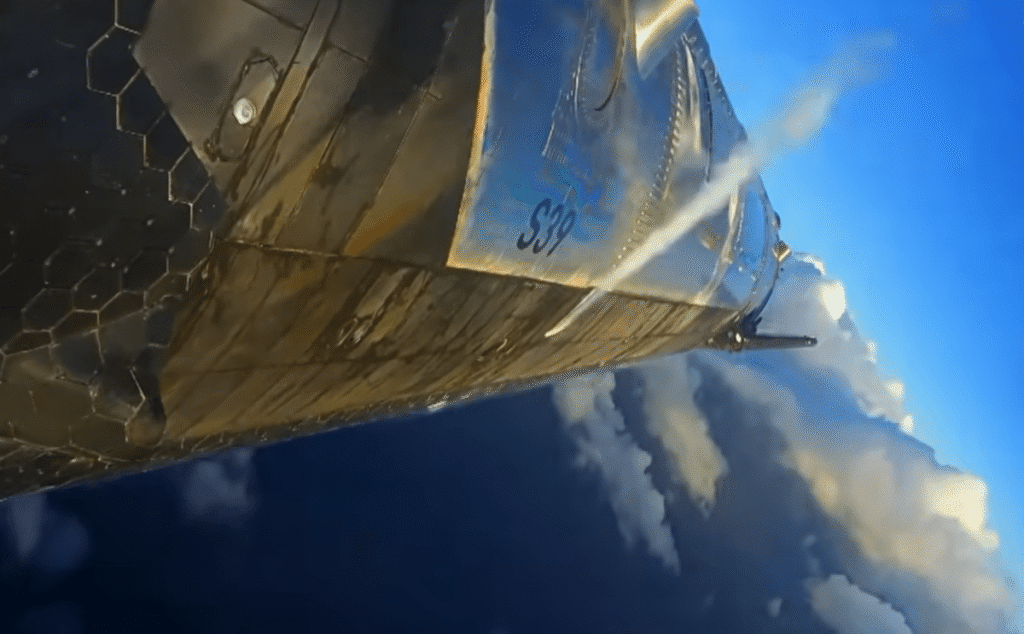
Table of Contents
A High-Stakes Pivot in the Orbit
For years, the narrative surrounding SpaceX has been one of inevitable disruption. The promise of Starship—a fully reusable launch system—wasn’t just about reaching Mars; it was the economic engine intended to make space access trivial. However, a closer look at SpaceX’s recent S-1 filing with the U.S. Securities and Exchange Commission, coupled with the results of its latest flight tests, suggests a more complicated trajectory. The company is facing a looming contradiction: the financial health of its primary revenue driver, Starlink, is inextricably tied to a rocket that has yet to prove it can actually be reused.
The S-1 reveals a staggering capital expenditure treadmill. To maintain its current service levels, SpaceX must replace roughly 20% of its satellite fleet annually. The scale of this investment is immense, with the company pouring $11.4 billion into its satellite business since the start of 2023—surpassing the $8.4 billion spent on Starship and its associated ground infrastructure. While the top-line revenue of $11.4 billion from connectivity is impressive, the cost of maintaining that network is a constant drain on liquidity.
The ‘Expendable’ Admission
Perhaps the most telling detail in the SEC filing is the first formal acknowledgment that full reusability of Starship may not be an absolute prerequisite for launching the next generation of Starlink satellites. On the surface, this looks like a pragmatic fallback. In reality, it’s a financial red flag. If SpaceX is forced to fly Starship as an expendable vehicle, the cost advantages that justify the project vanish.
Industry analyst Tim Farrar has pointed out that without full reusability, the cost per launch could hover around $100 million, or roughly $1,000 per kilogram. This would make Starship’s operational costs comparable to the Falcon 9, despite its massive increase in payload capacity. The efficiency gain wouldn’t be in the cost of the rocket itself, but merely in the volume of satellites deployed per mission. This shift transforms Starship from a revolutionary cost-cutter into a mere logistics upgrade.
Technical Hurdles and the Raptor Problem
The recent test flight of the third version of Starship and its Super Heavy booster highlighted why this financial risk remains so high. The mission struggled with the critical requirement for reusability: the reliable relighting of Raptor engines for controlled descent and landing. While the vehicle successfully deployed dummy satellites and test payloads, the failure to master the return trip means the ‘expendable’ path mentioned in the S-1 is currently the only guaranteed path.
This technical gap creates a strategic bottleneck. SpaceX intends to launch higher-throughput Starlink satellites in batches of 60, a massive leap in capacity over the Falcon 9. If these initial launches are expendable, the ‘free cash’ expected from the satellite business will be eaten by the cost of the rockets, potentially delaying more ambitious projects like orbital data centers.
The Saturation Signal
Beyond the hardware, the S-1 points to a cooling of the satellite broadband market. Starlink has crossed the 10-million subscriber mark, but growth rates appear to be decelerating. Data indicates a dip in user acquisition during the first quarter of 2026, complicating projections from firms like Quilty Space, which estimated a year-end total of 16.8 million subscribers. To hit those numbers, SpaceX would need to nearly double its quarterly growth rate—a difficult task following recent price hikes.
Furthermore, the Average Revenue Per User (ARPU) is sliding. In 2023, ARPU stood at $99; by Q1 2026, it dropped to $66. This is a direct result of expanding into international markets where purchasing power is lower. As SpaceX chases volume over margin, the economic pressure to lower launch costs becomes even more acute.
With Amazon’s Project Kuiper now nearing the scale required to challenge SpaceX’s dominance, the margin for error is shrinking. If the industry leader is seeing slowing demand and struggling with the physics of reusability, it suggests that the total addressable market for space-based broadband may be smaller than the hype suggested. SpaceX isn’t just fighting gravity; it’s fighting a diminishing return on investment.