The Geopolitics of the Strait: Trump’s Hormuz Gamble and the High-Stakes Tech of Nuclear Verification
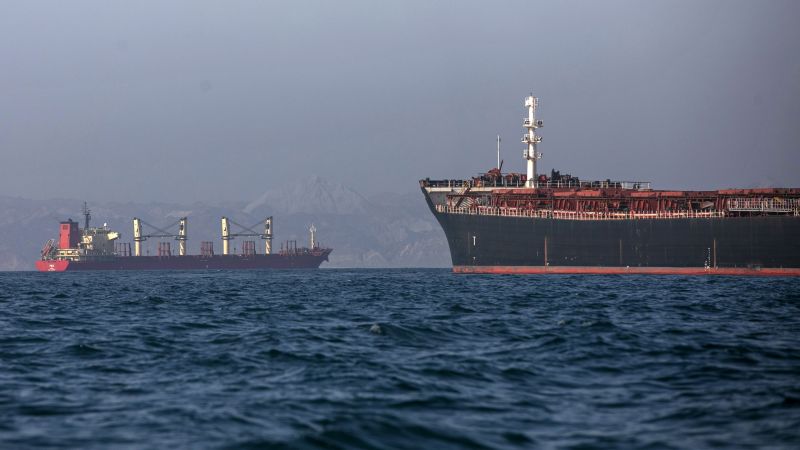
Table of Contents
Situation Room Stalemate
President Donald Trump has convened a high-level meeting in the White House Situation Room to make what he describes as a “final determination” on a tentative agreement with Tehran. The deal, reached earlier this week, seeks to address two of the most volatile flashpoints in global security: the operational status of the Strait of Hormuz and the resumption of stalled nuclear negotiations.
The urgency of the meeting comes as the global energy market watches the narrow waterway, where a significant portion of the world’s petroleum passes. While the tentative framework suggests a de-escalation, the actual implementation remains precarious. In Tehran, the rhetoric remains cautious. Iran’s chief negotiator has explicitly stated that “no step will be taken before the other side acts,” effectively placing the burden of the first move on Washington.
Adding to the uncertainty is the silence from the office of Supreme Leader Mojtaba Khamenei. In the Iranian political structure, no international agreement carries weight without the implicit or explicit blessing of the Supreme Leader, and the lack of a definitive confirmation suggests that the deal is still facing internal scrutiny within the Iranian establishment.
The Friction of ‘Warning Shots’
Even as diplomats discuss frameworks in Washington, the operational reality on the water tells a different story. The Islamic Revolutionary Guard Corps (IRGC) navy recently reported firing warning shots at four vessels near the Strait of Hormuz. According to a post on a Telegram account affiliated with the IRGC, the ships were attempting to transit the waterway without “prior coordination or authorization.”
These skirmishes highlight a dangerous gap between diplomatic intent and tactical execution. The use of social media platforms like Telegram to announce military actions indicates a strategy of psychological warfare, intended to signal that despite any deal in the works, the IRGC maintains absolute territorial control over the transit corridor.
The Technical Hurdle: Nuclear Verification
Beyond the maritime tension lies the core of the conflict: the technical verification of Iran’s nuclear capabilities. Any deal to reopen nuclear talks isn’t just about signatures on a page; it is about the deployment of sophisticated monitoring technology. The primary sticking point in previous negotiations has been the level of access granted to International Atomic Energy Agency (IAEA) inspectors.
The challenge is fundamentally a technical one. Verification requires the installation of remote monitoring equipment, satellite imagery analysis, and the physical inspection of centrifuge arrays. For the U.S., the goal is a “trust but verify” model that utilizes high-fidelity sensors and real-time data streams to ensure no clandestine enrichment is taking place. For Iran, these requirements are often viewed as conduits for espionage, where the technology of monitoring overlaps with the technology of intelligence gathering.
If the current deal proceeds, the focus will shift from the Situation Room to the technical annexes of the agreement. The world will be looking for specific commitments on the use of online enrichment and remote monitoring systems—tools that are designed to remove the human element and the potential for diplomatic deception from the equation.
A Precarious Balance
The current trajectory suggests a fragile equilibrium. The U.S. is attempting to leverage the economic pressure of sanctions to secure a maritime corridor and nuclear transparency, while Iran is leveraging the threat of regional instability to force a return to the negotiating table. With the IRGC continuing to flex its muscles in the Gulf and the Supreme Leader remaining enigmatic, the “final determination” in the White House may only be the beginning of a much longer, more technical struggle for control in the region.


