DJI Osmo Pocket 4 Moves to 1-Inch Sensor, Doubling Down on the ‘Prosumer’ Vlogger
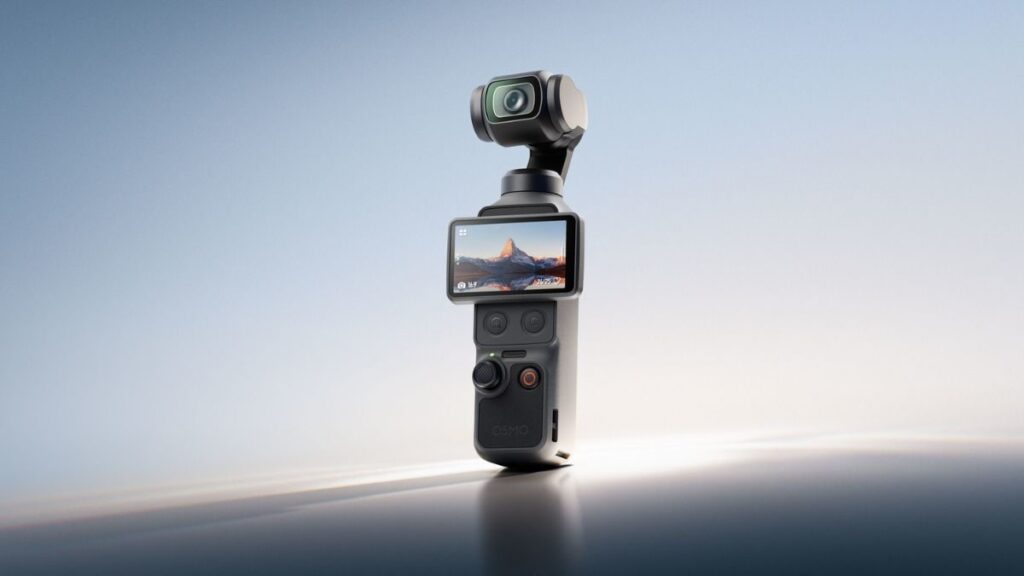
Table of Contents
The jump to a 1-inch sensor
For years, the DJI Osmo Pocket series has occupied a strange, successful niche: the camera for people who find a smartphone too limiting but a full mirrorless rig too cumbersome. With the global launch of the Osmo Pocket 4 on Thursday, DJI is making a decisive move to bridge the gap between ‘convenience’ and ‘cinematic’ by finally integrating a 1-inch CMOS sensor into the handheld form factor.
This hardware shift is the most critical update in the lineup. While the Pocket 3 made strides in low-light performance, the Pocket 4’s larger sensor allows for a native increase in dynamic range and a shallower depth of field, reducing the reliance on software-simulated bokeh. For creators filming in challenging lighting—such as neon-lit city streets or dim interiors—the 1-inch sensor significantly reduces noise and preserves detail in the shadows, moving the device closer to the output of the Sony ZV series or the DJI Action line’s high-end modes.
Stabilization and AI-driven tracking
Beyond the glass, DJI has overhauled the mechanical gimbal system. The Pocket 4 introduces an improved stabilization algorithm that handles rapid panning and erratic movements more fluidly than previous iterations. This is paired with a new iteration of DJI’s ActiveTrack, which leverages AI to maintain focus on subjects even when they briefly exit the frame or are obscured by obstacles—a common pain point for solo vloggers.
The processing power under the hood has also been bumped to handle these AI tasks in real-time, ensuring that the tracking doesn’t ‘hunt’ for the subject, but rather glides with a predictable, organic motion. This makes the camera an effective tool for those who need a ‘virtual camera operator’ without actually hiring one.
Packaging and the ‘Creator’ Ecosystem
DJI is continuing its strategy of bundling essential accessories to lock users into their ecosystem. The Osmo Pocket 4 is available in two primary configurations. The Standard Combo, priced at €499 (approximately Rs. 54,600), provides the core camera and basic charging accessories. However, the real value proposition lies in the Creator Combo, priced at €619 (approximately Rs. 67,700).
The Creator Combo is less of an accessory pack and more of a complete production kit. It includes the new DJI Mic 3 Transmitter, which offers improved noise cancellation and a more seamless pairing process. The bundle also ships with a fill light to combat the harsh shadows often found in handheld vlogging, a wide-angle lens for architectural or landscape shots, and the Osmo Mini tripod for static recording.
Market Positioning
By pushing the sensor size and integrating the Mic 3, DJI is clearly targeting the ‘prosumer’—users who are moving away from basic social media clips toward high-bitrate, professional-grade content for YouTube and TikTok. The Pocket 4 isn’t trying to replace a cinema camera; it’s trying to make the process of getting 4K, stabilized, well-exposed footage as frictionless as possible.
While the pricing is a slight step up from previous generations, the inclusion of 1-inch sensor technology justifies the premium. In a market where smartphone computational photography is hitting a ceiling, DJI is betting that raw hardware and mechanical stabilization remain the gold standard for creators.


