Precision Diving and Real-Time Comms: Inside the High-Stakes Rescue of Stranded Laos Cave Divers
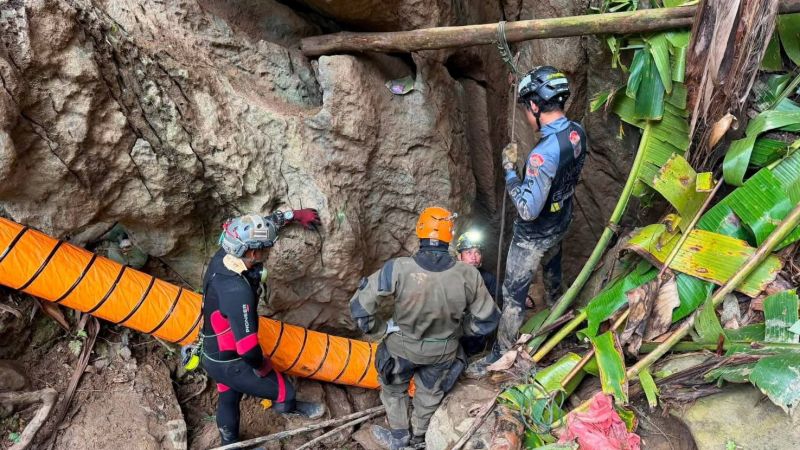
Table of Contents
The Logistics of a Subterranean Extraction
The successful extraction of the first survivor from a remote cave system in Laos marks a critical turning point in an operation that has tested the limits of specialized cave diving technology and human endurance. For over a week, a multinational team of specialist divers has been navigating a treacherous, pitch-black environment to reach villagers who became trapped after sudden flooding turned a subterranean exploration into a fight for survival.
The technical difficulty of this mission cannot be overstated. The survivors were located more than 800 feet from the cave entrance, positioned in a chamber where the terrain slopes downward at a punishing 45-degree gradient. In cave diving, such gradients complicate buoyancy control and increase the risk of silt-outs—where a single misplaced fin kick can stir up sediment, reducing visibility to zero and effectively blinding the diver.
Overcoming the Communication Void
One of the most harrowing aspects of the operation was the communication gap. Because radio waves do not penetrate rock and water effectively, the rescue team had to rely on a combination of tethered lines and strategic relay points to maintain contact with the surface. The tension peaked on Friday night when divers inside the system were heard screaming “they are coming out” during a phone interview with CNN, signaling that the physical connection between the rescuers and the stranded had finally been established.
This operation highlights the reliance on high-lumens LED lighting and redundant oxygen systems. In a cave this deep, a failure in a primary light source is often fatal. The multinational team utilized side-mount diving configurations, which allow divers to push through narrower apertures and maintain a more streamlined profile, a necessity when navigating the jagged limestone corridors of the Laotian highlands.
The Human Cost and Environmental Pressure
While the first survivor is safely out, the victory is tempered by the precarious state of those remaining. Five villagers were initially found huddled together in a chamber above murky waters, suffering from severe hunger and psychological distress. The physical toll of remaining stationary in a damp, low-temperature environment for over a week often leads to hypothermia, even in tropical regions, complicating the medical stabilization process once the survivors reach the surface.
The mission is now pivoting to find two other individuals who are still missing. This phase of the rescue is significantly more dangerous; while the first group was found in a known chamber, the search for the missing requires a more aggressive mapping of the cave’s unexplored branches. Divers are currently using sonar and tactical probes to identify air pockets or submerged crevices where the missing persons may have drifted during the initial flood event.
Comparative Technical Risks
The Laos rescue echoes the technical complexities of the 2018 Tham Luang cave rescue in Thailand, though it differs in scale and geography. In both instances, the primary adversary was the water’s turbidity and the narrowness of the conduits. The use of specialized narrow-gauge tanks and high-performance regulators has become the industry standard for these “extreme extraction” scenarios, where the margin for error is measured in millimeters.
As the multinational team continues its push into the deeper sections of the cave, the focus remains on balancing the urgency of the rescue with the safety of the divers. The gradient of the cave entrance remains a bottleneck, requiring careful coordination to ensure that incoming rescue teams do not obstruct the path of those extracting the survivors.