Xiaomi Doubles Down on MediaTek with Global Launch of 17T and 17T Pro
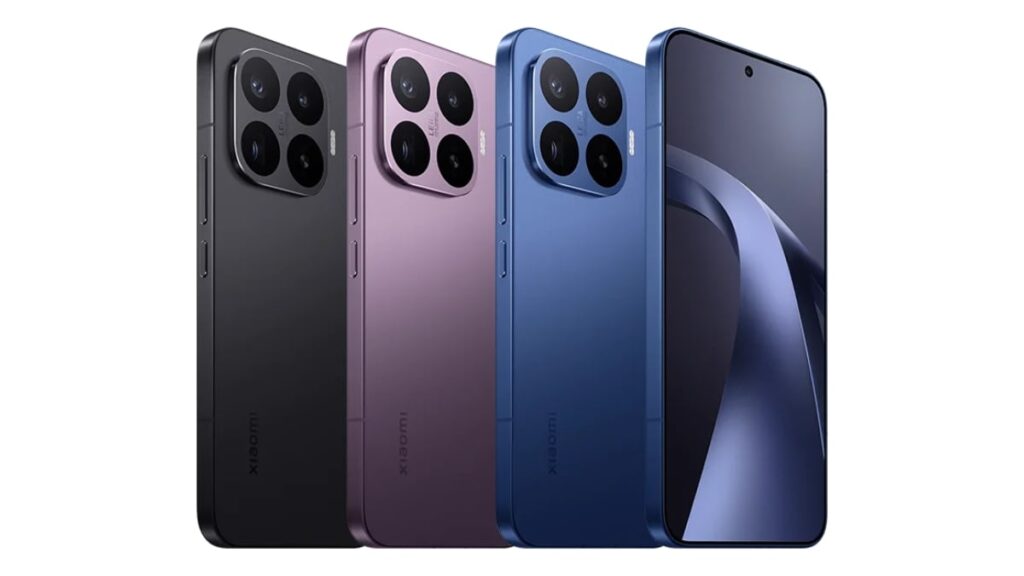
Table of Contents
A Strategic Pivot Toward Dimensity
Xiaomi has officially expanded its global portfolio with the unveiling of the Xiaomi 17T and 17T Pro. While the T-series has traditionally served as the brand’s ‘flagship killer’—offering high-end performance at a slightly lower price point than the numbered series—the 17T lineup signals a deeper commitment to MediaTek’s silicon. Both devices eschew Qualcomm’s Snapdragon chips in favor of the Dimensity 8500-Ultra (in the standard 17T) and the powerhouse Dimensity 9500 (in the Pro model).
The move is a calculated risk. By leaning into MediaTek, Xiaomi is likely managing production costs while pushing the boundaries of power efficiency. The Dimensity 9500, in particular, is designed to compete with the highest-tier silicon, promising a significant jump in NPU performance for the AI-driven features central to Xiaomi’s latest software skin.
Display and Software: The HyperOS 3 Shift
Both the 17T and 17T Pro are sporting what Xiaomi describes as 1.5K AMOLED screens. This resolution sits comfortably between standard Full HD and a full 2K panel, aiming to balance pixel density with battery longevity. These displays are designed for the high-refresh-rate demands of modern mobile gaming and fluid UI navigation.
Under the hood, the hardware is paired with the debut of HyperOS 3, built atop Android 16. This is a notable leap, as Xiaomi is positioning its software ecosystem to be more integrated and ‘intelligent,’ leveraging the hardware’s AI capabilities for better memory management and system-wide automation. The transition to Android 16 suggests that Xiaomi is aggressively pushing its update cycle to keep pace with Google’s latest framework.
The Leica Partnership
The defining characteristic of the 17T series remains its optical pedigree. Both handsets feature triple rear camera systems tuned by Leica. While Xiaomi has not released a full technical whitepaper on the sensors, the partnership continues to focus on “authentic” color reproduction and improved low-light processing. The Pro model, specifically, is expected to handle higher-bitrate video recording and more advanced telephoto capabilities than its sibling.
Pricing and Market Positioning
The pricing strategy reflects Xiaomi’s attempt to bridge the gap between the mid-range and the true premium segment. The standard Xiaomi 17T enters the market at EUR 749 for the 12GB/256GB base model, with a 512GB option available for EUR 799. It arrives in a palette of Black, Blue, Opal White, and Violet.
The 17T Pro is positioned as the high-performance variant, starting at EUR 899 for the 12GB/512GB configuration. For power users, Xiaomi is offering a 1TB storage tier priced at EUR 1,099, catering to those who record significant amounts of 4K video. The Pro is available in a more muted selection of Deep Blue, Deep Violet, and Black.
With these launches, Xiaomi is directly challenging the likes of Samsung’s A-series and Google’s Pixel ‘a’ lineup, though the 17T Pro’s specs lean much closer to the flagship S-series or Pro-Pixel territory. The success of the series will likely depend on how the Dimensity 9500 handles thermal throttling under heavy load and whether HyperOS 3 provides a stable enough experience for the global market.