The Starship Paradox: SpaceX’s S-1 Filing Reveals the High Cost of Ambition
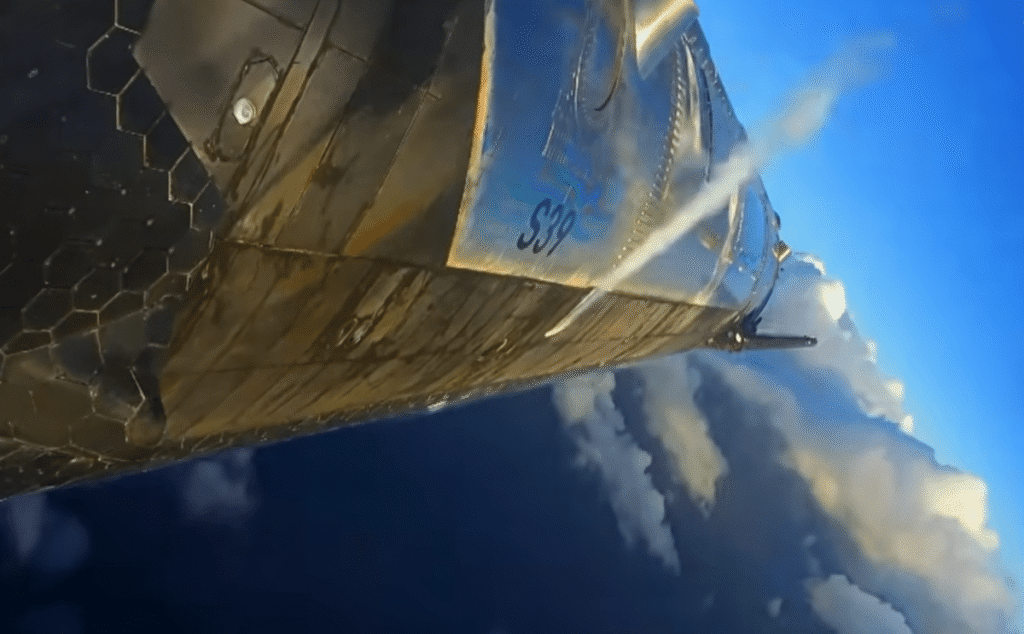
Table of Contents
The Financial Friction of a Martian Dream
For years, the narrative surrounding SpaceX has been one of inevitable disruption—a trajectory where the Starship rocket becomes so cheap and reusable that the cost of accessing space drops by orders of magnitude. However, a closer reading of SpaceX’s recent S-1 filing with the U.S. Securities and Exchange Commission, coupled with the results of its latest flight tests, suggests a more complicated reality. The company is facing a tension between its visionary goals and the brutal capital expenditure required to maintain its current dominance.
The tent pole of the company’s current valuation is Starlink. While the connectivity business is a powerhouse, generating $11.4 billion in revenue last year, the filing reveals a grueling “capital expenditure treadmill.” To maintain service levels, SpaceX must replace roughly 20% of its satellite constellation annually. Since the start of 2023, the company has poured $11.4 billion into the satellite business—surpassing the $8.4 billion invested in Starship and its supporting launch infrastructure.
The Reusability Gap
Elon Musk has frequently framed Starship as the essential catalyst for Starlink’s survival, arguing that the ability to launch massive payloads cheaply is the only way to keep the network viable. Yet, the S-1 contains a pivotal admission: full reusability of Starship is not strictly necessary to deploy the next generation of high-throughput Starlink satellites. This may sound like a safety net, but it is actually a financial warning sign.
If SpaceX settles for an expendable or partially reusable Starship, the economics shift dramatically. As satellite market analyst Tim Farrar noted, without full reusability, the cost per launch could hover around $100 million—roughly $1,000 per kilogram. This would mean Starship’s efficiency wouldn’t be a leap forward from the Falcon 9, but rather a lateral move in terms of cost-effectiveness, despite the massive increase in payload capacity.
Recent flight tests have underscored these technical hurdles. The third version of Starship and its booster struggled with a critical requirement for reusability: the successful relighting of Raptor engines for a controlled descent. While the rocket did manage to deploy dummy satellites and test vehicles, the inability to reliably “catch” or land the craft means the company is still burning through hardware at an unsustainable rate for a low-cost model.
Slowing Momentum in the LEO Market
The pressure on Starship is compounded by a cooling trend in Starlink’s user acquisition. While the service boasts over 10 million subscribers, data indicates a slowdown in growth during the first quarter of 2026. To hit the 16.8 million subscriber target projected by consulting firm Quilty Space, SpaceX would need to nearly double its current quarterly growth rate—a tall order following recent price hikes.
Moreover, the quality of that growth is shifting. Average revenue per user (ARPU) has plummeted from $99 in 2023 to $66 in early 2026. This decline is a direct result of SpaceX expanding into emerging international markets where pricing power is lower. As the cost to acquire and launch each new satellite remains high, the diminishing returns per user create a tighter squeeze on margins.
A Crowded Orbit
SpaceX is no longer the only player with a viable path to scale. Amazon’s Project Kuiper is rapidly approaching the scale necessary to challenge Starlink’s hegemony, pending a critical FCC deadline to launch 1,600 satellites by July. If the market for space broadband is smaller than anticipated—a possibility suggested by the slowing demand seen even by the market leader—the race for dominance may become a war of attrition.
The S-1 filing paints a picture of a company that is winning the first round of the space race but is now hitting the wall of diminishing returns. Starship remains the wild card; if Musk can solve the Raptor relighting and landing puzzles, the economics of the company transform. If not, SpaceX may find itself managing a very expensive, very large, and increasingly competitive utility company in the sky.