Spotify Introduces Podcast Clipping to Combat ‘Long-Form Fatigue’
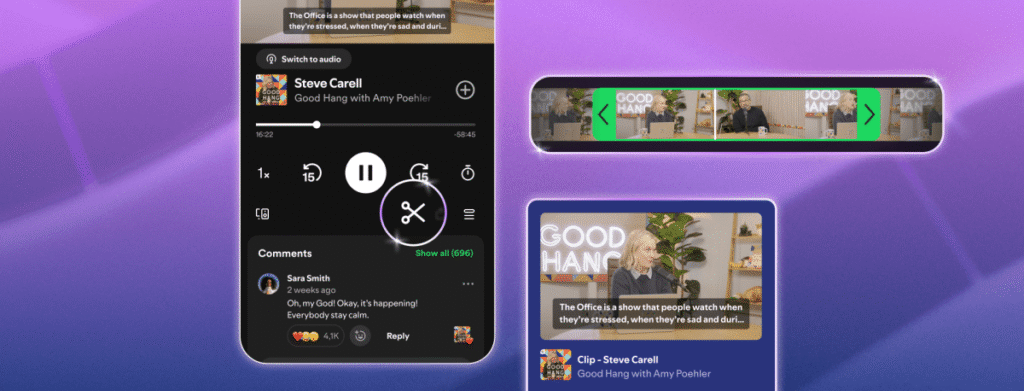
Table of Contents
The Shift Toward Modular Listening
Spotify is attempting to solve the ‘time tax’ associated with long-form audio. Starting Wednesday, the streaming giant is rolling out a new clipping feature that allows listeners to carve out specific segments of a podcast and share them as standalone snippets. The update addresses a growing friction point in digital media: the gap between the hour-long interview and the 30-second viral clip.
The interface is straightforward. A new scissors icon has been integrated into the “Now Playing” view, enabling users to mark a start and end point for a specific segment. Once a clip is selected, Spotify provides a preview window, allowing users to trim the audio for precision before pushing it to social media or messaging apps. This creates a more flexible sharing ecosystem; users can now choose between sharing a link to the full episode, a specific chapter, a timestamp, or a discrete audio clip.
For users who want to keep these moments for themselves, saved clips are stored directly in the Spotify Library. This allows for the curation of personal “best-of” archives or the addition of key insights into custom podcast playlists, effectively turning a passive listening experience into an active research or archiving tool.
The ‘CEO Podcast’ Pipeline
While the feature is a win for general usability, it arrives at a critical juncture for tech journalism and corporate communication. There has been a visible shift in how Silicon Valley executives handle public relations. High-profile figures from AI labs and semiconductor firms are increasingly bypassing traditional press junkets and rigorous journalistic interviews in favor of three-hour appearances on podcasts.
This shift allows executives to control the narrative and avoid the high-pressure environment of a live Q&A, but it creates a discovery problem for the audience. Critical news—such as a subtle admission about a product timeline or a strategic pivot—is often buried in the second hour of a conversation. By democratizing the ability to clip these moments, Spotify is essentially outsourcing the role of the “highlight reel” to its user base. When a critical minute of a long interview goes viral via a Spotify clip, it forces a wider audience back to the original source, potentially surfacing insights that would otherwise remain hidden in the depths of a long-form recording.
Scaling from Chapters to Clips
The rollout of clipping is not an isolated experiment but an evolution of Spotify’s data on user behavior. Earlier this year, the company introduced “Chapters,” which allowed creators to break episodes into thematic segments. According to Spotify, these chapters have seen significant traction, with users saving and adding them to playlists over 2 million times per month.
The transition from Chapters (which are creator-defined) to Clips (which are user-defined) represents a shift toward a more social, participatory model of audio consumption. It mirrors the way TikTok and Instagram Reels have fragmented video content into digestible, shareable units. For podcasters, this is a potent marketing lever; a well-placed clip shared by a listener can act as a high-conversion entry point, driving new listeners to the full episode who might have been intimidated by a two-hour runtime.
The feature is currently rolling out globally to both free and Premium users on mobile. While initially available for a subset of shows, Spotify indicated that availability will expand across its entire podcast catalog over the coming weeks.