The Rise of ‘Ghost Journals’: AI is Now Forging Academic Papers Under Real Professors’ Names
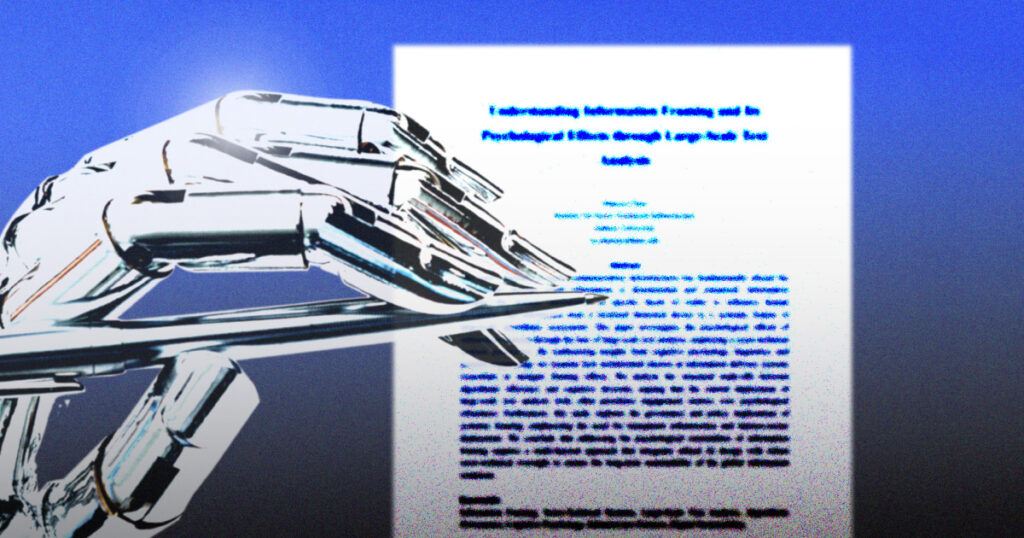
Table of Contents
The New Frontier of Academic Identity Theft
For decades, the ‘predatory journal’ has been a known blight on scientific research—shady publications that charge authors fees to publish papers without rigorous peer review. But a new, more sophisticated evolution has emerged: journals that don’t even wait for authors to submit work. Instead, they are using generative AI to write entire research papers and attributing them to legitimate, high-ranking professors without their knowledge or consent.
This isn’t just a case of lazy students using ChatGPT to write a thesis. It is a systematic effort to create a veneer of scientific legitimacy using the names of established experts to shield AI-generated hallucinations from scrutiny. When a paper is attached to a renowned researcher at an institution like Stanford or MIT, the typical skepticism of a reader is lowered, and the work is more likely to be cited or shared, effectively poisoning the well of academic discourse.
How the ‘Ghost’ Papers are Built
The mechanism is deceptively simple but highly effective. Bad actors leverage Large Language Models (LLMs) to synthesize existing research, blending real citations with entirely fabricated data and conclusions. By scraping the web for the names of professors who specialize in specific fields—such as oncology or quantum computing—these entities create ‘author lists’ that look plausible to the untrained eye.
These papers are then uploaded to journals that mimic the branding and layout of reputable publications. In many cases, these journals exist only as digital shells, designed to look professional enough to fool automated indexing services and casual browsers. Because the ‘authors’ are real people with real reputations, the papers often bypass the initial red flags that usually trigger fraud detection in traditional academic circles.
The Erosion of the Peer Review System
The danger here isn’t just the existence of fake papers, but the systemic failure they expose. The traditional peer review process—where independent experts vet a study before publication—is already under immense pressure. The addition of AI-generated content that mimics the precise tone and jargon of professional academia makes it increasingly difficult for human reviewers to distinguish between a breakthrough and a hallucination.
Moreover, this trend creates a legal and professional nightmare for the targeted academics. Professors are discovering their names on papers they never wrote, discussing methodologies they have never used, and presenting conclusions that may be dangerously wrong. In the medical field, where fake research can influence clinical perspectives, the stakes move from professional embarrassment to public safety.
Combatting the Synthetic Surge
The academic community is now racing to implement ‘proof of authorship’ protocols. Some institutions are calling for digital signatures and blockchain-verified submissions to ensure that a paper actually originated from the claimed author. There is also a growing movement toward digital watermarking for legitimate research.
However, the speed of AI generation currently outpaces the speed of verification. As LLMs become more adept at mimicking specific writing styles, the ‘signature’ of a real professor becomes easier to fake. The battle is no longer just about detecting AI-generated text, but about verifying the actual identity and intent of the person behind the keyboard.
For now, the burden of proof is shifting. Researchers are being urged to check their own publication histories via Google Scholar and PubMed more frequently, treating their professional identity with the same security rigor as a bank account.