Drones and Deadlocks: US-Iran Conflict Escalates as Trump Dismisses Hormuz Transit Deal
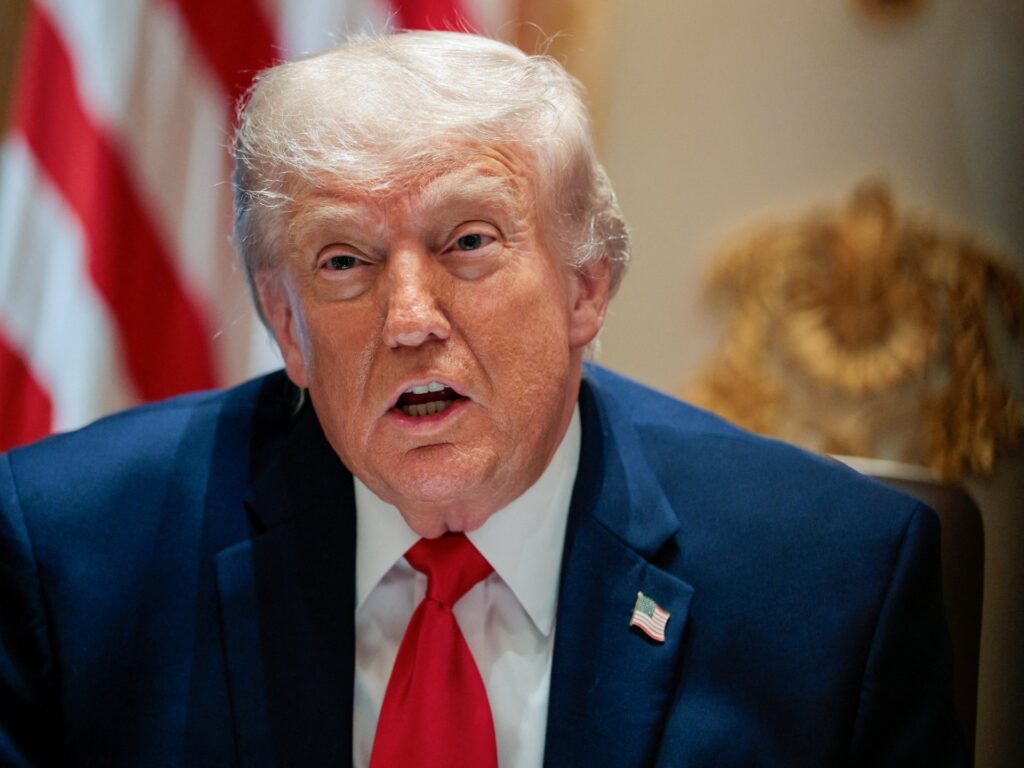
Table of Contents
Measured Response or Escalation?
The fragile ceasefire between the United States and Iran has entered a volatile new phase following a series of kinetic exchanges near the Strait of Hormuz. The Islamic Revolutionary Guard Corps (IRGC) announced on Thursday that it targeted a U.S. military base in response to an American strike near Bandar Abbas Airport, marking the third direct military engagement since the current ceasefire was established.
According to reports from the Iranian state broadcaster IRIB, the IRGC strike occurred at 4:50 am (0120 GMT). While the IRGC remained vague about the specific location of the targeted base, the ripple effects were felt regionally; Kuwait’s military confirmed that its air defenses were activated to respond to an “enemy” attack on Thursday, suggesting a wider operational footprint for the drones involved.
The Tactical Exchange: Drones vs. Ground Control
The conflict on the ground reveals a sophisticated game of electronic and aerial cat-and-mouse. An unnamed U.S. official told Reuters that the U.S. military successfully intercepted and shot down four Iranian attack drones. In a preemptive move, U.S. forces struck a ground control station in the port city of Bandar Abbas, specifically targeting a facility that was purportedly preparing to launch a fifth drone.
The U.S. administration is framing these actions as “measured” and “purely defensive,” asserting that the strikes were intended to preserve the ceasefire rather than dismantle it. However, the use of precision-strike capabilities against ground control infrastructure indicates a shift toward degrading the adversary’s launch capacity to prevent further incursions into international waterways.
Trump Rejects ‘Draft’ Framework
The military friction coincides with a diplomatic collapse regarding the shipping lanes of the Strait of Hormuz. During a cabinet meeting on Wednesday, President Donald Trump explicitly rejected reports that his administration was nearing a compromise with Tehran. This follows a report from Iranian state TV claiming an unofficial draft agreement existed to restore commercial shipping to pre-war levels within a month, with Iran and Oman jointly managing traffic.
Trump’s response was characteristically blunt, dismissing the idea of joint management. “Nobody’s going to control (the strait),” Trump stated, emphasizing that the area remains international waters. He further warned Oman—a long-term U.S. strategic partner—that it must “behave just like everybody else,” suggesting that any deviation from U.S. interests could lead to severe consequences.
The tension extends beyond shipping lanes to the core of the conflict: sanctions and nuclear proliferation. Ebrahim Azizi, head of the Iranian parliament’s national security committee, signaled via X (formerly Twitter) that Trump’s rhetoric would not sway Iran’s demands regarding uranium enrichment and the total lifting of U.S. sanctions.
Economic Fallout and Strategic Deadlocks
The intersection of military technology and geopolitical posturing has immediately impacted global markets. After a 5% dip on Wednesday, oil prices rebounded sharply on Thursday, with U.S. crude futures gaining over 3% as traders priced in the risk of a prolonged blockade in the Hormuz region.
From a strategic perspective, the U.S. finds itself in a paradoxical position. Doug Bandow, a senior fellow at the Cato Institute, notes that by effectively closing the Strait of Hormuz through various blockades, the U.S. may have inadvertently handed Iran a powerful economic lever. Bandow suggests that the reluctance to risk U.S. ships in a direct attempt to force the strait open creates a strategic deadlock that may eventually force the U.S. into a deal more favorable to Tehran.
With the U.S. refusing to discuss easing sanctions and the IRGC continuing to test the limits of the ceasefire with drone incursions, the “measured” approach of both sides appears increasingly unsustainable.


