Erin Brockovich Targets AI Infrastructure with Crowdsourced Data Center Map
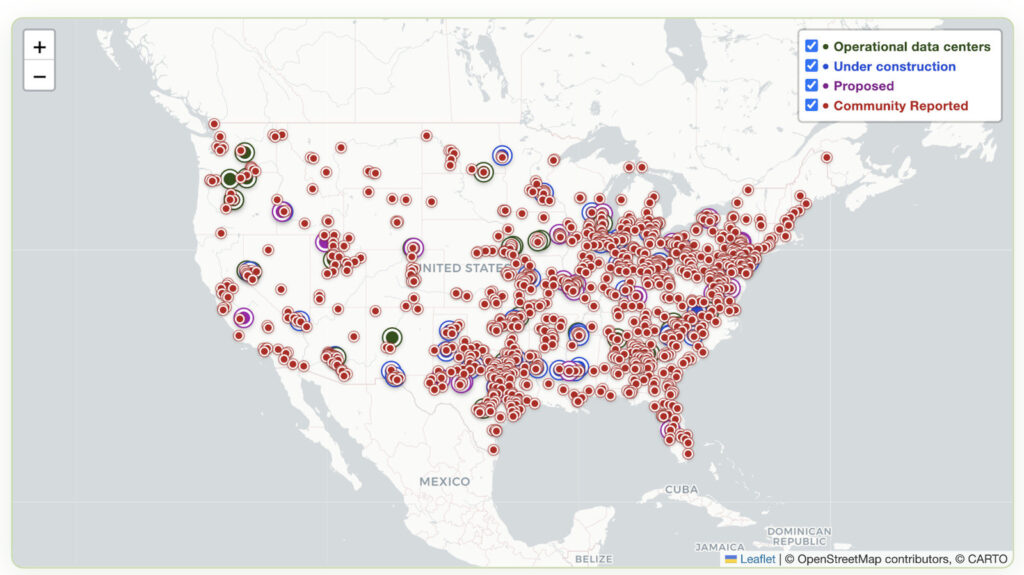
Table of Contents
A New Front in Environmental Activism
Erin Brockovich, the legal researcher whose fight against groundwater contamination in Hinkley, California, became a cultural touchstone, has turned her attention toward the physical footprint of the artificial intelligence boom. Brockovich has launched the AI Data Center Reporting platform, a crowdsourced mapping project designed to track the proliferation of AI infrastructure across the United States and provide a megaphone for residents facing the industrialization of their backyards.
While the software side of AI often feels ephemeral—existing in the cloud or as a chat interface—the physical reality is a massive surge in land use, energy demand, and water consumption. Brockovich’s new site functions as a living ledger, plotting operational facilities, those under construction, and rumored projects. By allowing community members to self-report developments, the platform captures the ‘gray area’ of infrastructure planning—projects that may not yet be listed in official municipal registries but are already causing local unrest.
The Texas Epicenter
The data emerging from the platform highlights a significant concentration of activity in the Lone Star State. Of the 2,716 reports filed since the project’s inception, Texas has emerged as the most active region. Specifically, Sulfur Springs has become a focal point of controversy, accounting for nearly 300 of the state’s reports.
At the heart of the Sulfur Springs tension is MSB Global, which is pursuing one of the most ambitious AI infrastructure projects in North America. The plan involves a staggering 3-gigawatt capacity spread across 30 buildings on approximately 1,600 acres. The sheer scale of the project has sparked a wave of legal challenges from previous landowners and local residents, who argue that the rapid industrialization of the area is outpacing regulatory oversight.
The Resource War: Water and Watts
The reporting on Brockovich’s map reveals a consistent hierarchy of concerns among residents: water scarcity, electrical grid stability, and public health. The tension centers on the inherent inefficiency of current cooling technologies used in high-density AI compute clusters.
Data centers are notoriously thirsty. According to the Environmental and Energy Study Institute (EESI), a single large-scale facility can consume up to 5 million gallons of water per day. To put that in perspective, that volume of water is roughly equivalent to the daily needs of a town with a population between 10,000 and 50,000 people. In drought-prone regions like Texas, this puts AI infrastructure in direct competition with municipal drinking water and agricultural needs.
Then there is the energy burden. The massive power draw of H100-style GPU clusters requires significant grid upgrades. Residents are reporting a troubling trend: utilities are often passing the cost of these industrial infrastructure upgrades onto the average consumer through increased rates. Beyond the economics, the reporting highlights fears regarding noise pollution from industrial cooling fans and air quality concerns related to the backup diesel generators that keep these facilities online during grid failures.
From Hinkley to the Hyper-Scale Era
Brockovich’s pivot to AI reflects a broader trend of ‘infrastructure pushback’ as Big Tech seeks to decentralize its hardware. For Brockovich, the parallels to her 1990s battle against Pacific Gas & Electric (PG&E) are clear: corporate interests often underestimate the long-term ecological and human cost of industrial scaling in rural areas.
By crowdsourcing the map, Brockovich is effectively creating a decentralized regulatory tool. In many cases, residents are the first to notice the clearing of land or the arrival of heavy machinery long before a public hearing is scheduled. This project aims to shift the power dynamic, giving communities the data they need to challenge zoning permits and demand more transparent environmental impact studies before the first server rack is installed.