Google I/O 2026: Beyond the Hype, the Push for an ‘Autonomous’ Ecosystem
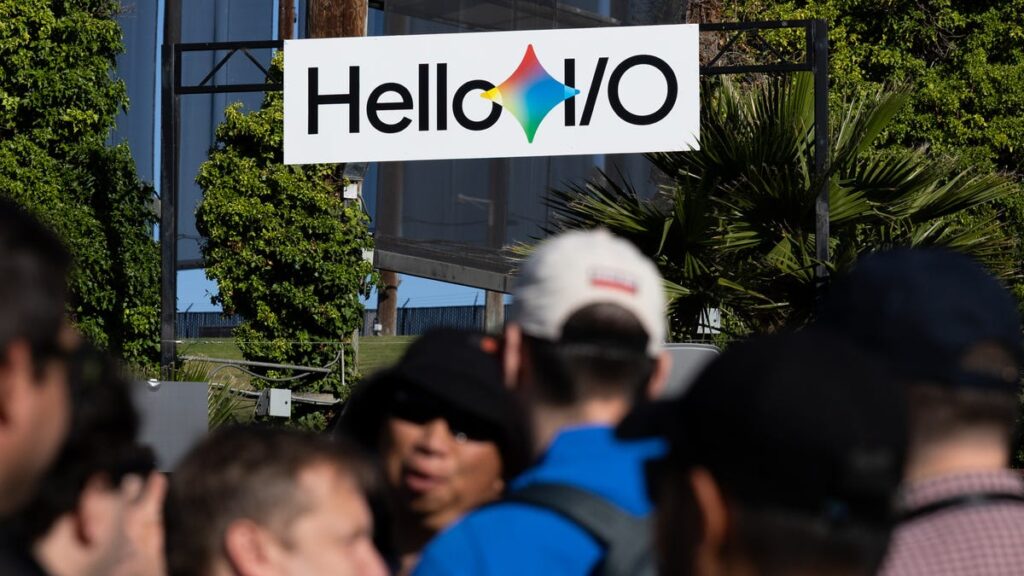
Table of Contents
The Pivot from Chatbots to Agents
For the last few years, the AI race has been defined by the prompt—a user asks a question, and a model provides an answer. But at Google I/O in Mountain View, the narrative shifted. Google isn’t just building a better chatbot; it is attempting to build a background operating system for your life. The centerpiece of this strategy is Gemini Spark, a “personal AI agent” designed to move beyond the chat interface and operate autonomously.
Unlike standard LLMs that wait for a trigger, Spark is designed to run 24/7 in the background. By indexing data across Gmail, Docs, and Chat, it aims to handle the administrative friction of digital life—compiling weekly team reports or tracking down missing RSVPs without being explicitly told to do so for every single instance. This positions Google directly against the “agentic” workflows being developed by Anthropic’s Claude Cowork and Microsoft 365 Copilot, effectively turning the Google ecosystem into a proactive assistant rather than a reactive tool.
Spark will debut for test users immediately, with a broader beta for Google AI Ultra subscribers in the U.S. arriving next week. The general public can expect a Chrome-integrated rollout later this summer.
Solving the ‘Search’ Problem in Video
While Gemini Spark handles the backend, Google is also tackling the frontend of how we consume information on YouTube. The new Ask YouTube feature represents a fundamental change in video discovery. Rather than relying on timestamps or scrolling through comments to find a specific answer, users can now query the video’s content directly.
For a query like “how to change the oil on a 2019 Subaru Outback,” the AI doesn’t just suggest a video; it identifies the exact second the relevant action occurs and jumps the playback to that point. This transforms YouTube from a repository of long-form content into a searchable database of visual instructions. Currently available to U.S.-based Premium members aged 18+, the feature is a clear play to retain users who are increasingly turning to TikTok or specialized forums for quick, actionable answers.
The Trust Layer: SynthID and the War on Deepfakes
As AI-generated content floods the web, Google is attempting to build a verifiable “trust layer” through the expansion of SynthID. Previously limited to the Gemini app, this invisible watermarking system is now being integrated directly into Google Chrome and Google Search.
The most practical application is the update to “Circle to Search,” which now allows users to right-click an image to determine if it was AI-generated. Crucially, Google isn’t doing this in a vacuum. The company has partnered with OpenAI, ElevenLabs, and Nvidia to standardize these watermarks. As CEO Sundar Pichai noted during the keynote, the goal is to set a cross-industry standard for transparency, acknowledging that a single company’s watermark is useless if the rest of the ecosystem doesn’t recognize it.
Workspace Integration and the New Hardware Bet
The push for productivity extends into the drafting process with Docs Live. This tool attempts to bridge the gap between fragmented brainstorming and a final draft. By synthesizing spoken ramblings and connected data from Drive and Gmail, Docs Live aims to eliminate the “blank page” problem. However, Google is keeping this behind a steeper paywall; the feature will be limited to AI Pro ($20/month) and Ultra ($100-$200/month) subscribers starting this summer.
Perhaps the most tangible shift, however, is in hardware. Google debuted a new lineup of smart glasses that aim to move AI off the screen and into the field of vision. While the technical capabilities impressed early testers, the ghost of Google Glass still looms. Shahram Izadi, Google’s head of XR, admitted that privacy remains a hurdle, noting that the company will provide more detailed data privacy frameworks at a fall event. For now, the glasses rely on a physical bystander LED to signal when the camera or microphone is active—a low-tech solution to a high-tech privacy crisis.