Ferrari Luce: The Controversial Shift to Electric Luxury and Jony Ive’s Influence
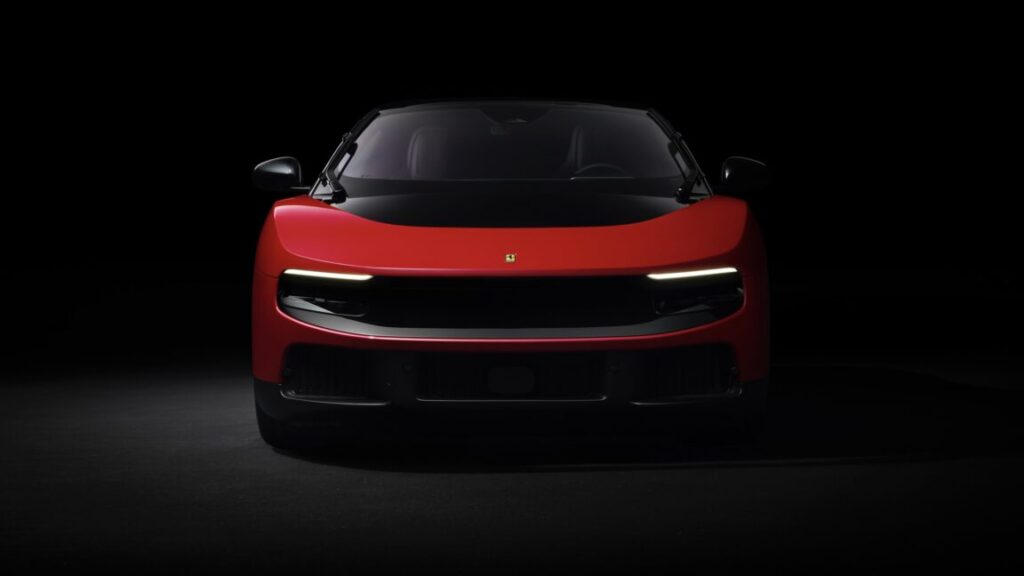
Table of Contents
A Departure from Tradition
Ferrari has long built its brand on the visceral scream of an internal combustion engine and the exclusivity of two-seat silhouettes. The unveiling of the Luce represents a violent break from that heritage. It is not merely Ferrari’s first battery-electric vehicle (BEV), but also its first four-door sedan and five-seater, marking a strategic pivot aimed squarely at the luxury EV markets of Silicon Valley and China.
The car arrives at a precarious moment for the Maranello-based manufacturer. As emissions regulations tighten and consumer preferences shift toward electrification, Ferrari is forced to balance its legacy as a racing powerhouse with the clinical efficiency of the EV era. The Luce is the answer to that tension, though the result is visually polarizing.
The LoveFrom Aesthetic
To execute this transition, Ferrari looked outside its own walls, partnering with LoveFrom—the design firm led by former Apple chief design officer Jony Ive and Marc Newson. The influence of Ive is palpable. The Luce possesses a minimalist, almost architectural quality that has led some observers to suggest it looks more like an Apple product than a traditional Ferrari. From the cab-forward glasshouse to the clean lines, the design prioritizes a seamless flow over the aggressive sculpting typical of the brand’s supercars.
There are, however, nostalgic nods for the purists. The four round tail lights are a direct reference to 1990s icons like the 360 and 550. While the car is divisive in photographs, the physical presence of the vehicle reveals a level of fit and finish that suggests a high-end luxury product rather than a mere experiment in electrification.
Aerodynamics and the Range Trade-off
The Luce’s unusual shape isn’t just a stylistic choice; it’s the result of a seven-year aerodynamic odyssey. Ferrari began simulation studies years before the project was officially greenlit, conducting over 6,000 computational fluid dynamics (CFD) simulations and 300 hours of wind tunnel testing. The goal was a contradiction: achieving the lowest possible drag coefficient while maintaining the downforce necessary to keep a heavy EV planted at high speeds.
The technical execution involves a hood that dives below a front wing to channel air over the roof, paired with an array of active air vents. These vents modulate based on the driver’s priority—switching between maximum efficiency for cruising and peak cooling for performance driving. Ferrari is currently targeting a range of 330 miles (530 km) under the WLTP cycle. Achieving this requires the use of specialized aerodisc wheels, machined from single blocks of aluminum to eliminate the turbulence typically caused by traditional five-spoke designs.
A Masterclass in Tactile Interior
While the exterior may spark debate, the interior of the Luce is an unqualified triumph. In an era where automotive manufacturers are replacing every physical control with a generic tablet, Ferrari has doubled down on materiality and haptics. The dashboard is crafted from a single piece of brushed aluminum, avoiding the trend of adding distracting secondary screens for passengers.
The instrument cluster is a sophisticated hybrid of digital and analog. Two OLED displays are sandwiched together, with the top layer featuring circular cutouts that reveal a physical needle for the speedometer. This blend of screens and mechanical elements extends to the air vents, which are valved like exhaust pipes and provide a satisfying tactile click when adjusted.
The center console is dominated by a pivoting infotainment screen. Rather than burying climate controls in a menu, Ferrari has utilized brushed aluminum rocker switches. The system supports Apple CarPlay, which integrates cleanly across the display. Perhaps the most distinctive detail is the integrated clock in the upper-right corner; with a button press, it transforms into a 60-second stopwatch and then a compass, using physical needles that evoke a high-end Swiss timepiece.
By focusing on the ‘touch’ of the car as much as the ‘tech,’ Ferrari has managed to translate its sense of luxury into the electric age. The Luce may not sound like a Ferrari, but inside, it feels like one.


