NASA Taps Blue Origin and Firefly for ‘Moon Base’ Infrastructure Push
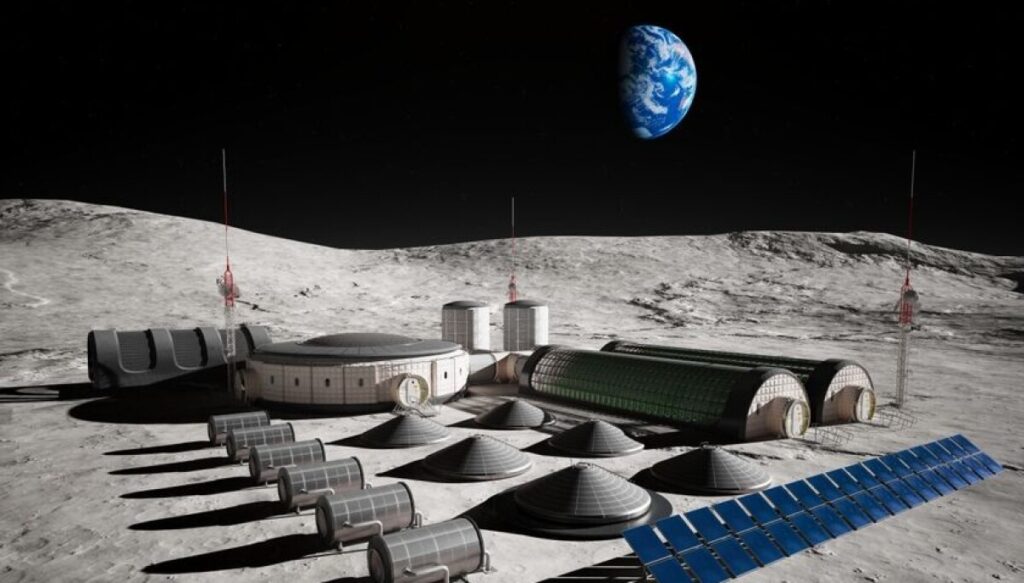
Table of Contents
The Shift from Flags and Footprints to Permanent Infrastructure
For decades, NASA’s lunar ambitions were defined by the “flags and footprints” era of the Apollo missions—short, high-impact visits designed for geopolitical victory and scientific sampling. That paradigm is officially shifting. The agency has now moved into a procurement phase for its “Moon Base” initiative, a multi-decade strategy intended to transform the lunar surface from a destination into a workspace.
In a series of recent announcements, NASA awarded contracts to four key industrial partners—Blue Origin, Astrolab, Lunar Outpost, and Firefly Aerospace—to build the hardware necessary for a sustained human presence. This isn’t just about landing astronauts; it’s about the logistical nightmare of moving metric tons of equipment to a vacuum-sealed, radiation-soaked environment where a single broken bolt can jeopardize a mission.
The Logistics of a Lunar Outpost
The agency’s roadmap is divided into three distinct phases, scaling up from basic cargo delivery to full-scale habitation. Phase 1, running through 2029, is essentially a logistics test. NASA plans up to 25 missions, including 21 landings, to deliver roughly four metric tons of cargo. This initial push is designed to seed the surface with the tools and transport systems required for more complex operations.
Blue Origin is playing a central role in this early stage. The company received a $188 million task order (with a $280.4 million option) to transport lunar terrain vehicles to the South Pole using its Mark 1 uncrewed lander. The first of these, designated Moon Base I, is slated to deliver science payloads to the Shackleton Connecting Ridge no earlier than autumn 2026.
Mobility is the primary hurdle for the Artemis astronauts. To solve this, NASA has tapped Astrolab and Lunar Outpost, awarding them $219 million and $220 million respectively. Their mission is to provide crewed and autonomous terrain vehicles capable of hauling two astronauts across the lunar regolith at speeds exceeding 9 mph. These aren’t just golf carts; they are ruggedized platforms like Astrolab’s CLV-1 and Lunar Outpost’s Pegasus—the latter of which leverages a supply chain including General Motors and Goodyear.
Mapping the Unknown with ‘MoonFall’
Before humans can safely set up shop, NASA needs a level of topographical detail the Apollo missions never provided. Firefly Aerospace has been contracted to build the carrier spacecraft for “MoonFall,” a set of robotic drones developed by NASA’s Jet Propulsion Laboratory (JPL). These drones will be released in lunar orbit to perform centimeter-scale resolution mapping and hunt for subsurface water ice—the “gold mine” of lunar resources that could potentially be used for fuel and life support.
Carlos García-Galán, the Moon Base program manager, emphasized that these drones are built for endurance, capable of surviving the brutal lunar night to resume operations as soon as the sun rises. “It dawns on us every day how little we know of the lunar surface,” García-Galán noted, highlighting that existing data covers only a fraction of the Moon’s territory.
The Blueprint for a ‘Lunar Economy’
Perhaps the most significant aspect of this announcement is the ideological shift in how these missions are funded. NASA Administrator Jared Isaacman is openly championing the creation of a “lunar economy.” The goal is to move away from a model where every bolt and battery is funded by taxpayers, transitioning toward a system where corporate entities finance outposts and infrastructure in exchange for the right to operate and extract resources.
While Isaacman acknowledges that a lunar economy cannot be “forced into existence,” the current contracts act as the seed capital. By building the initial transportation and power grids, NASA is effectively building the “roads” that private companies will eventually use to conduct business.
The transition to permanent habitation remains an elusive target. While Phase 2 (2029–2032) will introduce pressurized rovers for short-term stays, Garcia-Galán cautioned that full-time occupation depends on a complete logistics chain that currently does not exist. For now, the focus remains on the immediate milestones: Artemis II’s systems test and the targeted mid-2027 launch of Artemis III.