Ferrari’s Electric Pivot: The Luce is a Bold, Polarizing Bet on a New Era
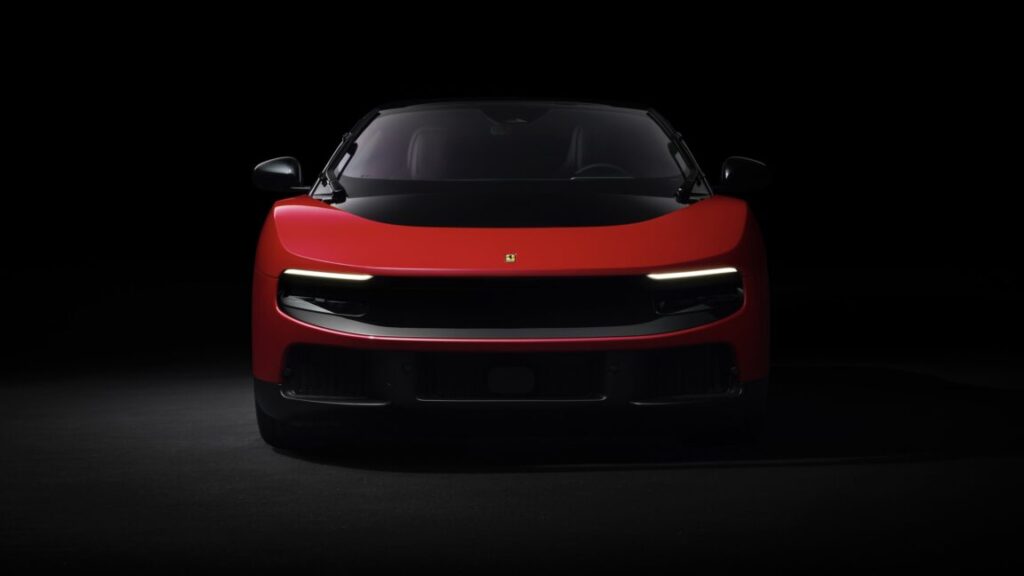
Table of Contents
A Departure from Tradition
For decades, the Ferrari brand has been defined by a rigid adherence to the mid-engine, two-seater formula. But the arrival of the Luce marks a definitive rupture in that lineage. The Luce is not just Ferrari’s first battery-electric vehicle (BEV); it is the brand’s first four-door, five-seater sedan. It is a vehicle that manages to be contradictory in almost every sense, blending a highly divisive exterior with an interior that may set a new benchmark for the entire automotive industry.
The move is a strategic necessity. As regulatory pressures mount in Europe and demand shifts in critical markets like China and Silicon Valley, Ferrari can no longer rely solely on the internal combustion engine. However, pivoting to electric power while maintaining the ‘soul’ of a Ferrari is a precarious balancing act. In the case of the Luce, Ferrari decided to look outside its Maranello walls for design guidance, partnering with LoveFrom—the creative collective helmed by former Apple design chief Jony Ive and Marc Newson.
The Aesthetic Tension
The influence of LoveFrom is immediate and unmistakable. To some, the Luce looks like a cohesive evolution of modern minimalism; to others, it looks like an Apple product that happens to have wheels. The cab-forward glasshouse echoes the avant-garde lines of the Lotus Etna concept, while the four round taillights serve as a conscious nod to the 360 and 550 models of the 1990s.
While early reactions have been polarized, the car’s form is driven by a rigorous commitment to physics. Ferrari revealed that aerodynamic studies for the Luce began seven years ago—two years before the BEV project was even officially greenlit. The goal was to minimize drag without sacrificing the downforce necessary to keep a high-performance vehicle planted at speed. The engineering effort is staggering: 6,000 computational fluid dynamics simulations and over 300 hours of wind tunnel testing.
The result is a body where the hood dives sharply beneath a wing, channeling air over the roof and toward a rear deck wing. Active air vents throughout the chassis adjust in real-time, shifting configurations based on whether the driver prioritizes maximum efficiency or raw performance. For those chasing range, Ferrari offers aerodisc wheels machined from single-piece aluminum, designed to eliminate the turbulence and wakes that typically sap BEV batteries. These wheels are key to hitting the targeted 330-mile (530 km) range under Europe’s WLTP cycle.
A Masterclass in Tactility
If the exterior is a subject for debate, the interior is an undisputed triumph. In an era where luxury manufacturers are replacing every physical switch with a generic touchscreen, Ferrari has gone in the opposite direction. The Luce dashboard is carved from a single piece of brushed aluminum, intentionally omitting a secondary screen for the passenger—a decision that feels both refreshing and sophisticated.
The interface is a blend of cutting-edge OLED technology and old-world mechanical precision. The instrument binnacle is fixed to the steering column, rotating with the wheel. It utilizes two sandwiched OLED displays, but the speedometer remains a physical needle, providing a level of analog authenticity rarely seen in modern EVs. Similarly, the air vents are tactile, valved like a performance exhaust, and the climate controls are handled by brushed aluminum rocker switches.
The center console features a pivoting infotainment screen that manages to solve the ‘passenger screen’ dilemma without adding visual clutter. It supports Apple CarPlay, which spans the width of the display, but the standout detail is the integrated clock. With a single button press, the clock transforms into a 60-second stopwatch and then a compass, utilizing physical needles in a move that feels more like a high-end Swiss watch than a piece of consumer electronics.
By prioritizing materials like Gorilla Glass and machined aluminum over plastic and pixels, Ferrari has created a cabin that justifies the vehicle’s premium positioning. The Luce is a gamble, betting that the prestige of the Prancing Horse can survive a transition to a four-door electric sedan, provided the execution is flawless.


