The Rare Collision of Cosmic Debris and Volcanic Activity: Analyzing the Fireball over the Philippines
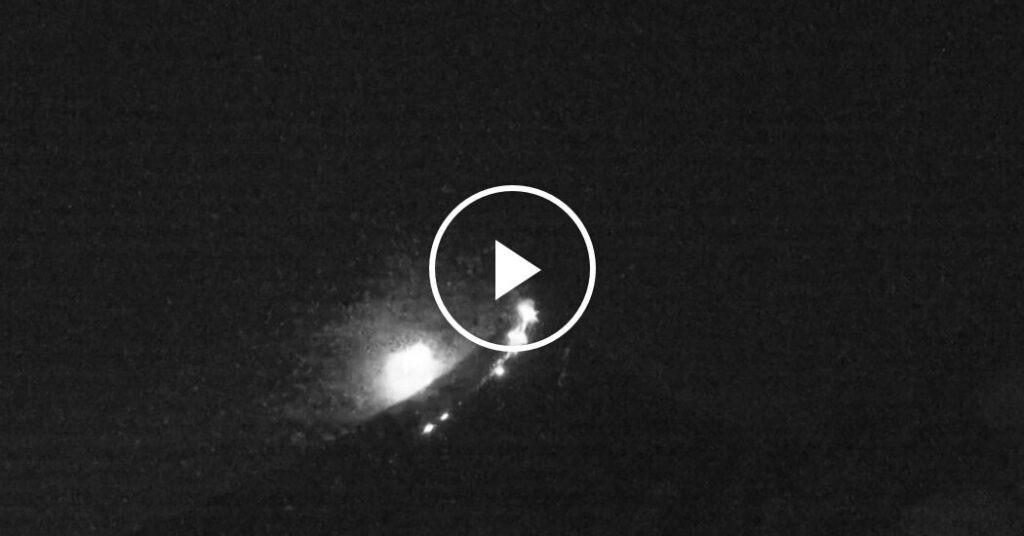
Table of Contents
A Singular Intersection of Geologic and Cosmic Events
In a rare synchronization of atmospheric and geologic phenomena, a brilliant fireball was captured streaking across the sky directly above an erupting volcano in the Philippines. While the visual evidence—captured in high-definition video—appears cinematic, the event provides a distinct data point for researchers studying the intersection of planetary geology and near-Earth objects (NEOs).
The event occurred as a bolide, a large meteor that explodes in the atmosphere, entered the troposphere at a shallow angle. The timing was particularly striking; the volcanic plume, consisting of ash and sulfur dioxide, provided a stark, dark backdrop that amplified the luminosity of the meteor’s plasma trail. This contrast likely contributed to the clarity of the footage, as the ash cloud acted as a natural filter, isolating the fireball’s trajectory against the chaotic backdrop of the eruption.
The Physics of the Atmospheric Entry
When a piece of cosmic debris enters Earth’s atmosphere at speeds typically ranging from 11 to 72 kilometers per second, it compresses the air in front of it, creating a high-pressure shock wave. This process, known as adiabatic compression, heats the surrounding gas to thousands of degrees, ionizing the air and creating the glowing plasma trail seen in the video.
Given the fireball’s brightness and the way it fragmented—a process known as “spalling”—it is likely that the object was composed of stony material, possibly a chondrite. Unlike iron-nickel meteors, which tend to penetrate deeper into the atmosphere, stony meteors often explode at higher altitudes due to thermal stress and mechanical pressure. The fact that the fireball was visible over the volcanic plume suggests it disintegrated in the upper atmosphere, likely between 30 and 60 kilometers high.
Tracking and Detection Challenges
The coincidence of this event raises questions about the current state of space situational awareness (SSA). While large asteroids are tracked by systems like NASA’s Planetary Defense Coordination Office, smaller bolides often go undetected until they enter the atmosphere. The Philippine event underscores the reliance on opportunistic sightings and citizen-science footage to fill the gaps in orbital catalogs.
For researchers, the real value of the footage lies in the trajectory analysis. By synthesizing the video from multiple angles, astronomers can potentially backtrack the object’s orbit to determine if it was a sporadic meteor or part of a known debris stream. There is also the technical possibility that the object was not a natural meteor but rather “space junk”—a piece of a decommissioned satellite or a spent rocket stage. The difference lies in the spectral signature of the light; metallic debris typically produces a distinct green or orange hue due to the presence of aluminum or magnesium, whereas natural stony meteorites often lean toward a white or yellowish glow.
Environmental Interaction
While the meteor did not interact with the volcano in a physical sense, the presence of volcanic ash in the air can affect the visibility and perceived color of such events. Ash particles can scatter light, potentially creating a “halo” effect around the bolide. However, the sheer energy release of a fireball typically overrides these atmospheric distortions, making the event a clear signal regardless of the local environmental volatility.
As the Philippines continues to monitor its active volcanic chains, the integration of atmospheric monitoring and seismic data becomes increasingly important. While this specific event was a coincidence, it serves as a reminder of the unpredictable nature of the environment, where the depths of the Earth and the reaches of space can momentarily converge in a single frame of video.