Garden Grove Chemical Scare: How a Failed Cooling Valve Nearly Triggered a BLEVE Catastrophe
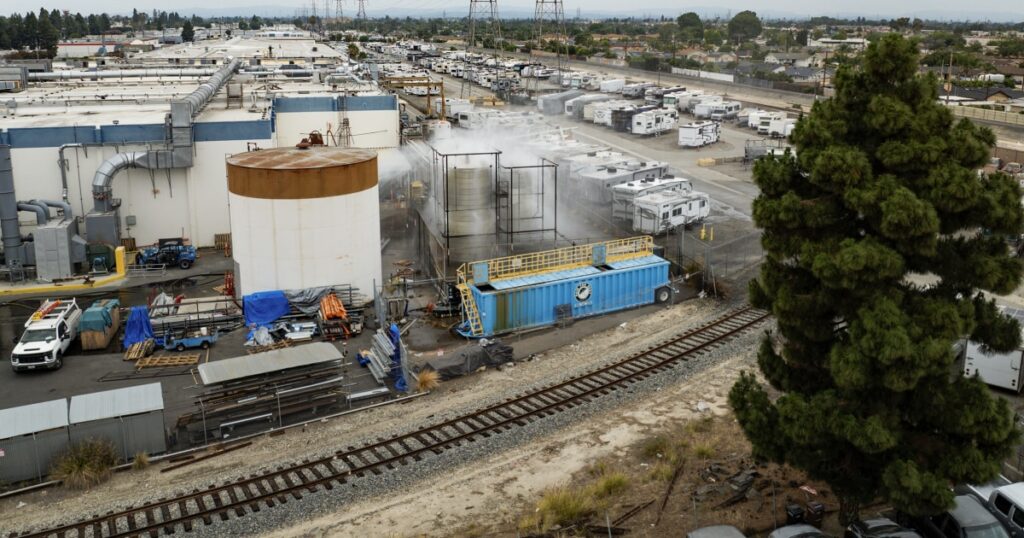
Table of Contents
A Narrow Escape in Garden Grove
The final 16,000 residents of Garden Grove, California, were permitted to return to their homes on Tuesday night, marking the end of a high-stakes standoff with a 7,000-gallon tank of volatile chemicals. For nearly a week, the city and its neighbors lived under the shadow of a potential environmental disaster at the GKN Aerospace facility, where a mechanical failure nearly triggered a catastrophic explosion.
The crisis centered on a massive reservoir of methyl methacrylate (MMA)—a highly flammable and toxic liquid used extensively in the production of acrylic plastics and aerospace components. By Tuesday evening, the Orange County Fire Authority (OCFA) confirmed that the immediate threat had subsided, stating there was no longer a risk of explosion, fire, or chemical leakage affecting the public.
The Mechanics of a Near-Miss
According to details released during a community meeting on Tuesday, the emergency began at 3:22 p.m. last Thursday when first responders were alerted to an active leak. Upon arrival, crews discovered a pressure valve at the top of one of three on-site tanks releasing vapor. The root cause was not a structural failure of the tank itself, but a breakdown in the refrigeration system designed to keep the chemical stable at a constant 50 degrees Fahrenheit.
When the cooling system failed, the methyl methacrylate began to overheat. In the world of industrial chemistry, this is a precarious situation; as the liquid heats, the internal pressure rises, potentially leading to what officials described as a BLEVE—a Boiling Liquid Expanding Vapor Explosion. Unlike a standard fire, a BLEVE occurs when the structural integrity of a pressurized vessel fails, causing the entire contents to vaporize instantaneously and explode with devastating force.
“That tank was imminently ready to blow,” stated Orange County incident commander Craig Covey. The situation was further complicated by temperature readings that climbed at least 100 degrees over the weekend, far exceeding the safe operating threshold.
Containment and Mitigation Strategies
The prevention of the explosion required a massive, coordinated cooling effort. GKN Aerospace activated internal sprinkler systems, while the fire department deployed high-volume hose streams delivering 1,250 gallons of water per minute to the exterior of the tank. This aggressive cooling reduced the internal pressure and lowered the temperature to 92 degrees by Tuesday.
Ironically, a structural flaw may have contributed to the survival of the neighborhood. Covey noted that a crack in the tank actually served as a makeshift vent, allowing some pressure to escape and providing crews a window to implement more aggressive cooling measures without triggering a full-scale rupture.
Regulatory Scrutiny and Community Backlash
While the immediate danger has passed, the political fallout is just beginning. At the peak of the crisis, approximately 60,000 people were displaced from their homes across Garden Grove and surrounding municipalities. During Tuesday’s community meeting, residents voiced sharp criticism over the presence of such hazardous materials in a densely populated area 35 miles southeast of Los Angeles.
Mayor Stephanie Klopfenstein confirmed that the incident will trigger a series of investigations at the city, state, and federal levels. The inquiry is expected to focus on whether GKN Aerospace adhered to safety protocols and whether existing regulations regarding the storage of volatile chemicals in residential proximity are sufficient.
In a statement, a spokesperson for GKN Aerospace apologized for the disruption and emphasized that the company continued to work around the clock with the Environmental Protection Agency (EPA) and the OCFA to secure the site. However, for many residents, the apology does little to erase the trauma of a week spent wondering if their neighborhood was about to become ground zero for a chemical disaster.