Oppo Pad 6 Debuts in China: A Massive Battery and Dimensity 9500s Powerhouse
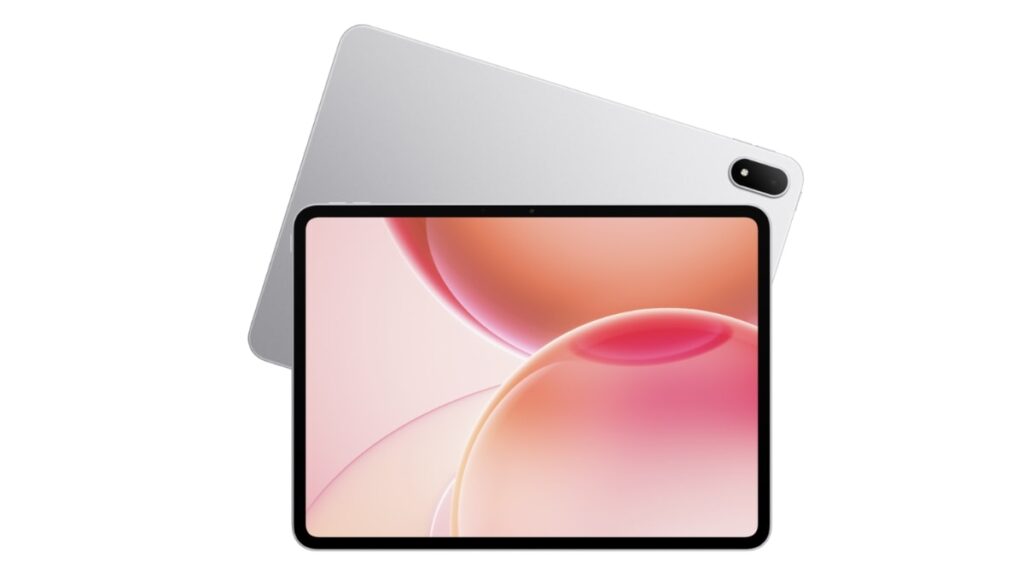
Table of Contents
A Heavyweight Contender for the Android Tablet Space
Oppo has officially expanded its tablet portfolio with the launch of the Oppo Pad 6 in China. Positioned as a direct successor to the Pad 5, the new device isn’t just a modest spec bump; it represents a strategic push into the high-performance productivity segment, blending aggressive battery capacity with MediaTek’s latest silicon.
The most immediate standout is the power delivery. Oppo has equipped the Pad 6 with a 10,420mAh battery, a figure that comfortably outclasses many of its competitors in the 12-inch category. For users who rely on tablets for long-haul travel or full workdays away from a wall outlet, this capacity suggests a level of endurance that could challenge the current market leaders. When paired with the efficiency of the new SoC, the Pad 6 is clearly being marketed as a device for power users rather than casual media consumers.
Silicon Strategy: The Dimensity 9500s
Under the hood, Oppo has opted for the MediaTek Dimensity 9500s. By utilizing the ‘s’ variant of the chipset, Oppo is likely balancing peak performance with thermal efficiency, ensuring the tablet doesn’t throttle during sustained workloads or high-end gaming. This processor is supported by a generous memory ceiling, with configurations reaching up to 16GB of RAM, making it a viable machine for heavy multitasking and the increasingly resource-hungry AI features being integrated into mobile OS environments.
The software side is equally ambitious. The Pad 6 ships with ColorOS 16, built upon Android 16. While Android 16 is still in its early stages of global ecosystem adoption, Oppo’s rapid deployment indicates a desire to be at the forefront of the software curve, likely leveraging the new OS’s improved windowing and multitasking capabilities to make the 12.1-inch screen feel more like a laptop replacement.
Display and Aesthetics
The visual experience is anchored by a 12.1-inch LCD panel. While OLED remains the gold standard for contrast, Oppo has leaned into a 144Hz adaptive refresh rate, ensuring that animations remain fluid while conserving energy when static content is displayed.
In a move aimed at readers and digital artists, Oppo is also introducing a “Soft Light” edition. This specialized screen treatment reduces glare and mimics the tactile feel of paper, providing a matte alternative to the standard glass for those who spend hours sketching or reading documents. The device is available in two distinct finishes: Deep Space Gray and Galaxy Silver.
Pricing and Market Positioning
The pricing strategy reveals that Oppo is targeting both the mid-range and premium tiers of the tablet market. The base model, featuring 8GB of RAM and 256GB of storage, enters the market at CNY 3,499 (approximately ₹49,000). Stepping up to the 12GB/512GB and 16GB/512GB variants increases the price to CNY 3,899 (₹54,700) and CNY 4,299 (₹60,300), respectively.
For those opting for the Soft Light edition, the costs shift slightly, starting at CNY 3,799 for the 8GB/256GB model and peaking at CNY 4,199 for the 12GB/256GB configuration. By offering multiple RAM and storage tiers, Oppo is attempting to capture a wide swath of the Chinese market before potentially eyeing a wider international rollout.
Oppo Pad 6 Technical Specifications
| Feature | Specification |
|---|---|
| Display | 12.1-inch LCD, 144Hz Adaptive |
| Processor | MediaTek Dimensity 9500s |
| RAM | 8GB / 12GB / 16GB |
| Storage | 256GB / 512GB |
| Battery | 10,420mAh |
| OS | ColorOS 16 (Android 16) |
| Rear Camera | 8-megapixel |


