Ferrari’s Electric Gamble: The ‘Luce’ Debut Sparks Market Turmoil and Brand Identity Crisis
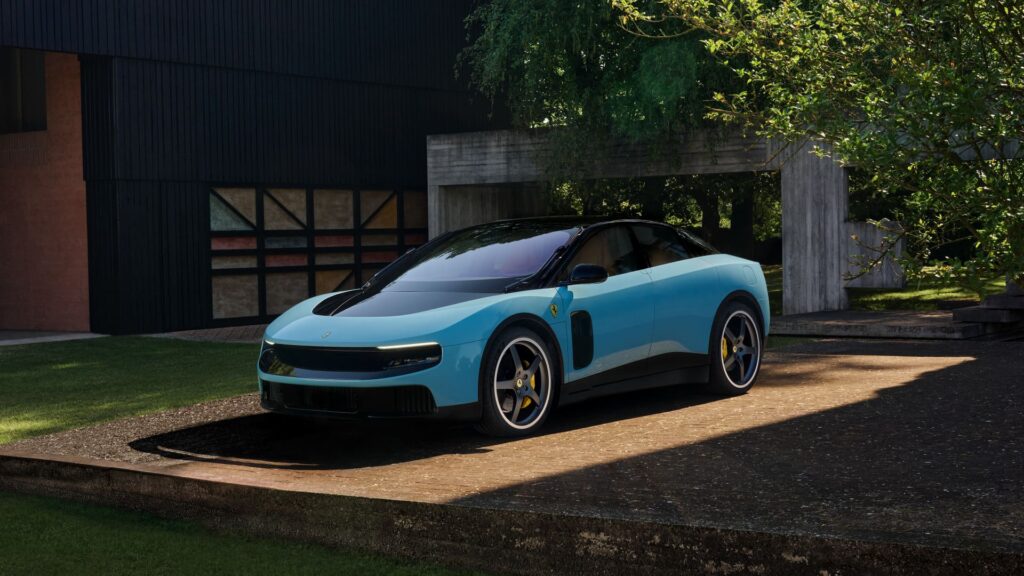
Table of Contents
A Risky Pivot in Maranello
Ferrari has long operated more as a luxury fashion house than a traditional automaker, selling exclusivity and the visceral roar of an internal combustion engine. But the debut of the Luce—the company’s first fully electric vehicle—has sent a shockwave through both the stock market and the brand’s loyalist base, prompting a sharp sell-off in Milan and New York.
Unveiled in Rome, the Luce (meaning “light”) represents a fundamental shift in direction for the Maranello-based manufacturer. However, the market reaction was immediate and cold. Ferrari shares tumbled approximately 8% in Milan shortly after the presentation, while U.S.-listed shares dipped 5.3%. The decline isn’t just a fluke of Tuesday’s trading; the stock has struggled significantly over the last 12 months, sliding more than 32% as investors weigh the costs of electrification against a cooling global demand for high-end EVs.
Design Friction and the Jony Ive Influence
The Luce is not a typical Ferrari. Moving away from the aggressive, aerodynamic silhouettes that define the brand, the Luce is Ferrari’s first-ever five-seater. To achieve this new aesthetic, Ferrari partnered with LoveFrom, the design firm founded by former Apple design chief Jony Ive. While Ive is renowned for the minimalist elegance of the iPhone and iMac, that same minimalism appears to be alienating the Ferrari faithful.
The criticism has reached the highest levels of the company’s own history. Former Ferrari chairman Luca di Montezemolo, who led the company for decades, did not mince words, describing the vehicle as a “disgrace” to the company’s legacy. In a scathing critique delivered at a Rome business conference, di Montezemolo suggested the “prancing horse” logo should be removed from the car entirely. This sentiment was echoed by Italian Deputy Prime Minister Matteo Salvini, who took to X to question if the 550,000 euro ($640,000) price tag was justified for a design he claimed looked like “anything but a car from the Prancing Horse.”
The Engineering Trade-off
Despite the aesthetic controversy, the Luce is a technical powerhouse. Ferrari claims the vehicle can sprint from 0 to 60 mph in roughly 2.5 seconds, reaching a top speed of 192 mph. Crucially, the company opted for a vertical integration strategy, developing and manufacturing all components in-house in Maranello to maintain tight control over quality and performance.
CEO Benedetto Vigna has framed the launch as a necessary evolution, emphasizing “respect” for the new technology. Vigna argues that a shift in powertrain requires a shift in design, stating that the technology must be properly represented in the car’s form. When addressing the loss of the signature Ferrari engine note, Vigna noted that while the sound is different, the “emotion” provided to the driver remains consistent.
Investor Anxiety in a Cooling EV Market
The financial blow reflects more than just “design hate.” The timing of the Luce launch is precarious. Rivals like Porsche and Lamborghini have recently scaled back their EV ambitions, citing a slump in demand for electric luxury vehicles. For investors, the Luce represents a massive R&D expenditure that must now be recouped in a market that is increasingly hesitant about electrification.
Michael Field, chief equity strategist at Morningstar, suggests that the move may dilute the brand’s identity. By embracing the EV concept, Ferrari risks alienating the purists who view raw combustion power as the core of the supercar experience. Anthony Dick, an analyst at Oddo BHF, noted that the stock’s reaction is the sharpest ever seen for a specific car design, signaling that the market views this as the furthest deviation from the brand’s ethos in its history.
With customer deliveries scheduled to begin in the fourth quarter of the year, Ferrari is now in a race to prove that the Luce can attract a new generation of wealthy buyers without erasing the mystique that made the prancing horse a global icon.