A Hydraulic Pin and a Public Offering: Why SpaceX’s Starship V3 Scrub is More Than a Delay
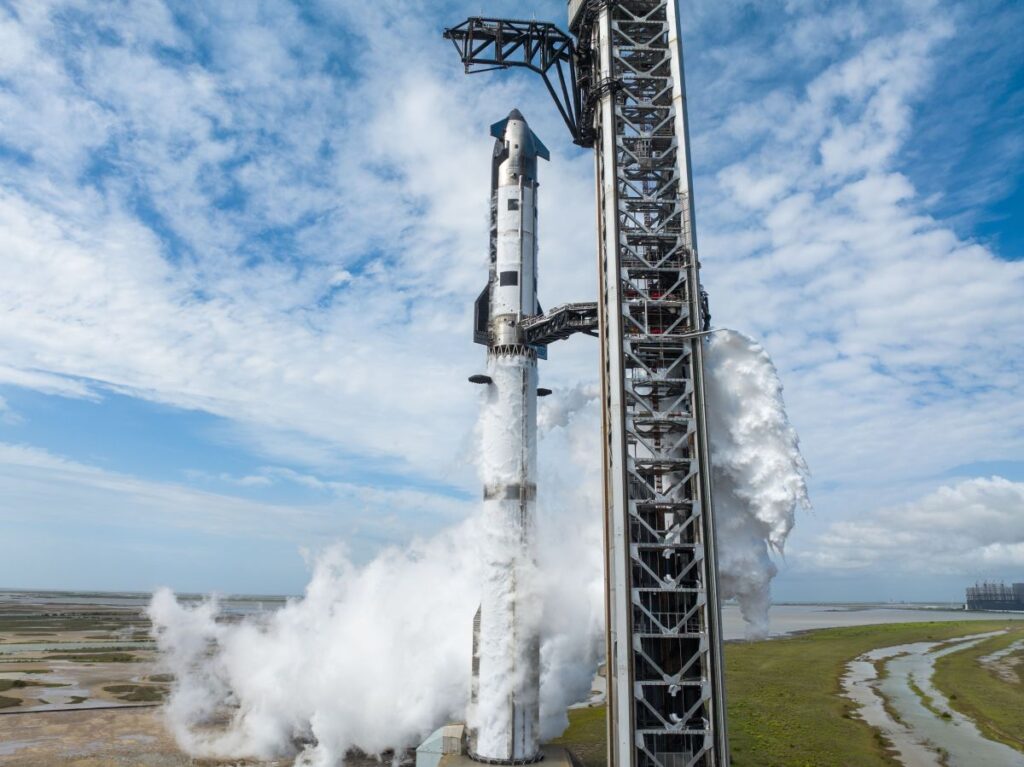
Table of Contents
A T-minus 40-second heartbreak
The countdown for SpaceX’s most ambitious hardware iteration to date didn’t end with a roar, but with a recycle. In the final seconds of the launch window at Starbase, Texas, the first flight of the Starship V3 system was scrubbed just as the vehicle sat fully fueled and ready for ascent. While the countdown dipped below T-40 seconds, a stubborn piece of ground hardware turned a potential milestone into a scheduling headache.
According to Elon Musk, the culprit was a specific failure in the launch infrastructure: a hydraulic pin holding the tower arm in place failed to retract. In the high-stakes environment of a rocket launch, a failure to clear the vehicle’s path is an automatic abort. SpaceX has tentatively rescheduled the attempt for Friday at 5:30 p.m. local time, contingent on whether the hardware fix can be implemented overnight.
The stakes of Version 3
This isn’t just another test flight in a long series of iterations. The V3 architecture represents a fundamental shift in how SpaceX approaches the mega-rocket. At the heart of the upgrade are the third-generation Raptor engines, designed for higher thrust and a more streamlined profile. The booster has also been modified to be more ‘catchable’ by the launch tower’s mechanical arms, featuring one fewer grid fin to optimize stability and weight.
Internally, SpaceX is fighting a war against propellant leaks. Previous flights saw troubling gas buildup in certain sections of the Starship upper stage—a flaw that could compromise the vehicle’s goal of total reusability. V3 introduces design changes specifically intended to mitigate these leaks, bringing the system closer to the operational reliability of the Falcon 9, which has fundamentally changed the economics of space flight.
However, the path to V3 hasn’t been smooth. The company spent the months following its October 2025 flight refining these designs, a period marred by a November incident where a V3 booster exploded during ground testing. This Friday’s attempt is the first real-world validation of whether those lessons were successfully integrated.
The IPO shadow
While the technical hurdles are significant, the timing of this launch is fraught with financial tension. SpaceX recently filed for an initial public offering (IPO) and is expected to enter the public markets within weeks. For a company that has historically operated in the shadows of private funding, the transition to a public entity puts a spotlight on its primary capital expenditure: Starship.
The financial viability of the company’s future is inextricably linked to this rocket. While Starlink is a massive success—generating $11 billion in revenue last year according to the IPO filings—the next phase of the constellation requires the massive payload capacity that only Starship can provide. SpaceX has deployed dummy satellites in the past, but it has yet to put a fully operational, high-capacity payload into orbit using the new system.
Managing expectations for Friday
Even if Friday’s launch is a success, it won’t be a complete victory lap. This specific mission is a ‘soft landing’ test. Neither the booster nor the Starship vehicle will be recovered; they are slated for controlled splashes in the Atlantic and Indian Oceans, respectively. Furthermore, the vehicle will not achieve a true Earth orbit, meaning the upper stage’s ability to deliver commercial payloads remains unproven.
For investors and observers, the success of this flight will be measured not by the destination, but by the execution. If SpaceX can navigate the hydraulic failures of the tower and the volatility of the Raptor engines, it will send a strong signal to Wall Street that its transition from an iterative prototype phase to a reliable launch system is finally underway.


