Nuro’s Gamble on the ‘Second Mover’ Advantage in the Robotaxi Race
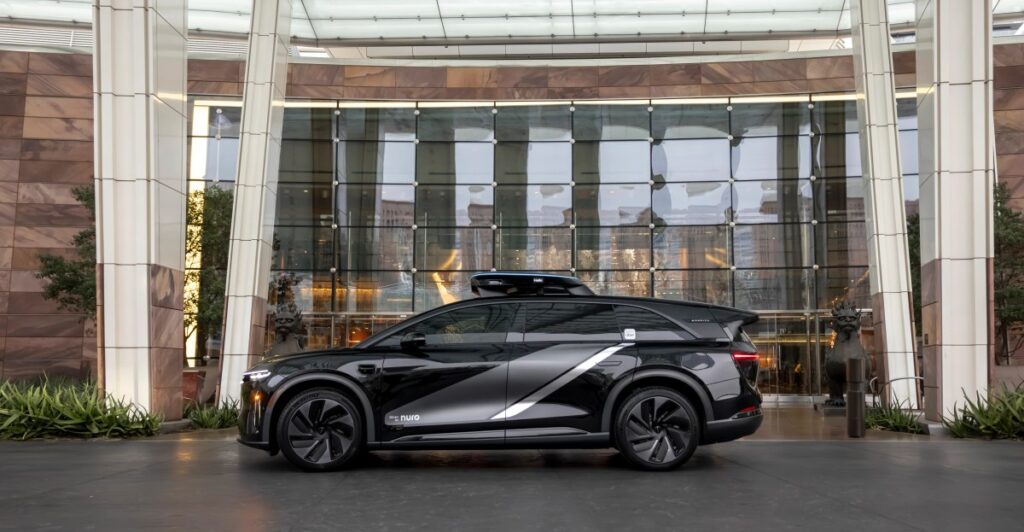
Table of Contents
The Strategy of Following
In the high-stakes race for autonomous ride-hailing, being first is often seen as the only way to win. Waymo, the Alphabet-owned pioneer, has spent years establishing a dominant lead, operating a fleet of over 3,000 driverless cars across ten U.S. cities. But for Nuro, the company founded by former Google self-driving veterans, the goal isn’t to be the first—it’s to be the most refined.
After spending its early years focused on the niche market of robot delivery, Nuro has pivoted toward the broader robotaxi sector. The company is now betting on a “second mover” advantage, arguing that watching the industry leader stumble and succeed in real-time is more valuable than the prestige of being the first to launch. According to co-founder and co-CEO Dave Ferguson, Waymo’s public operational challenges serve as a free stress test for Nuro’s own systems.
“There is a lot of value in this sort of classic second mover perspective,” Ferguson noted in a recent interview. He emphasized that whenever Waymo faces a hurdle, Nuro engineers use that specific scenario to “kick the tires” on their own tech, ensuring their vehicles would handle the same situation with more reliability.
A Three-Way Power Play
Nuro isn’t entering the market as a standalone operator. Instead, it has constructed a complex, three-pronged alliance with Uber and Lucid Motors. This partnership is designed to bypass the manufacturing and fleet-management hurdles that have slowed other startups.
Under the current agreement, Nuro provides the “brains”—the sensing and compute stack. This technology is integrated directly into the production line of the Lucid Gravity SUV. By the time a Gravity leaves the factory, it is already equipped with Level 4 autonomy. From there, the vehicles are sold to Uber, which assumes the role of owner and operator, managing the depots and the underlying infrastructure of the service.
This structure allows Nuro to focus on the software and AI, while leveraging Uber’s massive demand and Lucid’s luxury hardware. For Uber, it provides a scalable path to autonomous ride-hailing without having to build the autonomy stack from scratch.
Broadening the Operational Domain
One of the biggest criticisms of early autonomous deployments has been their incremental approach—starting with a few protected blocks and slowly expanding. Ferguson suggests Nuro will take a different path. While the company won’t launch across the entire South Bay on day one, it intends for its San Francisco debut later this year to be “broadly useful” from the start.
This means avoiding an ultra-conservative playbook. While some advanced features like freeway driving may follow later, Nuro plans to launch with a wider operational design domain than the industry standard, avoiding the slow transition from protected to unprotected intersections that has characterized early robotaxi rollouts.
The Remote Assistance Debate
As Nuro prepares for launch, it is stepping into a regulatory environment increasingly skeptical of “remote assistance.” Recent congressional inquiries have pressured Waymo and others to be more transparent about the human operators overseeing these fleets. There is a lingering public perception that a human is essentially “gaming” the car from a dark room.
Ferguson is quick to dismiss this image. He explains that remote assistance isn’t about active steering or driving, but rather providing prompts and answering questions when the AI encounters a confusing scenario. It is a system of guidance, not direct control, though the distinction remains a point of contention for regulators concerned about safety and labor transparency.
Ultimately, Nuro’s long-term ambition is to build a universal AI driving system. By combining the lessons from its legacy rules-based machine learning with modern end-to-end models, Nuro hopes to create a driving style that feels more natural and less mechanical than the early iterations of the technology.


