Nuro Bets on the ‘Second Mover’ Advantage in the Robotaxi Race
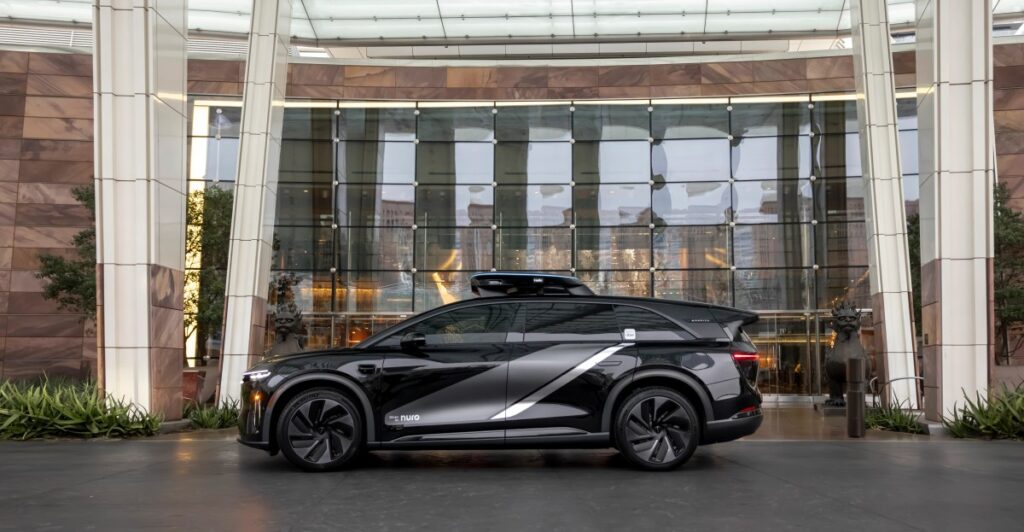
Table of Contents
The Strategy of Following
Waymo is currently the undisputed heavyweight of the autonomous ride-hailing world, operating a fleet of over 3,000 driverless cars across ten U.S. cities. For most companies in the space, being behind Waymo feels like a deficit. But for Nuro, the former delivery-robot startup, playing catch-up is the actual strategy.
Nuro, founded by alumni of Google’s own self-driving project, is leaning into what co-founder and co-CEO Dave Ferguson calls the “second mover perspective.” After pivoting from grocery delivery to passenger transport in 2024, Nuro isn’t trying to reinvent the wheel—it’s trying to build a better one by analyzing Waymo’s public stumbles and operational hurdles.
“We have a huge amount of respect for Waymo,” Ferguson noted in a recent interview. He explained that when Waymo encounters challenges in the field, Nuro uses those moments as a litmus test for their own systems, effectively “kicking the tires” on their tech to ensure they wouldn’t repeat the same mistakes.
A Three-Way Power Play
Nuro’s entry into the passenger market isn’t a solo effort. The company has architected a complex, three-pronged partnership with Uber and Lucid Motors. Unlike other autonomous players who retrofit existing cars with bulky sensors, Nuro is integrating its sensing and compute stack directly into the production line of the Lucid Gravity SUV.
This means the vehicles leave the factory as native Level 4 autonomous machines. From there, the ownership chain shifts: Lucid builds them, Nuro powers them, and Uber buys and operates them. Uber will handle the fleet management, depot logistics, and the crucial but often misunderstood layer of remote assistance.
The role of remote assistance has recently become a flashpoint for regulators and members of Congress, who have questioned the transparency of offsite workers overseeing driverless fleets. Ferguson was quick to clarify that this isn’t like a video game. Remote operators don’t “drive” the car via joystick; instead, they provide high-level prompts and guidance when the AI encounters a scenario it cannot resolve on its own.
Avoiding the Incremental Trap
One of the biggest risks for any AV company is the “incremental rollout”—starting with a tiny, protected neighborhood and spending years slowly expanding. Nuro intends to avoid this. While they aren’t claiming they will cover the entire South Bay on day one, Ferguson insists the service will be “broadly useful” from the start.
This means Nuro won’t limit itself to a handful of protected intersections. Instead, they are aiming for a wide operational design domain (ODD) at launch, though some high-complexity environments, like freeways, may be phased in later. This aggressive approach is bolstered by the company’s transition toward end-to-end learning models, which allow for a more naturalistic driving style compared to the rigid, rules-based systems of the past.
The ambition doesn’t stop at ride-hailing. Nuro’s long-term roadmap includes licensing its AI driving stack to other automakers for advanced driver-assistance systems (ADAS) and privately owned autonomous vehicles. For now, however, the focus is on San Francisco, where the company recently secured the first of several critical permits needed to put their Lucid-powered fleet on the street later this year.


