SpaceX’s Starship V3 Hits Major Milestones in First High-Stakes Test Flight
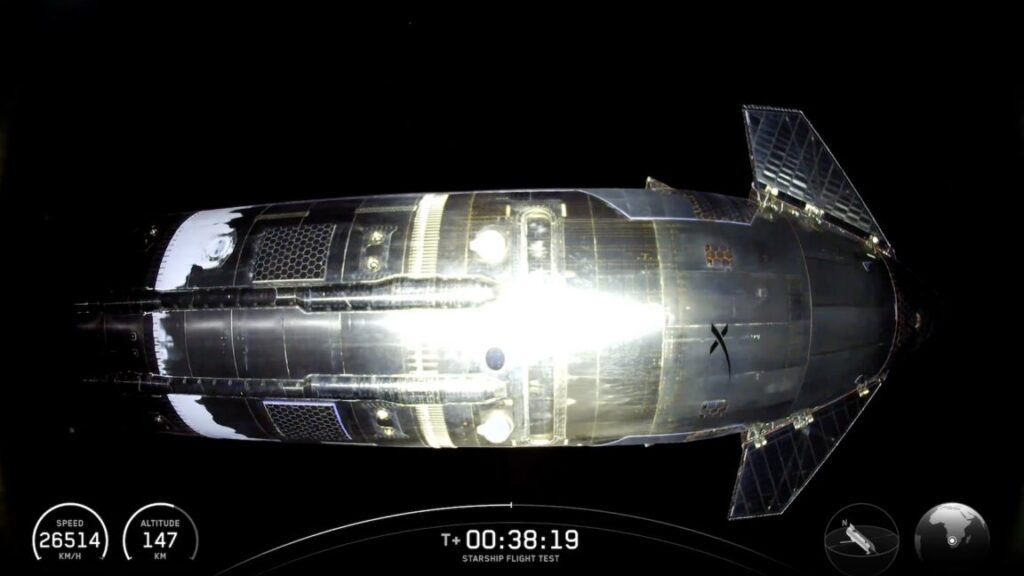
Table of Contents
A New Iteration Takes Flight
SpaceX returned to the launch pad on Friday with the debut of Starship V3, the latest evolution of the company’s massive stainless-steel launch system. Lifting off from the Starbase facility in South Texas at 5:30 pm CDT, the 408-foot-tall vehicle—the largest rocket ever constructed—cleared the tower and banked east over the Gulf of Mexico, marking a critical step in the company’s rapid prototyping cycle.
While early iterations of the Starship program were characterized by spectacular mid-air disintegrations, V3 managed a far more composed debut. The vehicle reached a peak altitude of 121 miles over the South Atlantic Ocean before eventually splashing down on target in the Indian Ocean, roughly an hour after liftoff.
Heat Shielding and Reentry Performance
One of the most scrutinized aspects of the flight was the heat shield. On previous V1 and V2 tests, the extreme plasma of reentry often compromised the ship’s aerodynamic flaps or burned through the thermal protection system. This time, however, onboard cameras revealed the flaps remained intact throughout the descent. The vehicle successfully executed banking maneuvers to simulate a return path to Starbase, eventually flipping from a horizontal glide to a vertical orientation for its final descent.
The landing sequence concluded with a precision burn of the Raptor engines, transitioning from three engines down to a single unit just before hitting the water. While the ship inevitably tipped and exploded upon impact—a typical end for these uncrewed tests—the data gathered from the controlled splashdown northwest of Australia represents a significant win for SpaceX’s engineering team.
Payload Efficiency and the Raptor 3
Beyond the flight path, SpaceX used V3 to test a redesigned payload deployment mechanism. The system, described as a “Pez-like” dispenser, is specifically engineered for the high-volume release of flat-packed Starlink satellites. During this flight, the dispenser successfully released 20 mockups of next-generation satellites along with two specialized camera-equipped spacecraft designed to inspect the hull’s exterior in a vacuum.
The flight also served as the first real-world test for the Raptor 3 engines. These redesigned powerplants are lighter and more efficient, providing the Super Heavy booster with roughly 18 million pounds of thrust. For context, that is double the power of the Space Launch System (SLS) rocket used in NASA’s recent Artemis II mission.
Not Without Glitches
Despite the overall success, the flight wasn’t flawless. Two Raptor engines failed during the sequence—one on the Super Heavy booster and one on the Starship upper stage. These failures highlighted the importance of the vehicle’s “engine-out” capability, which allows the rocket to compensate for lost thrust by extending the burn time of the remaining engines. The ship maintained its trajectory, though the booster was unable to complete its boost-back maneuver and crashed into the Gulf.
The Broader Implications
The success of V3 is a pivotal moment for NASA, which is relying on Starship to serve as the human-rated lander for future lunar missions. NASA Administrator Jared Isaacman, who witnessed the launch in person, praised the effort as a significant leap forward. Furthermore, the successful use of the new launch pad at Starbase provides a blueprint for upcoming facilities at Cape Canaveral, Florida.
With a projected payload capacity of 100 metric tons to low-Earth orbit—double that of V2—Starship V3 isn’t just a test of endurance, but a signal that SpaceX is moving closer to the operational cadence required for Mars and Moon exploration.