The Food Scientist and the Soviet Secret: How a Radio Ad Put a Briton in Orbit
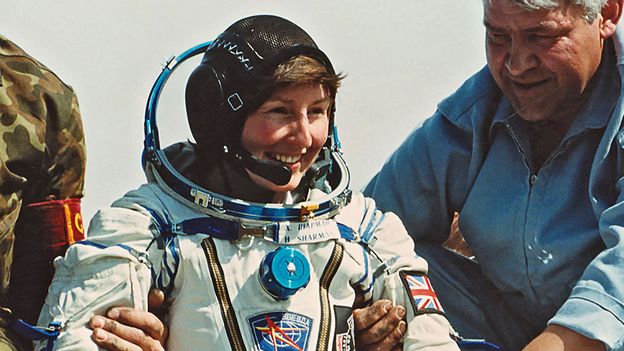
Table of Contents
A Pivotal Moment in a Traffic Jam
Most people remember their commutes as mundane interruptions to the day. For Helen Sharman, a 27-year-old food scientist in June 1989, a typical traffic jam on the way home from the Mars factory in Slough became the catalyst for a historical anomaly. While scanning radio stations to kill time, she heard a brief, unassuming advertisement: “Astronaut wanted. No experience necessary.”
At the time, the United Kingdom lacked a formal state-sponsored space program. For a British citizen to reach orbit, the only viable route was through private enterprise and international cooperation. This advertisement was the call for Project Juno, a commercial venture designed to send a Briton to the Soviet Union’s Mir space station. Funded by a private consortium and operated via the Soviet space agency, it was a daring experiment in diplomacy and commerce during the thawing period of the Cold War.
The Gauntlet of Star City
The selection process was grueling. Out of 13,000 applicants, only four made it to the final stage of training. Sharman found herself transported from the London suburbs to the outskirts of Moscow, arriving at a facility known as “Star City.” In the rigid hierarchy of the Soviet era, the site was officially designated as Military Unit 26266—a closed military townlet that didn’t appear on any public maps.
The atmosphere was one of extreme secrecy and discipline. NASA astronaut Michael Barratt later described Star City as a “forbidden city,” a hidden hub where the world’s most elite cosmonauts were forged. Yet, under the reforming regime of Mikhail Gorbachev, the gates were slightly ajar for a few foreigners. Sharman’s experience was a strange blend of high-security military life and unexpected luxury; while she had access to chauffeur-driven Volgas, she famously arranged for her own Ford Escort to be shipped in from Finland to maintain a sense of normalcy.
Breaking Tradition on the Mir
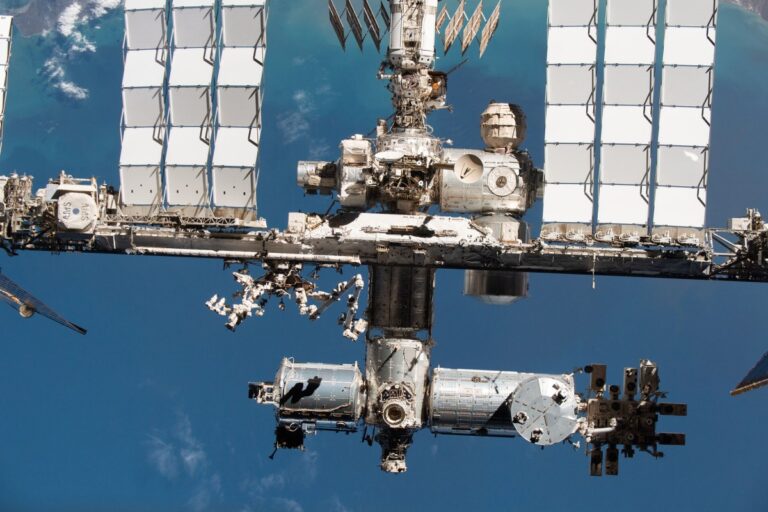
On May 18, 1991, Sharman launched aboard the Soyuz TM-12 capsule. Her destination was the Mir space station, where she would spend eight days conducting research and making history. Entering the world of the cosmonauts meant adopting their idiosyncratic traditions. One such ritual, started by Yuri Gagarin in 1961, involved a last-minute stop for a toilet break on the bus ride to the launchpad—a quirk of the Baikonur cosmodrome that persists to this day.
Despite the rigid structure of the Soviet program, the human element prevailed. Sharman formed deep bonds with her crewmates, Anatoly Artebartsky and Sergei Krikalyov. She also befriended Alexei Leonov, the first human to perform a spacewalk, who viewed himself as an “international cosmonaut.” In a gesture of camaraderie that defied the sterile nature of space travel, Leonov gifted Sharman a pink chiffon jumpsuit with frilly sleeves, which she dubbed “the dream-garment.” She wore it during the celebratory first-night dinner on Mir, while Krikalyov wore a tie that floated horizontally in the microgravity environment.
A Legacy Beyond the Mission
For Sharman, the technical achievements of the mission were secondary to the cultural bridge it built. Her time in Star City and aboard Mir proved that scientific pursuit could transcend national boundaries and political ideologies. The mission wasn’t just about biological research or orbital mechanics; it was a signal that the era of isolated space races was giving way to an era of global collaboration.
Reflecting on the experience, Sharman has noted that the training and the immersion in Soviet culture were perhaps more influential on her outlook than the actual time spent in zero gravity. The journey from a food scientist in Slough to an orbital pioneer remains one of the most improbable trajectories in the history of space exploration, sparked by nothing more than a lucky turn of a radio dial.