The $48,000 Gamble: An Independent Researcher’s Deep Dive into the ROI of Local GPU Clusters
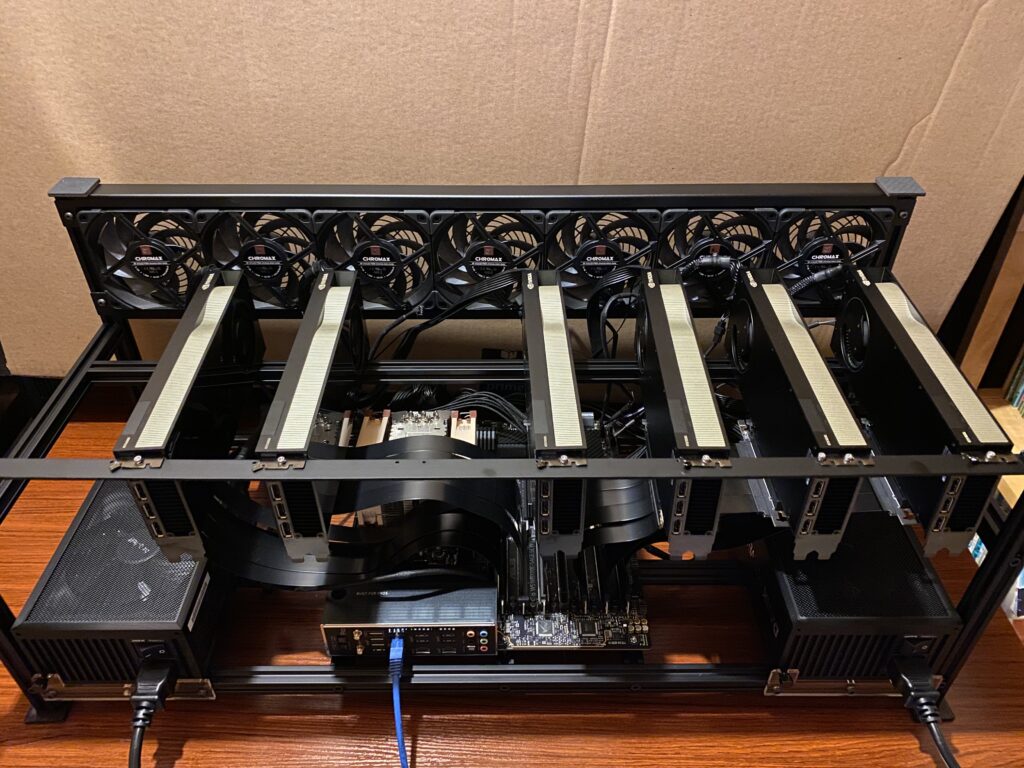
Table of Contents
The Cost of Independence
For most independent AI researchers, the choice of infrastructure usually boils down to a trade-off between the flexibility of the cloud and the sunk cost of hardware. For one former FAANG engineer, that choice manifested as a $48,000 investment in a custom-built server dubbed ‘grumbl’—a powerhouse consisting of six NVIDIA RTX 6000 Ada GPUs.
The decision to move away from corporate employment and toward independent research creates a unique financial pressure: the opportunity cost of time. When the loss of a salary is measured against the speed of discovery, the priority shifts from minimizing monthly spend to maximizing throughput. For this researcher, the goal was simple: build the most powerful machine capable of running within a residential environment to accelerate the development of a breakthrough in Large Language Model (LLM) efficiency.
Navigating the Hardware Minefield
Selecting the right silicon is a nuanced process. While the NVIDIA H100 and A100 remain the gold standards for enterprise data centers, the RTX 6000 Ada offered a more compelling price-to-throughput ratio for a solo operator, particularly for those heavily focused on Reinforcement Learning (RL) and inference tasks where FP8 support is critical.
However, the primary challenge wasn’t the silicon, but the electrical grid. Standard data center servers are not designed for apartment circuits. To avoid overloading a single breaker, the build required two separate power supplies plugged into two different circuits. To mitigate the inherent fire risks associated with such a non-standard electrical configuration, the project was handled by a professional PC builder rather than as a DIY home project.
In a twist of irony, the carefully engineered ‘apartment-safe’ setup eventually migrated to a parents’ basement, where the availability of industrial-grade electrical upgrades rendered the original circuit-splitting constraints moot.
The Data: Local Iron vs. The Cloud
To determine if the $48,000 spend was a rational financial move, the researcher implemented a rigorous tracking system, logging GPU usage and wattage every minute. This allowed for a direct comparison between the cost of ownership and the cost of on-demand cloud rentals.
The Utilization Gap
The data revealed a telling trend in how research actually happens. In the early stages, utilization was lower as development time—coding and debugging—outpaced actual experiment time. By June 2025, the workflow shifted toward compute-heavy projects, pushing the servers into a near-constant state of activity. Despite this, the overall average utilization sat at 76%, with a more recent average of 85% since the start of 2025.
The Financial Breakdown
| Expense Category | Cost / Impact |
|---|---|
| Initial Hardware Investment | $48,000 |
| Electricity (approx. $125/mo) | ~$3,000 |
| Estimated Cloud Rental Equivalent | $68,000 |
| Net Savings to Date | $17,000 |
While the hardware has now officially paid for itself, the analysis notes that these savings are calculated against on-demand pricing. Reserved instances (6-12 month commitments) would have narrowed the gap, though they would not have provided the asset equity of owning the GPUs.
Beyond the Balance Sheet
Ultimately, the experiment suggests that while cloud rentals offer a lower barrier to entry, the mental and operational freedom of local compute can lead to higher-risk, higher-reward experimentation. The ‘stress’ of local ownership—such as the anxiety of a server failing to boot and the fear of fried PCIe risers—is a trade-off for zero-latency access to compute.
The gamble appears to have paid off. After a period of high-risk experimentation and multiple failures, the researcher recently launched a project aimed at solving a major LLM bottleneck, which has already garnered significant industry attention and over 400,000 views. For this particular case, the $48,000 server wasn’t just a cost center—it was the engine for a successful product launch.