Imperagen Taps Quantum Physics and AI to Overhaul Enzyme Engineering
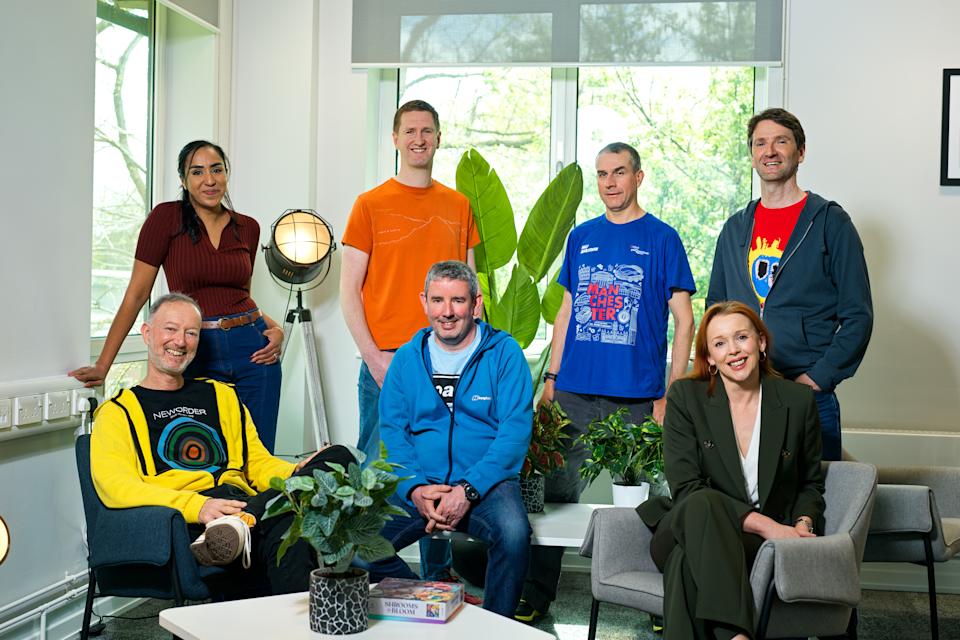
Table of Contents
A Shift Away from Lab Trial-and-Error
For decades, enzyme engineering has been a grueling exercise in patience. The traditional process—essentially a high-stakes game of trial and error—requires scientists to manually mutate enzymes and test them in a lab, hoping for a variant that performs a specific chemical reaction more efficiently. It is a slow, expensive, and often unpredictable cycle that can stall the development of everything from life-saving pharmaceuticals to sustainable biofuels.
Imperagen is betting that the solution isn’t more lab time, but better math. The Manchester-born startup recently announced a £5 million ($6.7 million) seed round led by PXN Ventures, with additional backing from IQ Capital and Northern Gritstone. The funding arrives as the company seeks to move the heavy lifting of enzyme design from the wet lab into a high-compute environment using a combination of quantum physics and artificial intelligence.
Founded in 2021 as a spin-out from the Manchester Institute of Biotechnology by Dr. Andrew Currin, Dr. Tim Eyes, and Dr. Andy Almond, Imperagen is positioning itself as a bridge between theoretical physics and industrial application. The goal is simple: make the creation of engineered enzymes faster and more commercially viable.
The Tech Stack: Quantum, AI, and Robots
Imperagen’s approach relies on a three-pronged technical strategy designed to eliminate the guesswork inherent in biocatalysis. Rather than starting with physical mutations, the company employs quantum physics-based simulations. These models allow researchers to predict how millions of different enzyme variants will behave on a computer, narrowing the field of candidates before a single pipette is touched.
This quantum data is then fed into custom AI models specifically trained on the chemical problems the company is trying to solve. To prevent these models from becoming theoretical echoes, Imperagen utilizes a “closed-loop simulation.” This involves using robotics and automation to generate real-world experimental data, which is then looped back into the AI to refine its predictions.
This synergy addresses a persistent gap in the biotech sector. While many AI-powered platforms can suggest promising candidates in a digital environment, those candidates frequently fail when scaled up for industrial production. By integrating quantum simulations with automated physical validation, Imperagen aims to ensure that what works on the screen actually works in the vat.
Scaling Commercial Bio-Production
The appointment of Guy Levy-Yurista as CEO marks a strategic shift for the company as it moves toward commercialization. Levy-Yurista, who brings a background in enterprise technology and life sciences, is tasked with building out a vertical AI infrastructure for biocatalysis—the process of accelerating chemical reactions using natural catalysts.
The implications of this technology extend far beyond a single lab. Enzymes are the workhorses of the modern bio-economy. In pharmaceuticals, they are critical for drug discovery and development. In the energy sector, they are the key to unlocking more efficient biofuels. Even the food and agriculture industries rely on enzymes to improve sustainability and reduce the carbon footprint of industrial manufacturing.
Imperagen enters a competitive landscape alongside other AI-driven biotech firms such as Cradle Bio, Biomatter, and Absci. However, the emphasis on quantum-level simulation provides a distinct technical angle in a field increasingly crowded with generative AI wrappers.
Roadmap and Expansion
With total funding now sitting at £8.5 million ($11.42 million), Imperagen is entering a period of aggressive scaling. The new capital is earmarked for a significant hiring push for AI specialists and the expansion of the company’s experimental lab capabilities. Over the next two years, the company intends to build out a dedicated go-to-market function to transition its technology from the research phase to industrial partnerships.
As the industry pushes toward “greener” chemistry, the ability to reliably produce cleaner, safer bio-products is becoming a commercial necessity. Imperagen’s success will likely depend on whether its quantum-AI hybrid can consistently outperform the legacy methods of the biotech establishment.