Iran Threatens ‘License Fees’ for Big Tech Undersea Cables in Strait of Hormuz
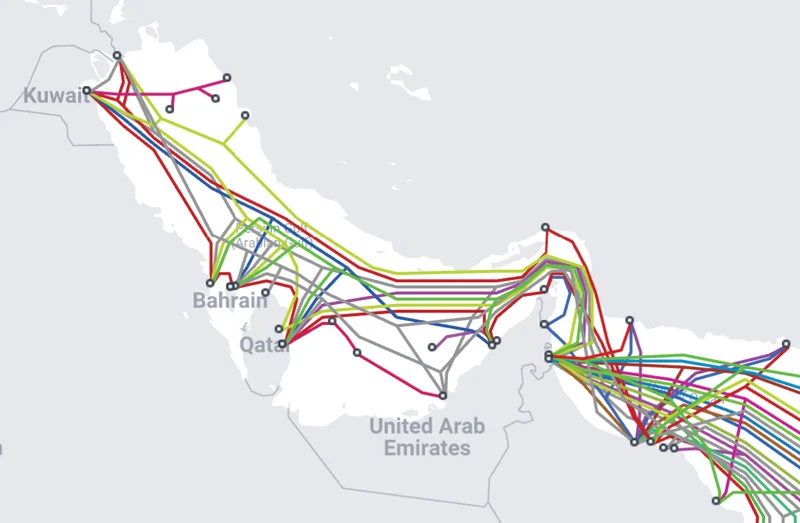
Table of Contents
A Digital Chokepoint
The Strait of Hormuz has long been recognized as one of the world’s most volatile maritime corridors, primarily due to the massive volume of oil that passes through its waters. Now, Iran is attempting to extend its leverage from energy to information. In a move that signals a new layer of geopolitical tension, Iranian officials have declared their intent to impose “license fees” on the undersea internet cables that traverse the region.
The assertion came via Ebrahim Zolfaghari, a spokesperson for Iran’s military and the Islamic Revolutionary Guard Corps (IRGC), who stated in a May 9 post that the state would begin imposing fees on these critical digital arteries. While the initial announcement was brief, state-linked media outlets Tasnim and Fars have since provided a more aggressive blueprint. According to reporting by The Guardian, these outlets specifically named Meta, Google, Amazon, and Microsoft as targets for these fees, claiming that Iran alone possesses the right to oversee the maintenance and repair of cables within its perceived sphere of influence.
The Infrastructure at Risk
While the vast majority of global internet traffic flows through deep-ocean cables, the Strait of Hormuz is a critical junction for regional connectivity. According to data from TeleGeography, several major systems—including the Asia Africa Europe-1, FALCON, and the Gulf Bridge International Cable System—are vital to the Gulf states.
The geopolitical friction is compounded by the geography of these cables. Alan Mauldin, a research director at TeleGeography, noted that the FALCON and Gulf Bridge systems pass through Iranian territorial waters at specific points. This gives Tehran a physical point of leverage, whether through legal claims of sovereignty or the more visceral threat of physical interference. While Europe-Asia traffic generally avoids this specific chokepoint by routing through the Red Sea, that region has its own set of instabilities, including recent disruptions attributed to Houthi rebels.
The ‘Protection’ Racket and Repair Deadlocks
The immediate threat is not necessarily a total blackout, but rather a calculated strategy of “infrastructure hostage-taking.” Most undersea cable damage is accidental—caused by fishing trawlers or ships dragging anchors. However, the repair process is slow, requiring specialized vessels to grapple the cable from the seafloor, a process that can take weeks.
In the current climate, these repair ships are sitting ducks. With the U.S. military and Iran engaged in a series of skirmishes—including the reported destruction of over 160 Iranian naval vessels since February—the Strait of Hormuz has become a no-go zone for commercial repair crews. This creates a precarious ultimatum for tech giants: pay the Iranian “protection fees” to ensure repairs can proceed, or leave damaged cables offline indefinitely.
Maritime intelligence firm Windward suggests that from Tehran’s perspective, these fees are a low-cost, high-reward gamble. Considering a single transoceanic system can cost up to $1 billion to deploy, a recurring licensing fee is a small price for a company to pay to maintain connectivity, but a significant diplomatic and financial win for the Iranian state.
Searching for a Detour
The instability has already begun to disrupt the industry’s pipeline. Alcatel Submarine Networks recently notified customers of its inability to fulfill certain contracts after a cable-laying ship became stranded near Saudi Arabia. This directly impacted a Meta-backed project intended to expand internet access across Africa.
As a result, there is a growing movement among U.S. tech firms and Gulf nations to bypass the Strait of Hormuz entirely. This involves pivoting toward overland fiber-optic routes. However, this transition is not a simple engineering task. Proposed routes through Syria, Iraq, Sudan, and Ethiopia introduce a different set of geopolitical risks, often replacing one volatile regime with another. For now, the digital architecture of the Middle East remains precariously tethered to a narrow strip of water where the lines between technology and warfare are increasingly blurred.