The Age Verification Arms Race: Can the Internet Prove You’re an Adult Without Killing Privacy?
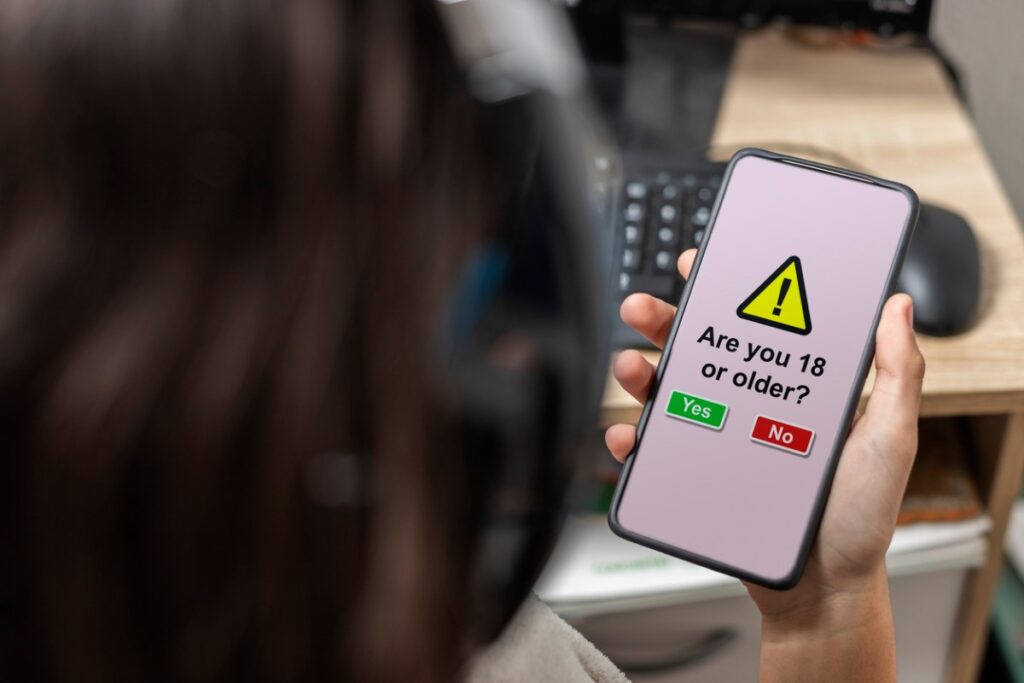
Table of Contents
The Friction of Digital Maturity
For decades, the internet’s primary method of age verification was a simple, dishonestly answered checkbox: ‘I am 18 or older.’ It was a legal fiction that allowed platforms to claim compliance while maintaining a frictionless user experience. However, a global wave of regulation is turning that fiction into a liability. From the UK’s Online Safety Act to a patchwork of restrictive laws across U.S. states, the mandate is shifting from ‘honor system’ to ‘hard proof.’
The challenge for the tech industry is that proving age online is fundamentally different from checking an ID at a liquor store. In a physical setting, a glance at a driver’s license is a momentary transaction. In the digital realm, establishing identity often requires the creation of massive, centralized databases of sensitive biometric or government data—creating a honeypot for hackers and a nightmare for privacy advocates.
Estimation vs. Verification
As the pressure mounts, the industry is splitting into two primary technical camps: age verification and age estimation. While they sound similar, the architectural and privacy implications are worlds apart.
Age verification is the traditional route. It requires a user to upload a government-issued ID or link a credit card. It is highly accurate but intrusive. For a teenager trying to access a restricted site, this often means handing over a passport scan to a third-party vendor they’ve never heard of.
Age estimation, by contrast, leverages AI and computer vision. By analyzing facial geometry and skin texture via a camera, these systems infer an approximate age. It doesn’t tell the platform who the user is, only how old they likely are. On paper, this is the privacy-preserving win. In practice, it’s a technical battlefield.
The Deepfake Dilemma
The rise of synthetic media has complicated the estimation game. As generative AI becomes more sophisticated, “presentation attacks”—using a high-resolution screen or a deepfake video to fool a camera—have become more common. This has forced developers to lean heavily on liveness detection (requiring users to blink or turn their heads) and standards like ISO/IEC 30107-3 to ensure the biometric sample is coming from a living human, not a sophisticated render.
Where the Check Actually Happens
Beyond the how is the where. The industry is currently debating where the “gate” should be placed to minimize data leakage.
- Platform-Level: The site itself collects the data. This is the most common but least trusted method, as users are wary of social media giants holding their IDs.
- Third-Party Providers: An intermediary (like Yoti or ID.me) verifies the age and sends a simple “Yes/No” token to the platform. This keeps the raw data away from the content provider.
- Digital Identity Wallets: A burgeoning model where a government or trusted entity issues a cryptographically signed credential to a user’s phone. The user presents this “digital badge” without revealing their full identity.
- Device-Level: Some policymakers argue the check should happen at the browser or OS level, effectively turning the smartphone itself into the age-gate.
The Regulatory Collision
This isn’t just a technical puzzle; it’s a legal collision course. While the IEEE 2089 standards attempt to create a framework for age-appropriate digital services, and ETSI TS 119 461 defines remote identity proofing for European regulators, the implementation remains fragmented.
The paradox is stark: in the effort to protect children from harmful content, regulators may be forcing the creation of an identity infrastructure that tracks every adult’s movement across the web. As the industry pivots toward digital wallets and more sophisticated AI estimation, the goal remains the same: finding a way to prove a user is an adult without needing to know exactly who that adult is.