The Mexican Experiment: Can Ibogaine Repair the Traumatized Brain?
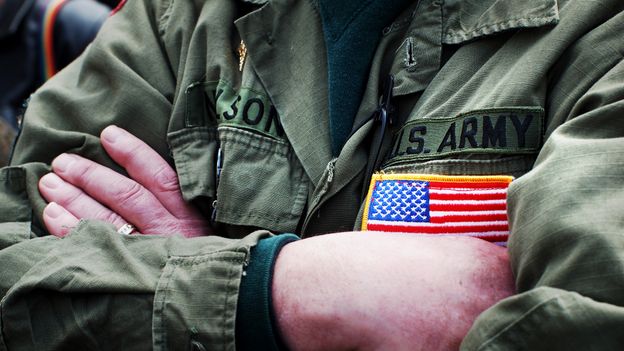
Table of Contents
A Last Resort in Tijuana
For Elias Kfoury, a former US Navy special operations medic, the road to recovery was paved with failure. Despite twelve surgical procedures to address physical injuries and a rotating door of conventional psychiatric therapies, the psychological scars of two different wars—the Lebanese Civil War of his childhood and his own military service—remained stubbornly intact. By 2016, the darkness of post-traumatic stress disorder (PTSD) felt permanent.
His turning point didn’t happen in a US hospital, but in a clinic in Tijuana, Mexico. There, Kfoury became part of a small cohort of 30 US special forces veterans participating in a study monitored by researchers at Stanford University. The treatment: ibogaine, a potent hallucinogen derived from the roots of the African iboga shrub.
The experience was less like a medical procedure and more like an immersive psychological excavation. Lying on a mat with eyeshades, Kfoury spent roughly twelve hours in a lucid, often challenging state, confronting childhood versions of himself and revisiting memories of lost friends and family. For many in the trial, these vivid, dream-like journeys were the catalyst for a profound shift in their mental state.
Measuring the ‘Magic’
The results of the trial, as tracked through health questionnaires, were striking. Participants saw their status shift from “mild-to-moderate disability” to “no-to-mild disability” regarding depression, anxiety, and PTSD symptoms. More importantly, the researchers found a direct correlation: the more intense the immersive psychedelic experience, the greater the improvement in PTSD symptoms, a trend that persisted one month after the treatment.
Ibogaine is not a new discovery in the world of alternative medicine. Its reputation began in 1962 with Howard Lotsof, a heroin addict who discovered that a single dose of the compound almost entirely erased his withdrawal symptoms. Since then, it has been viewed as a potential “silver bullet” for opioid and cocaine addiction. However, its legal status remains precarious; it is a controlled substance in the US and banned in several other countries due to safety concerns, pushing much of the current clinical exploration into unregulated territories like Mexico.
The Biological Puzzle
Despite the anecdotal and clinical success, the scientific community is still grappling with how ibogaine actually works. Unlike better-known psychedelics like psilocybin or LSD, ibogaine doesn’t primarily target the 5-HT2A receptor.
Clayton Olash, a researcher at Stanford University’s Brain Stimulation Laboratory, suggests the drug may operate through a different biological pathway. Olash’s analysis focuses on the kappa-opioid receptors, which may stimulate cells that restore myelin—the protective coating around brain nerve fibers. If this hypothesis holds, ibogaine wouldn’t just be treating the symptoms of PTSD; it could be repairing the physical damage caused by traumatic brain injuries (TBI) and opioid use disorders.
There is also the role of noribogaine, a metabolite produced as the body processes the initial dose. This compound is believed to interact with serotonin levels, potentially stabilizing mood and reducing the cravings that plague recovering addicts.
For veterans like Kfoury, the molecular mechanism is secondary to the result. The transition from a state of total despair to a manageable life is the primary metric of success. As research continues to bridge the gap between ceremonial use and clinical application, the goal is to move these treatments from unregulated clinics in Mexico into safe, standardized medical environments.