Turkey Bans LGBTQ+ Charter Cruise from Docking, Citing ‘Moral Standards’
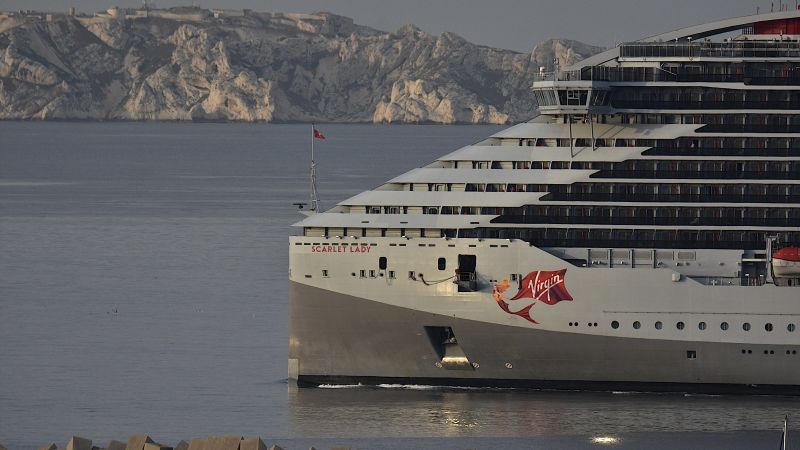
Table of Contents
A Policy of Exclusion in the Mediterranean
Turkish authorities have officially banned a cruise ship chartered for LGBTQ+ travelers from docking at the country’s ports, a move the government justifies as a defense of “moral standards” and “family values.” The decision affects the Scarlet Lady, a vessel owned by Richard Branson’s Virgin Voyages, which was scheduled to make stops in the Mediterranean as part of a specialized tour.
The voyage, organized by Atlantis Events, was designed as an “Athens to Venice” itinerary departing from Greece on July 5. The ship was slated to dock in the popular port town of Kuşadası and the metropolis of Istanbul. However, local officials in Turkey’s Aydin province—where Kuşadası is situated—declared there was “absolutely no possibility” of the group visiting, characterizing the event as incompatible with the social fabric of the region.
The Friction Between Tourism and Ideology
The ban marks a rare and direct intervention against a commercial tourism charter. Rich Campbell, President and CEO of Atlantis Events, expressed shock at the decision, noting that in 36 years of operation, this is the first time his company has been explicitly barred from berthing based on the identity of the passengers. The cruise was expected to carry over 1,000 passengers from the United States, with additional guests from Canada, Australia, and the United Kingdom.
The tension extends beyond simple docking permits. In Istanbul, police reportedly raided a local bar after an “Atlantis brochure” allegedly promoted a party at the venue. Campbell has since distanced the company from the document, stating the brochure was neither produced by nor affiliated with Atlantis Events. He emphasized that the group is not a political entity but a travel group intended to spend money and respect local cultures.
The Broader Political Context
This incident does not occur in a vacuum. Under President Tayyip Erdogan and the AK Party, Turkey has seen a steady tightening of restrictions regarding LGBTQ+ visibility and rights. Since 2015, the government has consistently banned Pride marches in Istanbul, often citing “public safety” or “security concerns” as the official reasoning, while using rhetoric centered on traditional family values.
By targeting a high-profile American-led charter, the Turkish government is signaling a willingness to prioritize ideological purity over the potential economic windfall of luxury tourism. For the passengers, the result is a shifted itinerary; Atlantis Events has announced that the Scarlet Lady will now redirect to Cairo, Egypt, and the Greek island of Crete to compensate for the lost Turkish port calls.
As the cruise industry increasingly leans into niche, identity-driven travel, this clash highlights the growing friction between globalized consumer expectations and the rigid sociopolitical landscapes of various sovereign nations.