The Lightning Strike: How a Flooded Archive and a 94-Year-Old’s Memory Brought a WWII Pilot Home
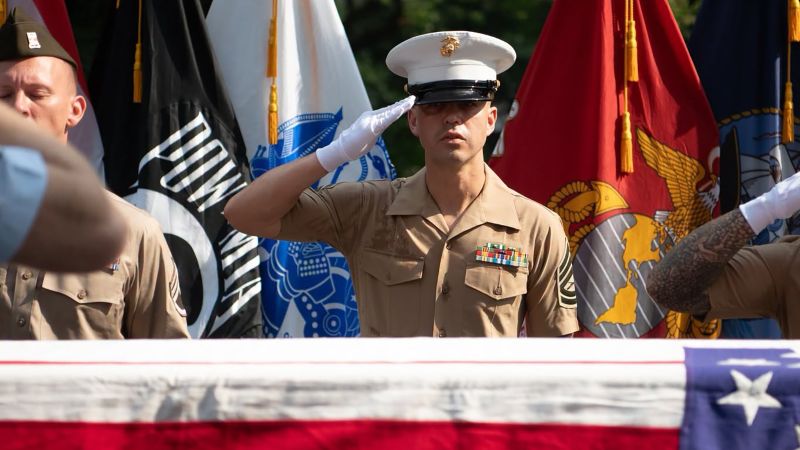
Table of Contents
A Cold Case Eight Decades in the Making
For eighty years, 1st Lt. Franklin McKinney was a name on a missing persons list, a pilot who vanished into the skies of Southeast Asia during the height of World War II. Now, in a convergence of historical curiosity, environmental fluke, and human memory, the pilot from Providence, Rhode Island, is finally returning home.
McKinney disappeared on November 5, 1944, while piloting an F-5E—the specialized reconnaissance variant of the P-38 Lightning. Based at Beitan Airfield in Yunnan, China, McKinney was part of a high-stakes effort to photograph Japanese positions across northern Thailand and Burma. The military officially declared him dead in March 1946, but for decades, his final resting place remained a mystery, buried not only by time but by the dense terrain of northern Thailand.
The Archive in the Flood
The path to McKinney’s recovery did not begin with a military search party, but with a senior thesis. In 2008, Dan Jackson, then a cadet at the US Air Force Academy, began researching a China-based fighter squadron for his final project. This academic curiosity evolved into a lifelong mission, eventually resulting in the books Forgotten Squadron and Fallen Tigers.
The breakthrough arrived through a strange twist of fate in 2011. Bangkok experienced catastrophic flooding so severe that officials were forced to use rowboats to navigate the corridors of the Thai archives. While attempting to rescue documents from the rising humidity and water, Sakpinit Promthep, then head of the Royal Thai Air Force Museum, stumbled upon a forgotten telephone log. The document, sent from a Thai Air Force wing commander to superiors in Bangkok, detailed a crash site investigation of a P-38 reconnaissance aircraft. Most crucially, it noted the recovery of a human skull and listed the probable cause of the crash: a midair lightning strike.
Mapping the Invisible
Despite the archive’s clue, the geography remained the primary obstacle. Richard Hakanson, an American researcher based in Chiang Mai, spent years attempting to locate the villages mentioned in the wartime reports. These settlements were so small they didn’t appear on modern maps, leaving the searchers to navigate by intuition and local lore.
The final piece of the puzzle emerged in 2017 in the form of Fong Inma. At 94 years old, Inma possessed a vivid memory of a violent thunderstorm that struck the village of Mae Kua on that specific November afternoon in 1944. Her eyewitness account provided the precise context needed to narrow the search area to a rice paddy in northern Thailand.
The Cost of Reconnaissance
The recovery highlights the precarious nature of WWII photo reconnaissance. Unlike the fighter pilots of the era, recon pilots flew unarmed. Their only defense was altitude and speed. However, Jackson’s research reveals that McKinney was a “daredevil” who chafed at the requirement to fly at 30,000 feet. He frequently descended to 19,000 feet to capture higher-resolution images, placing himself well within the reach of enemy interceptors and unpredictable weather patterns.
At 10:15 a.m. on his final mission, McKinney took off toward the Uttaradit and Chiang Mai provinces. He never returned. His bunkmate, 1st Lt. Sterling Barrow, recorded his anxiety in a journal that evening, praying for his friend’s safety—a prayer that would not be answered for another eighty years.
Following a formal ceremony at the US Embassy in Bangkok, the remains of 1st Lt. McKinney have been repatriated to the United States, fulfilling a long-standing military commitment to ensure no service member is left behind, regardless of the time elapsed.